
Style interior design: which ones actually work in a Singapore flat
08 Oct 2026 · YC Design and Build
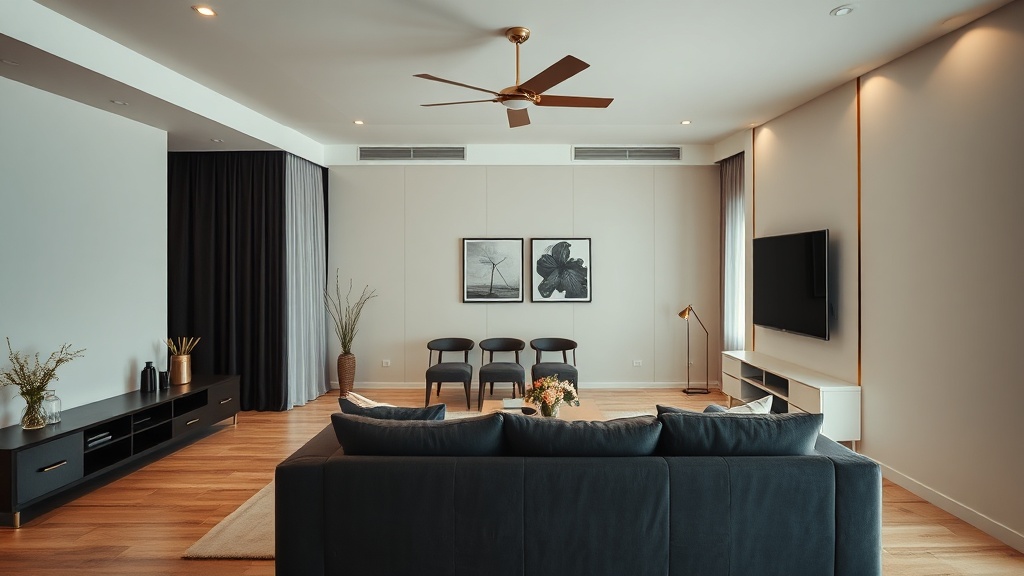
A plain guide to interior styles that suit Singapore flats, what they cost, and the trade-offs before you choose.
Most people do not struggle to find a style. They struggle to work out whether that style will still make sense after hacking, storage, drying laundry, cleaning grout and paying the final bill. In a Singapore flat, style design interior choices only work when they fit the way the unit is built and the way you live in it.
A nice reference photo is easy. Making it work in a 4-room HDB, or a condo with management rules, is the harder part. This guide is about that part: what each common style does well, where it usually fails, and what it tends to ask from your budget and maintenance.
How to judge style design interior choices in a Singapore flat
Before looking at names like Scandinavian, Japandi or Industrial, use four checks. If a style fails two or three of them, it usually looks good for six months and irritating after that.
- Space: Does the style make a small flat feel calmer, or does it add bulk everywhere through deep carpentry, heavy feature walls and oversized furniture?
- Climate: Can the materials take humidity, cooking fumes and regular cleaning? Open pore timber, dark grout and rough cement finishes all behave differently in Singapore.
- Storage: Does the style leave enough closed storage for shoes, bags, household items and spare bedding? Minimalist looks often fail here, not because the style is wrong, but because storage was cut too hard.
- Buildability: Can the look be built properly within the unit's condition, rules and budget? A resale flat with uneven walls and old services has different limits from a new BTO shell.
This is also where project type matters. In Singapore, renovation cost is driven more by property type and scope than by style name alone. As a broad 2026 guide, most HDB projects land around S$30,000 to S$90,000, condos around S$40,000 to S$220,000, and landed homes around S$120,000 to S$800,000+. The main cost movers are whether the home is new or resale, how much hacking and wet work is needed, and how much custom carpentry you want. Style affects cost too, but usually through those decisions.
For example, a minimalist scheme with mostly paint, loose furniture and basic cabinetry can stay controlled. The same "minimalist" brief with concealed doors, flushed skirting, full-height veneer panels and shadow gaps can jump fast. Same label, very different build.
What usually works best in HDB and condo flats
Not every style translates well into a standard apartment layout. In practice, a few families of styles tend to work more reliably because they respect flat proportions, common ceiling heights and normal household clutter.
1. Warm minimalism
This is one of the safest choices for many flats. It is not empty white-box minimalism. It uses simple lines, light colours, some timber tone, and enough concealed storage to keep the place calm.
Why it works:
- It suits small and medium rooms.
- It does not rely on one difficult feature finish.
- It can be built in stages if budget is tight.
- It ages fairly well because the forms are simple.
Where it goes wrong:
- Too little storage. Then every countertop fills up.
- Too much beige without contrast. Then the space looks flat, not calm.
- Very delicate finishes. Light laminates and matte surfaces can show marks.
Good fit for: BTOs, newer condos, 3-room and 4-room HDBs, families who want a quiet backdrop.
Trade-off: Easy to live with, but it can look plain if the proportions and lighting are not handled properly.
For a 4-room HDB, warm minimalist schemes are often reported around S$45,000 to S$75,000, depending on carpentry, materials and wet works. That is not a fixed budget. If you keep existing flooring and avoid major layout changes, it can stay lower. If you add full-height cabinetry, curved details, concealed doors or upgraded finishes, it moves up.
2. Scandinavian
Proper Scandinavian style is more than pale wood and white walls. It is practical, bright and modest in detailing. In Singapore flats, that practicality is the reason it still works.
Why it works:
- Light colours help bounce daylight in narrower units.
- Simple cabinetry keeps rooms from feeling crowded.
- It mixes well with everyday furniture and does not demand a full custom fit-out.
Where it goes wrong:
- Using too many small decorative items. Then it starts reading as shop display.
- Choosing timber tones that clash with flooring.
- Applying "Scandinavian" as a shopping list of shapes instead of planning storage and circulation first.
Good fit for: First homes, young families, owners who want reasonable cost control.
Trade-off: Safe and flexible, but less distinctive if you want a strong character.
For a typical 4-room HDB, modern Scandinavian and modern contemporary styles are often placed around S$45,000 to S$70,000. Again, most of the movement comes from how much custom work is included.
3. Japandi
Japandi is basically a crossover: Japanese restraint plus Scandinavian warmth. It is popular because it feels neat without turning cold.
Why it works:
- It favours low visual noise, which helps flats feel less packed.
- Natural tones sit well with common apartment lighting.
- It encourages fewer but better-planned built-ins.
Where it goes wrong:
- Curves, slatted panels and special veneer details are overused. These push cost.
- Open shelving is used for styling, but daily living creates clutter.
- Very low furniture can be impractical for elderly family members.
Good fit for: Owners who want a quieter home and are prepared to edit belongings.
Trade-off: Looks controlled, but only stays that way if the household keeps things under control.
The style itself is not the expensive part. The expensive part is when a "simple" Japandi look is built with custom curved laminates, routed handles, concealed lighting and full-house carpentry.
4. Contemporary
Contemporary is often used as a broad label. In practical terms, it usually means current, clean and mixed, rather than tied to one strict style language. That flexibility is useful in Singapore because many households need the house to do several jobs at once.
Why it works:
- It can combine practical storage with a cleaner finish.
- It adapts well to odd corners and mixed family needs.
- It can take some stronger materials or colours without becoming theme-based.
Where it goes wrong:
- No clear decisions. Then the result looks generic.
- Too many statement materials in a small footprint.
- Trying to combine luxury detailing with moderate budgets.
Good fit for: Resale flats, households with mixed preferences, owners who want function first but not a plain result.
Trade-off: Flexible, but it needs discipline or it becomes a bit of everything.
Styles that can work, but need more care
These styles are not bad choices. They just ask more from the flat, the workmanship or the owner.
Industrial
Industrial style remains popular because it feels direct. Exposed textures, darker palettes, black metal, concrete tones. In the right home, it works. In the wrong home, it can make the flat feel smaller and harder.
Why it works:
- It can hide wear better than very light schemes.
- It suits owners who prefer a less polished, more robust finish.
- It can work well in loft-like layouts or units with stronger daylight.
Where it goes wrong:
- Dark finishes absorb light. Smaller rooms feel tighter.
- Cement screed and textured walls are not always forgiving if done poorly.
- Metal and black detailing need restraint, or the place starts to feel heavy.
Good fit for: Singles or couples, larger flats, certain condos, owners who like a more stripped-back look.
Trade-off: Strong character, but less forgiving in compact homes and often trickier to get right in detail.
For 4-room HDBs, modern industrial is often placed around S$50,000 to S$75,000. Screed flooring, custom metalwork and feature finishes usually move the cost.
Modern classic
Modern classic tries to balance cleaner layouts with more traditional detailing. Think panelled walls, moulding profiles, richer joinery and a more dressed-up feel.
Why it works:
- It gives presence to otherwise ordinary rooms.
- It can make resale units feel more finished and deliberate.
- It suits owners who want a more formal home.
Where it goes wrong:
- Details are scaled badly for the room size.
- Too many profiles and trims collect dust and crowd the walls.
- Carpentry cost rises because detailing is more involved.
Good fit for: Larger 4-room and 5-room flats, some condos, owners who prefer structure and symmetry.
Trade-off: More visual richness, but more detailing means more cost and usually more maintenance.
For a 4-room HDB, modern classic or modern colonial style guides often put the range around S$60,000 to S$90,000. Detailed carpentry is a major reason.
Modern luxury
This is where many homeowners get caught by the gap between image and build. Luxury looks expensive because it usually is expensive. Stone, metal trims, large-format surfaces, custom wardrobes, layered lighting and hidden services all cost money.
Why it works:
- It can look very resolved when everything is coordinated properly.
- Materials can feel substantial and durable.
- It suits bigger homes where details can breathe.
Where it goes wrong:
- Trying to copy a high-end look with moderate materials and limited workmanship.
- Overloading a small flat with glossy finishes and feature walls.
- Forgetting that luxury details need accurate site coordination.
Good fit for: Larger condos, bigger resale flats with healthy budgets, landed homes.
Trade-off: Strong finish quality when done properly, but it is the least forgiving style to value-engineer halfway through.
For a 4-room HDB, modern luxury guides often place projects around S$70,000 to S$120,000+. That can go higher with extensive hacking, premium surfaces and more custom work. In condos and landed homes, the spread is much wider because floor area and material specification vary heavily.
Styles that often look better online than in real flats
Some looks are not wrong. They are just easier to photograph than to live with.
Very stark minimalism
The all-white, almost empty style can look sharp in a photo set. In a normal Singapore household, it usually needs strict discipline, hidden storage everywhere and a high tolerance for marks and dust.
If you have children, domestic help, elderly parents, hobby equipment, or simply a realistic amount of daily life, the style is hard to maintain. Most homeowners do better with warm minimalism than stark minimalism.
Farmhouse and cottage-heavy interpretations
Some farmhouse elements can work, especially in landed homes or larger condos. In standard flats, very rustic finishes, shaker-heavy detailing, oversized pendant lights and distressed textures can feel imported rather than natural.
The issue is proportion. Many flat layouts are compact and efficient. Heavy decorative language can overwhelm them.
Theme interiors
Hotel style. Muji style copied too literally. Wabi-sabi reduced to random plaster walls. Boutique cafe style at home. These usually date quickly because they are based on an image instead of a household routine.
Better to borrow parts of a style than turn the whole flat into a set.
How style affects renovation cost in real terms
Homeowners often ask which style is cheapest. The honest answer is that scope beats style name. A "simple" style can be expensive if it requires precise custom work. A richer-looking style can stay moderate if you control the built-ins and keep the base finishes.
These are the cost items that usually move the budget most:
- Hacking: Demolition of walls, tiles, old cabinets and finishes. Resale flats often need more of this than BTOs.
- Wet works: Tiling, screeding, plastering, waterproofing and masonry. Bathrooms and kitchens drive this.
- Electrical: New points, rewiring, lighting layout and load planning.
- Carpentry: Wardrobes, kitchen cabinets, TV walls, study units, platform beds, shoe cabinets and concealed storage.
- Surface choice: Laminate, veneer, solid surface, sintered stone, quartz, tile size and profile details.
- Custom detailing: Curves, fluted panels, routed handles, shadow gaps, glass partitions and integrated lighting.
That is why a resale 4-room HDB can cost much more than a new 4-room BTO even if the style brief is similar. The resale unit may need old finishes hacked out, bathroom waterproofing redone, services replaced and walls rectified before the style even starts.
| Style direction | Usually easier to control cost? | Main cost triggers | Main risk |
|---|---|---|---|
| Warm minimalism | Yes, if detailing stays simple | Full-height carpentry, concealed doors, upgraded laminates | Underbuilding storage |
| Scandinavian | Yes | Custom timber finishes, feature lighting, full-house built-ins | Looking generic |
| Japandi | Moderate | Curves, slats, veneer, integrated lighting | Paying more for a style meant to feel simple |
| Industrial | Moderate | Screed, metalwork, textured finishes, dark carpentry | Flat feels smaller and darker |
| Modern classic | Less easy | Mouldings, profiles, detailed carpentry, wall treatments | Over-detailing small rooms |
| Modern luxury | No | Premium surfaces, custom joinery, layered lighting, coordination | Trying to cut cost after design is fixed |
How to choose a style by flat type
BTO flats
BTOs usually give you the cleanest starting point. Less hacking. Fewer hidden problems. That means style decisions can focus more on layout, storage and day-to-day use.
Styles that usually work well: warm minimalism, Scandinavian, Japandi, restrained contemporary.
Be careful with: overbuilding carpentry in every room. New flats are not large. If every wall becomes storage, the home can feel compressed.
Practical approach: do the fixed items properly first, kitchen, wardrobes, electrical, lighting and key storage. Leave some personality to furniture and soft furnishings. That keeps options open and helps budget control.
HDB resale flats
Resale homes are where style should come after condition assessment. Uneven floors, old wiring, tired bathrooms and awkward previous alterations all matter more than the Pinterest board at first.
Styles that usually work well: contemporary, warm minimalism, modern classic in moderation.
Be careful with: forcing a delicate style onto a unit that needs heavy rectification. Spend on the bones first.
Practical approach: decide what must be rebuilt, then match the style to what is left. Sometimes keeping an existing floor and simplifying the design gives a better result than spending hard on one statement feature.
Condominiums
Condos vary a lot. Some are new and straightforward. Some resale units need substantial work. There may also be management requirements for working hours, protection, approvals and wet area restrictions.
Styles that usually work well: contemporary, warm minimalism, Japandi, modern luxury where the unit size and budget support it.
Be careful with: assuming condo means easier. Some condos are more restrictive than HDBs on practical site matters.
Practical approach: use the architecture of the unit. If it already has decent glazing, ceiling height or views, do not fight it with overdone feature walls.
Common style mistakes homeowners make
- Choosing a style before listing what must be stored. Shoes, luggage, cleaning items, kids' materials, altar items, spare chairs, laundry gear. These decide carpentry more than style names do.
- Copying references from larger homes. A condo showflat or landed project may not scale down into a 93 square metre HDB.
- Spending on visible features before invisible works. Rewiring, waterproofing and rectification are not glamorous, but they prevent expensive rework.
- Using too many materials. Three or four finishes done consistently usually read better than seven or eight fighting each other.
- Ignoring cleaning. Open shelves, fluted surfaces, dark grout, rough plaster and mirror cladding all ask for different maintenance.
- Confusing "custom" with "better". Sometimes a loose cabinet or standard wardrobe layout is the smarter call.
A practical way to pick your style
If you are deciding between a few directions, do this in order:
- Write your non-negotiables. Number of bedrooms, work-from-home needs, dining size, shoe storage, whether you cook heavily, whether elderly parents visit often.
- Mark the expensive scopes. Hacking, bathrooms, kitchen, rewiring, air-conditioning routing, flooring replacement.
- Choose your tolerance level. Low maintenance, moderate maintenance or happy to maintain special finishes.
- Pick one base language. For most flats, that should be warm minimalist, Scandinavian or contemporary.
- Add one secondary character only. A little industrial, a little classic, a little Japandi. Not all at once.
- Test the look against your daily clutter. If the style only works when nothing is left out, it may not be the right base style for your household.
This sounds plain, but it avoids many expensive changes later.
FAQ
Which interior style is best for a small HDB flat?
Usually warm minimalism, Scandinavian or a restrained contemporary scheme. They keep the visual load lower and work better with compact rooms. The key is not just colour, it is storage planning, furniture scale and how much carpentry is built in.
Does a simpler style always cost less?
No. A simple-looking design can still cost more if it relies on precise custom carpentry, concealed details, special finishes or extensive lighting work. Cost is driven mainly by scope, hacking, wet works, electrical changes and the amount of custom joinery.
Should I choose style first or layout first?
Layout and function first. Work out how you live, what needs to be stored, and what must change in the unit. After that, choose the style language that supports those decisions. The homes that age best usually follow that order.
If you want, ask YC about your own flat.
Read next
- Office interior design: how to get it right in a Singapore homeSet up a home office that works for real life in Singapore: layout, lighting, storage, wiring, noise control and the trade-offs to expect.Design Styles
- Choosing an office interior design company: what to ask before you commitHow to choose an office firm in Singapore: what to ask about scope, budget, timeline, site work and who is actually doing the build.Design Styles
- Commercial interior design: how to get it right in a Singapore homeCommercial interior design can work in a Singapore home if you get the layout, materials and lighting right, and accept the trade-offs.Design Styles
Tell us what you are working with.
Send us the unit type and a rough idea of what you want done. We will come back with what it takes.