
Old HDB 4 room renovation: what to expect, stage by stage, and what to budget
05 Oct 2026 · YC Design and Build
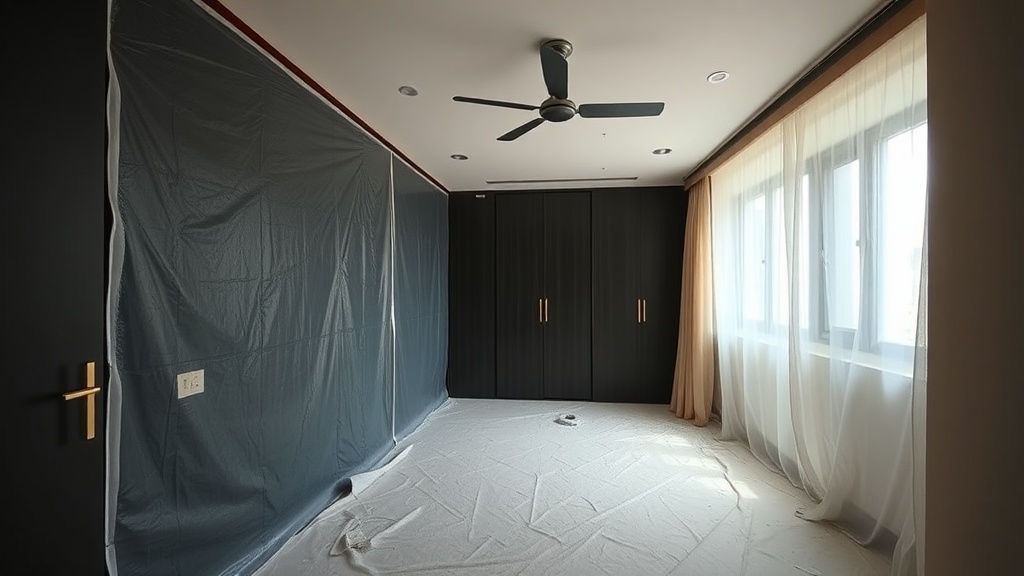
A practical guide to an old HDB 4 room renovation: stages, common site issues, timelines, and what changes the budget.
You bought an older flat, then the renovation quotes started coming in all over the place. That is normal. An old hdb 4 room renovation can be a straightforward refresh, or it can turn into a full rebuild of old wiring, old plumbing and old finishes.
For most owners in 2026, a realistic full renovation sits around S$50,000 to S$80,000. A lighter job can land around S$35,000 to S$40,000. A heavier designer-led overhaul with more carpentry, more reconfiguration and higher-end finishes can reach S$90,000 to S$140,000. What moves the number is not style words. It is scope.
Old HDB 4 room renovation: why resale costs more than BTO
The short version is this: with an older resale flat, you are paying for removal before you pay for the new work.
A new flat usually starts with bare surfaces, newer services and fewer surprises. An older 4-room HDB often needs some combination of demolition, disposal, levelling, rewiring, plumbing replacement, waterproofing and patching. Even if the final look is simple, the hidden work can be substantial.
That is why resale 4-room budgets commonly run about S$10,000 to S$25,000 higher than a new 4-room flat at a similar finish level. The extra spend usually goes into things you do not show off to guests: electrical, pipework, substrate preparation and making old surfaces usable again.
| Flat type | Typical mid-range budget | Why |
|---|---|---|
| 4-room BTO | S$35,000 to S$65,000 | Less hacking, fewer hidden defects, newer services |
| 4-room resale, older unit | S$55,000 to S$85,000 | More demolition, rectification, rewiring, plumbing and wet area work |
If you are trying to decide whether a quote is high or low, the first question is not, “How many carpentry feet?” It is, “What exactly are we replacing, and what are we keeping?”
What a realistic budget looks like
These are working ranges for an older resale 4-room HDB in 2026. They are not fixed prices. The final sum moves with flat condition, extent of hacking, amount of custom carpentry, finish level and whether major services need full replacement.
- Minimal refresh: about S$35,000 to S$40,000. Usually limited hacking, selective flooring, repainting, basic carpentry and keeping more existing items.
- Basic to lower mid-range: about S$40,000 to S$55,000. Often includes some hacking, modest kitchen work, one or two bathrooms with controlled material choices, and simpler carpentry.
- Typical full renovation: about S$50,000 to S$80,000. This is the common band for owners redoing kitchen, both bathrooms, flooring, electrical and painting.
- Mid to premium: about S$55,000 to S$85,000. More carpentry, more finish upgrades, more infrastructure replacement.
- Designer-led or heavy overhaul: about S$90,000 to S$140,000. Usually full rewiring, major wet works, substantial built-ins, layout changes and higher-end materials.
If a quote is well below these bands, check what is excluded. Common omissions are haulage, disposal, tiling screed, waterproofing, appliance integration details, additional power points, replacement of old pipes and making good after hacking.
Stage by stage: what to expect in an old hdb 4 room renovation
Renovation feels less stressful when you know the sequence. Older flats follow a fairly predictable order. The problem is that owners often only see the finish stage, not the groundwork that has to happen first.
1. Site check and scope confirmation
This is where the real budget starts. Before drawings and materials, someone needs to inspect the unit properly.
For an old flat, the important checks are:
- Condition of existing tiles and whether overlay is possible
- Signs of water damage, hollow tiles or failed grout
- Electrical loading, old wiring routes and condition of the distribution board, also called the DB box
- Water pipe condition, especially exposed older pipework under sinks and in service yards
- Ceiling condition, wall unevenness and cracks
- Windows, doors and whether replacement affects other approvals
- Past unauthorised alterations, if any
If this step is rushed, the quote looks neat but variations come later. A variation is an added or changed cost after work starts. Some variations are legitimate, especially when hidden defects only appear after hacking. Some happen because the initial survey was too loose.
Trade-off: spending more time on the first inspection can slow the quotation stage, but it usually reduces nasty surprises later.
2. Space planning and deciding what not to touch
Owners usually focus on what to change. Cost control comes from deciding what to leave alone.
In an older 4-room flat, the big decisions are often these:
- Keep or hack existing flooring
- Open the kitchen or keep it enclosed
- Redo one bathroom or both
- Replace all built-ins or only where storage is actually needed
- Keep bedroom layouts intact or merge rooms
Every one of those choices has a chain reaction.
For example, opening the kitchen may mean hacking walls, patching floor and wall finishes, adjusting electrical points, planning a cooker hood route and dealing with odour control. It can look simple on a plan and still add significant work on site.
The cheapest square foot in a renovation is usually the one you do not build.
3. Approvals and renovation rules
For HDB flats, some works need approval and some works are restricted. Contractors carrying out renovation works in HDB flats must follow HDB requirements. Depending on the scope, there can also be requirements tied to building works, workplace safety and specialised trades.
For a homeowner, the practical point is simple: do not assume any wall can be hacked, any toilet can be altered in any way, or any noisy work can be carried on indefinitely.
Common approval-sensitive works include:
- Hacking of walls
- Works affecting bathrooms and other wet areas
- Replacement works that must follow prescribed methods or materials
- Structural or structural-looking elements, where confirmation is needed before any demolition
There are also practical site rules: permitted working hours, protection of common areas, debris disposal and lift usage arrangements where required.
Trade-off: if you push for more aggressive layout changes, expect more coordination and less room for improvisation on site.
4. Demolition and hacking
This is where an old flat starts showing its real condition.
Typical demolition and hacking for a resale 4-room HDB often falls around S$3,000 to S$8,000. The range moves with wall hacking, floor removal, built-in demolition, debris volume and access conditions.
During this stage, crews remove old carpentry, sanitary fittings, kitchen cabinets, floor tiles, wall tiles and approved wall sections. Once surfaces are opened, hidden problems appear.
Common findings in older flats:
- Uneven floor levels between rooms
- Damaged plaster behind hacked cabinets
- Old pipe routing that limits cabinet design
- Weak or patchy screed, meaning the levelling layer below tiles is not sound
- Waterproofing failure in toilets
This is one reason a very low initial quote can be misleading. Demolition is not just removal. It is the moment where assumptions get tested.
5. Electrical rewiring
In older resale flats, electrical work is often under-budgeted by owners. It should not be.
Typical rewiring costs are often around S$4,000 to S$9,000, depending on the number of new points, whether full rewiring is needed, cable routing difficulty and whether the DB box requires replacement or upgrading.
“Point” usually means one usable electrical location, such as a socket outlet, lighting point, heater point or appliance point.
Reasons older flats may need more electrical work:
- Insufficient sockets for current appliance use
- Old cable condition
- Poorly placed points from older layouts
- Need for dedicated points for oven, induction hob, air-conditioning or water heaters
Trade-off: full rewiring costs more upfront, but patching onto old circuits can create limitations later. If you know you will run more appliances than the previous owner, this is not the place to be overly optimistic.
6. Plumbing and wet area infrastructure
Typical plumbing works in an old resale 4-room often run around S$2,500 to S$6,000. The cost depends on whether you are only changing fittings, or also rerouting pipes and replacing old supply lines and waste lines where accessible.
Bathrooms and kitchens are where old-flat budgets climb fastest. Not because the spaces are huge, but because many trades overlap there: demolition, waterproofing, screeding, tiling, plumbing, electrical, carpentry and installation of fittings.
If old pipes are still serviceable and layout stays close to existing, you spend less. If you move sinks, shift shower positions or create a very different kitchen arrangement, expect more work.
7. Waterproofing and bathroom rebuilding
Waterproofing is one of the least visible line items and one of the most important. It is the protective layer applied in wet areas to prevent water seepage into surrounding structures.
Typical waterproofing costs often fall around S$1,500 to S$4,000, depending on how many areas are treated and the extent of wet works.
Bathroom renovation itself commonly ranges around S$5,000 to S$10,000 per bathroom. The number moves with tile choice, extent of hacking, sanitary ware, shower screen, vanity design and whether the whole space is rebuilt or only partially renewed.
For two bathrooms, this can quickly become one of the largest sections of the job.
Trade-off: retaining old bathroom floor or wall finishes may save money, but only if condition is genuinely good and the new design does not depend on reworking levels and waterproofing. In many older flats, half-doing a bathroom is where false savings happen.
8. Flooring: overlay or hack and lay
Flooring is often a fork in the road for budget.
Typical flooring for a 4-room resale flat, when hacking and relaying is involved, often ranges around S$6,000 to S$15,000. The final number depends on floor area, material type, skirting, levelling needs and whether there are many transitions between spaces.
You usually have two broad approaches:
- Overlay: install a new finish over the existing one, if condition and level allow.
- Hack and lay: remove the old finish and rebuild from the substrate up.
Overlay is cheaper and faster. It can save several thousand dollars. But it is not always suitable. Hollow tiles, poor adhesion, uneven levels and wet area conditions can rule it out. Also, overlay raises finished floor height, which can affect door clearances and transitions.
Hack and lay costs more, takes longer and creates more mess. But it gives you a cleaner starting point.
There is no moral victory in hacking everything. If the existing floor is sound and the new design works with overlay, that can be the sensible move.
9. Masonry, plastering and making good
After demolition, rewiring and plumbing, the flat rarely looks better before it looks worse. Chases in walls need patching. Floors may need levelling. Openings need repair. New bases for cabinets or kerbs in wet areas may need to be formed.
This is the stage many owners do not notice in the quote, yet it affects whether the finish looks sharp or tired. Cheap jobs often show their age here: uneven tile lines, out-of-plumb walls, lipping between tiles and cabinets that need fillers because walls were not corrected properly.
Trade-off: spending more effort on substrate preparation rarely shows on social media photos, but it shows every day when you live there.
10. Carpentry and storage
Kitchen carpentry in a resale 4-room commonly falls around S$6,000 to S$14,000. Bedroom and other carpentry often adds another S$5,000 to S$12,000. For homes with extensive built-ins, total carpentry can climb much higher.
Carpentry gets expensive for two reasons: quantity and complexity.
Quantity is obvious. More cabinets cost more. Complexity is where owners get caught. Curves, special laminates, internal accessories, suspended details, integrated lighting and unusual dimensions all add time and labour.
For an old flat, carpentry also interacts with wall straightness and service routing. If the walls are not true, cabinets need more adjustment. If old pipes or beams interfere, design has to work around them.
Useful rule: build storage where it solves a real problem. Do not fill every wall just because the wall exists.
11. Painting, doors, fixtures and final installation
Painting typically ranges around S$2,500 to S$5,000 for a full unit, depending on surface condition, paint system and how much preparatory repair is needed.
At this stage, installers usually fit:
- Sanitary ware
- Taps and mixers
- Lights and switches
- Sockets and faceplates
- Doors and ironmongery, meaning handles, hinges and locks
- Glass elements such as shower screens, where included
This is also when small errors show up. A point is 150mm off. A cabinet door swing clashes with another door. A vanity light is centred to the wall but not to the mirror. These are not dramatic defects, but they matter.
A good final stage depends on the earlier stages being measured properly. Finishing cannot rescue careless groundwork.
12. Snagging and handover
Snagging means the final check of defects and incomplete items before handover. In an old flat, good snagging matters because there are many interfaces between old structure and new finishes.
Typical snag items include:
- Paint touch-ups
- Silicone gaps
- Door alignment
- Loose hardware
- Water ponding checks in wet areas
- Socket and light testing
- Cabinet adjustment
Do not rush this stage just because the place finally looks complete.
Where the money usually goes
If you are planning a typical full renovation, these item ranges are a practical way to read your quote:
- Hacking and demolition: S$3,000 to S$8,000
- Electrical rewiring: S$4,000 to S$9,000
- Plumbing works: S$2,500 to S$6,000
- Waterproofing: S$1,500 to S$4,000
- Flooring, hack and lay: S$6,000 to S$15,000
- Kitchen carpentry: S$6,000 to S$14,000
- Bedroom and other carpentry: S$5,000 to S$12,000
- Painting: S$2,500 to S$5,000
- Bathroom renovation: S$5,000 to S$10,000 per bathroom
These numbers are useful because they tell you where a quote is unusually lean or unusually heavy. If one area is far lower than expected, check whether the scope is truly narrower, or simply under-described.
What pushes your budget up, fast
Most budget overruns are not random. They usually come from a few predictable moves.
- Too much hacking. Hacking itself costs money, then it triggers disposal, patching, levelling and rebuilding.
- Changing layout after work starts. A moved sink or shifted wall can affect several trades.
- Redoing both bathrooms fully with premium finishes. Small spaces, high cost density.
- Overbuilding carpentry. Long runs of custom storage look tidy on plans and cost real money in production.
- Underestimating electrical needs. Late additions to power points and dedicated appliance points add up.
- Choosing finishes before checking substrate condition. Nice tiles do not remove the need for floor correction.
- Ignoring hidden defects in old flats. Spalling concrete, uneven walls and aged services do not disappear because the design mood is minimal.
How to keep costs under control without making the flat feel cheap
Cost control is mostly about discipline, not about buying the cheapest thing in every category.
- Keep the layout where possible. Working with existing plumbing and wall positions saves money.
- Use carpentry where it earns its keep. Kitchen, wardrobe, study niche. Not every wall needs a feature.
- Pick one or two finish upgrades, not ten. A better worktop and better bathroom fittings usually matter more than many decorative add-ons.
- Overlay floors only when technically suitable. Done correctly, it can save a lot. Done blindly, it creates future problems.
- Spend properly on hidden systems. Electrical, plumbing and waterproofing are not glamorous, but they are expensive to revisit after move-in.
- Allow a contingency. Old flats deserve breathing room in the budget because some conditions only show after hacking.
A practical way to think about it: keep the bones sensible, then spend where daily use is highest.
Common mistakes first-time owners make in an old 4-room HDB
Choosing by package headline alone
Packages can be useful for comparing scope, but old flats do not always fit neat package assumptions. A low headline number may not include enough rectification for an ageing unit.
Using the whole budget on visible items
If all the money goes to tiles, laminates and feature walls, hidden systems get squeezed. That is backwards for an old flat.
Not checking what “full rewiring” or “full bathroom renovation” actually includes
These terms sound complete and can still vary a lot. Ask how many points, what pipe sections, what waterproofing scope, what demolition, what making good.
Starting with too many custom details
An old flat already has enough variables. If this is your first renovation, keep the complicated parts to places where they matter.
Leaving no reserve for defects
In a resale renovation, a clean contingency is safer than pretending there will be none.
A simple way to read your quote
When comparing quotations, do not only compare the bottom line. Compare these five things:
- Scope clarity: are demolition, disposal, patching and making good clearly stated?
- Service works: how much electrical and plumbing replacement is included?
- Wet area detail: what exactly is being rebuilt in each bathroom and in the kitchen?
- Carpentry quantity: how many cabinets, what finishes, what internal fittings?
- Exclusions: appliances, sanitary fittings, permits, haulage, protection, glass, lighting and final touch-ups.
Shorter quotes are not always clearer quotes. If a line item is vague, the number attached to it is not very meaningful.
FAQ
How much should I budget for an old HDB 4-room renovation?
For most owners in 2026, a realistic full renovation budget is around S$50,000 to S$80,000. A lighter refresh can be about S$35,000 to S$40,000. A more extensive designer-led overhaul with full infrastructure replacement and substantial built-ins can reach S$90,000 to S$140,000. The main cost drivers are hacking, bathroom and kitchen scope, electrical rewiring, plumbing replacement, flooring approach and carpentry quantity.
Why does an old resale 4-room HDB cost more to renovate than a BTO?
Because more of the budget goes into removal and rectification before the new finishes even start. Older resale flats often need hacking, disposal, levelling, rewiring, plumbing updates, waterproofing and repair of damaged substrates. At similar finish levels, resale 4-room budgets commonly run about S$10,000 to S$25,000 above BTO.
Is it cheaper to overlay flooring instead of hacking it?
Usually yes, if the existing floor is sound and the levels work. Overlay can save several thousand dollars and shorten the programme. But it is not suitable for every flat. Hollow tiles, uneven surfaces, height issues at doors and poor wet area conditions can make hack and lay the better choice. The right answer depends on site condition, not just budget.
Ask YC about your own flat and we can talk through the scope before you commit to it.
Read next
- Old 3 room HDB renovation: what to expect, stage by stage, and what to budgetOld 3 room HDB renovation, stage by stage: what gets checked first, where delays happen, and what usually moves the budget.Property Types
- Commercial renovation: what to expect, stage by stage, and what to budgetA practical guide to commercial renovation, from planning and permits to handover, with what affects cost and timing in Singapore.Property Types
- 4-room BTO renovation ideas: what to expect, stage by stage, and what to budgetPractical 4-room BTO renovation ideas, what each stage involves, and how budget shifts with layout, carpentry, services and finishes.Property Types
Tell us what you are working with.
Send us the unit type and a rough idea of what you want done. We will come back with what it takes.