
Interior design victorian style: what to expect, stage by stage, and what to budget
07 Aug 2026 · YC Design and Build
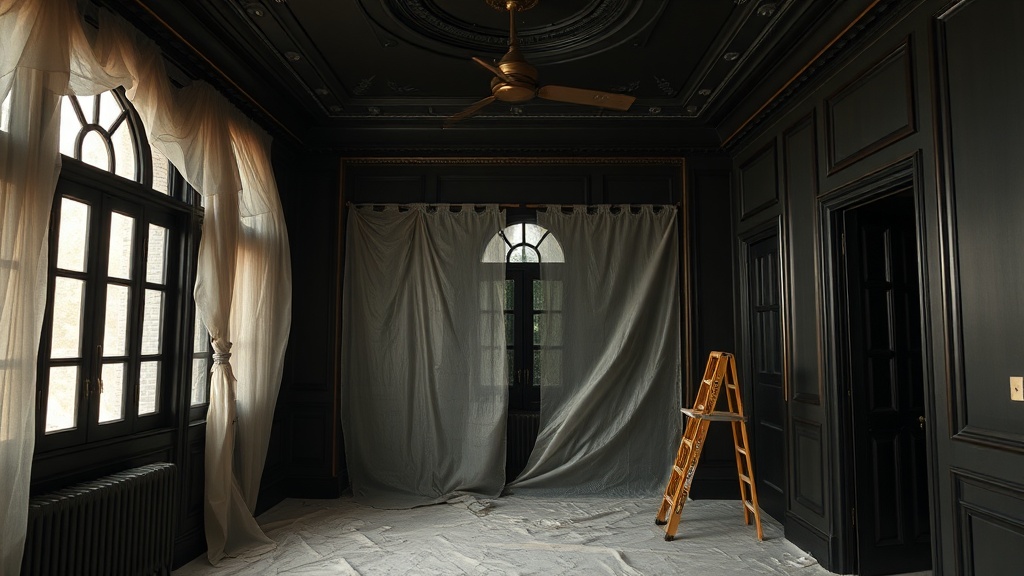
Interior design victorian style means layers, trim and custom work. Here is what to expect, stage by stage, and what usually affects budget.
You like the look of Victorian interiors, but most photos skip the practical bit: what actually gets built, in what order, and what it costs in Singapore. Interior design victorian style can be done in a flat, condo or landed home, but the budget moves fast once you add mouldings, panelling, wallpaper and feature lighting.
The main thing to understand is this: Victorian style is not expensive because of one big item. It gets expensive because many small decorative trades stack up across every room. If the home is resale, rectification work sits underneath that as well.
What “interior design victorian style” usually means in a Singapore home
When homeowners say Victorian, they often mean one of three levels:
- Light Victorian influence: deeper wall colours, some wall moulding, classic light fittings, heavier curtains, timber tones.
- Modern Victorian: cleaner layout, more restrained ornament, but with panelling, cornices, statement bedheads, brass or black detailing, patterned wallpaper in selected areas.
- Full Victorian-inspired interior: ornate cornices, ceiling roses, wainscoting, richer fabrics, carved furniture, layered lighting, more decorative doors and cabinetry.
In Singapore, most homes end up in the middle category. There are two reasons. First, our flats are smaller than the houses this style came from. Second, humidity, dust and day-to-day maintenance matter. A full decorative approach can look good in photos, but feel crowded if the rooms are tight.
That is the first trade-off: the more authentic the style, the more visual weight you add. In a compact HDB or small condo, too much detail can shrink the room.
What to budget, before room-by-room decisions start
For 2026 in Singapore, Victorian-inspired work generally sits at the upper end of mainstream renovation budgets. A typical full-home Victorian-inspired renovation for an HDB is often around S$55,000 to S$90,000, depending on flat size, condition, and how much decorative detailing you actually build in.
That range is not a package price. It is a practical band. What moves it:
- New unit versus resale.
- How much hacking is needed.
- Whether bathrooms and kitchen are included.
- How many rooms get mouldings and wall panelling.
- Imported wallpaper, fabric and lighting choices.
- Whether furniture is loose-purchased or custom-made.
As a baseline, common 2026 renovation ranges across Singapore homes are broadly lower than this if you do simpler contemporary work. Victorian detail pushes the project up because it is carpentry- and finishing-heavy.
| Property type | Broad full renovation range | Where Victorian style often lands |
|---|---|---|
| HDB 3-room or 4-room | Varies widely by age and scope | Often around S$55,000 to S$90,000 for a full Victorian-inspired approach |
| Resale condo | Often higher than HDB due to size, rectification and management requirements | Usually towards the upper half of a comprehensive renovation budget |
| Landed home | Significantly higher, especially with wet works and extensive carpentry | Can climb very quickly once detailing is repeated across many rooms |
If you are trying to set a first budget, split it into two parts:
- Must-do building work: hacking, disposal, masonry, tiling, waterproofing, electrical, plumbing, painting, carpentry base works.
- Style layer: mouldings, wall panelling, wallpaper, decorative lighting, curtains, furniture, mirrors, accessories.
This helps because Victorian style often feels affordable at concept stage, then becomes expensive when the style layer is repeated in every room.
Stage 1: Brief and feasibility, can the home carry the style
This stage is simple but important. Before colours or wallpaper books come out, you need to know what the property allows.
What gets checked first
- Property type: HDB, condo, landed.
- Whether it is new or resale.
- Existing condition: cracked screed, uneven walls, old wiring, leaking bathrooms, hollow tiles.
- Ceiling height: Victorian detailing reads better with some wall height.
- Natural light: darker palettes need enough daylight or stronger artificial lighting.
- Furniture clearance: ornate doors, panelling and skirting all reduce usable space slightly.
If it is HDB or condo, the next point is renovation restrictions. Victorian style itself is not restricted, but the works behind it may be. Hacking, wet area work and some service changes can require approvals or must follow prescribed methods. The exact allowance depends on the property and current rules, so this has to be checked properly for the specific unit.
The second trade-off appears here: if the flat has low ceilings, many beams, or small bedrooms, heavy cornices and full-height decorative walls may not be the right move. You can still get the feel with lower wall panelling, lighter colours and more selective ornament.
Good questions to settle at this stage
- Do you want authentic richness, or a cleaner modern Victorian look?
- Which rooms matter most: living room, master bedroom, dining, study?
- Are you budgeting for renovation only, or renovation plus furniture and curtains?
- Can you live with dust-catching details such as mouldings, pleated fabrics and decorative lighting?
That last question sounds minor. It is not. Victorian interiors have more edges, ledges and surface texture than modern minimalist homes. They need more cleaning.
Stage 2: Space planning, where the style should stop
A common mistake with interior design victorian style is applying the same treatment everywhere. That usually wastes money and makes the home feel theatrical instead of lived-in.
Better approach: choose primary rooms and secondary rooms.
Primary rooms
These are where the decorative budget usually makes sense:
- Living room.
- Dining area.
- Master bedroom.
- Entry foyer, if you have one.
Secondary rooms
These can be quieter:
- Children's rooms.
- Study.
- Guest room.
- Kitchen service zones.
In practical terms, that means you might do full wall moulding in the living room, a feature wall in the master, but simpler painted walls in the other bedrooms. This is one of the easiest ways to hold the budget.
Another planning point is storage. Victorian furniture looks substantial, but Singapore homes still need concealed storage. If you over-decorate built-ins, you can end up paying more for less usable volume. We usually advise homeowners to keep wardrobes and service storage visually calmer, then spend detail where it is seen and appreciated.
Stage 3: Concept and materials, the items that drive cost
Once the layout is settled, the style decisions begin. This is where budgets move fastest.
Mouldings and cornices
Cornices are decorative mouldings at the junction between wall and ceiling. They are one of the clearest Victorian cues. They also cost more than many homeowners expect because they involve material, mitre work, joints, surface preparation and paint finishing.
Reported guide prices in Singapore place ornate crown mouldings at roughly S$3,000 to S$6,000 per room, depending on profile complexity and room size. The higher end usually comes from custom profiles, more corners, higher ceilings and more detailed finishing.
Trade-off: strong visual effect, but they can make a low ceiling feel lower if the profile is too deep.
Wainscoting and wall panelling
Wainscoting means decorative wall panelling, often on the lower half or lower two-thirds of a wall. It is one of the most useful Victorian elements in local homes because it gives the look without having to cover every wall with wallpaper.
Guide costs are often around S$2,000 to S$5,000 per room or area, depending on height, material and detailing.
Trade-off: very strong style signal, but lots of joints and edges mean more workmanship is needed. Poorly aligned panelling shows immediately.
Wallpaper
Victorian wallpapers are often floral, damask, striped or textured. In Singapore, they are commonly used on feature walls rather than every wall in a room.
Guide prices often range around S$20 to S$80 per square metre. The big cost mover is not just the wallpaper roll. It is wall condition and installation. Old walls need more prep. Pattern matching also adds wastage.
Trade-off: quick visual result, but moisture-prone walls and poor wall prep can shorten lifespan.
Lighting
A chandelier can carry a whole room if the proportions are right. Reported guide pricing often falls around S$500 to S$3,000 per piece. The spread is wide because it depends on size, material, brand and whether the ceiling point needs reinforcement or relocation.
Trade-off: a statement fitting looks expensive even when the rest of the room is restrained. But oversized fittings in low ceilings feel forced.
Curtains and upholstery
Victorian interiors rely on softness, not just hard finishes. Velvet, brocade and heavier drapes are common references. Guide fabric rates are often around S$50 to S$150 per metre, but installed curtain cost depends on track type, fullness, lining, height and width.
Trade-off: fabric gives warmth and acoustic softness, but heavier materials need more maintenance and can trap dust.
Furniture
Guide figures for Victorian-style furniture can range roughly S$2,000 to S$8,000 per piece for major items, depending on whether they are mass-produced, reproduced in classic style, or more bespoke.
Trade-off: if the renovation is ornate and the furniture is too plain, the look falls apart. If both are equally ornate, the room can become crowded.
Stage 4: Budgeting the style, room by room
This is the stage where we usually tell homeowners to stop talking in theme words and start listing actual items. “Victorian living room” is not a budget. “Cornice, panelling to one wall, one chandelier, curtains, two wall lights” is a budget.
Living room
Usually the best place to spend. It is visible, shared, and often has the most wall area.
- Cornice or ceiling detail.
- Feature wall panelling.
- Statement light.
- Sofa and coffee table with classic lines.
- Curtains with more texture and weight.
If the budget is tight, do not spread decoration over all four walls. One main wall is usually enough.
Dining area
Dining areas suit Victorian styling well because a chandelier and wall treatment can define the space without much built-in work.
- Feature pendant or chandelier.
- Mirror or artwork.
- Chair and table silhouette that supports the theme.
This is often a lower-cost way to get the mood without heavy carpentry.
Master bedroom
A Victorian-inspired bedroom usually relies on the bed wall first.
- Panelled bedhead wall or wallpaper.
- Side wall lights or table lamps.
- Full curtains.
- Wardrobes kept simpler if space is limited.
That last point matters. Decorative wardrobe doors can look nice in rendering but make a compact bedroom feel bulky.
Kitchen
The kitchen is where many Victorian schemes should be trimmed back. Singapore kitchens work hard. Heat, grease and cleaning matter more than ornament.
You can still use shaker-style doors, classic handles and a warmer palette, but over-detailed cabinet fronts and decorative open shelves often become a maintenance issue.
Trade-off: more traditional character, but harder cleaning if profiles are too deep.
Bathrooms
Bathrooms can take some Victorian cues through mirror shape, light fittings, tile choice and vanity design. But wet area detailing must stay practical. Waterproofing and serviceability come first.
In resale homes, this stage can be expensive because bathroom work is not just style. It may include hacking, screeding, tiling, plumbing and waterproofing rectification.
Stage 5: Quotations, how to read them without getting lost
A Victorian-style quote is easier to compare if the decorative items are broken out clearly. If they are bundled too broadly, you cannot tell where the money is really going.
Items that should be clear in the quotation
- Hacking and disposal.
- Masonry and wall making-good.
- Ceiling works.
- Cornices and mouldings, by room or length.
- Wall panelling, by area or room.
- Wallpaper supply and installation.
- Carpentry carcass material and door finish.
- Electrical points, switches and light installation.
- Painting scope.
- Plumbing and sanitary installation.
If a quote simply says “Victorian feature wall” with one lump sum, ask what is included. Is it MDF panelling, PU moulding, wallpaper backing, paint finish, skirting changes, touch-up after electrical work? These details affect both cost and finish.
Another practical point: ask what is not included. Decorative lighting, mirrors, curtains and furniture are often outside the core renovation sum.
Stage 6: Site works, what happens in order
This is where being a direct main contractor matters. Victorian interiors are not only about design choices. They depend on sequencing. If the order is wrong, finishes get damaged or have to be redone.
Typical sequence
- Protection and demolition: hacking, disposal, strip-out of old finishes if resale.
- Masonry and wet works: wall alterations, floor levelling, bathroom base works.
- Electrical and plumbing first-fix: concealed wiring, pipe runs, point planning.
- Ceiling and partition works: bulkheads, false ceilings if any.
- Carpentry measurement: after site dimensions are stable.
- Tiling and surface preparation.
- Mouldings and wall panelling installation.
- Painting and wallpaper: usually after dusty works settle.
- Lighting, sanitary and hardware installation.
- Carpentry installation, touch-up and defect rectification.
One reason Victorian work can overrun is that decorative finishes are less forgiving. If walls are uneven, moulding lines expose it. If electrical points shift late, panelling layouts get broken. If wallpaper goes in before enough drying time, problems show later.
The trade-off at this stage is speed versus finish quality. You can rush simple work more easily than detailed work. Ornamental profiles, mitred corners and patterned wallpaper need steadier hands and more checking.
Stage 7: Styling, the part many budgets forget
A lot of Victorian-inspired homes are under-budgeted because the renovation gets all the attention, then the finishing layer is left too late.
Without the right loose items, even a well-built shell can feel incomplete.
Allow for these separately if needed
- Curtains and blinds.
- Rugs.
- Mirrors.
- Wall lights and lamps.
- Artwork.
- Dining chairs.
- Occasional furniture.
If you need to cut cost, we usually suggest protecting the built shell first. Good wall panelling, proportionate lighting points and a balanced colour palette will still hold up even if you phase the furniture later. Rebuilding decorative carpentry later is far more disruptive than adding a mirror or armchair later.
Where budgets usually blow out
There are predictable places where Victorian projects go above the original number.
- Resale rectification hidden under the style: old wiring, damaged screed, hollow tiles, leaking pipes.
- Changing profile sizes late: deeper cornices and thicker mouldings can trigger redesign and rework.
- Using decorative treatment in every room: costs multiply fast.
- Imported wallpaper or lighting with long lead times: freight, replacements and delays can add up.
- Forgetting furniture and curtains: the shell gets done, the room still does not read as Victorian.
The simplest control method is to rank all decorative elements into three groups: must have, good to have, can add later. Then build the quote around that order.
How to keep the Victorian look without overspending
You do not need to copy a period house room for room.
- Put panelling on one key wall instead of the whole room.
- Use paint and moulding instead of full wallpaper coverage.
- Choose one statement light per main room, not several decorative fittings.
- Keep wardrobes and service cabinetry simpler.
- Use richer curtain fabric and hardware to carry the style.
- Mix classic furniture silhouettes with cleaner surrounding finishes.
In smaller Singapore homes, restraint usually gives the better result. Not because the style is wrong, but because proportion matters more than theme purity.
Who this style suits, and who should think twice
Victorian-inspired interiors usually suit homeowners who want warmth, layering and a more formal look than contemporary flats. They also suit people who enjoy collecting furniture, art and decorative objects over time.
You may want to think twice if:
- You prefer very low-maintenance surfaces.
- You dislike dusting ledges, trims and pleated fabrics.
- Your rooms are small and already storage-heavy.
- Your budget only covers basic renovation, but not the style layer.
That does not mean you must avoid the look entirely. It may just mean using selected Victorian references rather than a full scheme.
FAQ
Is Victorian style suitable for an HDB flat in Singapore?
Yes, if the detailing is scaled properly. Most HDB homes suit a lighter or modern Victorian approach better than a fully ornate one. Room size, ceiling height, storage needs and renovation rules all affect how far you should take it.
Why does interior design victorian style cost more than a simple modern renovation?
Because the style relies on many layered trades: mouldings, panelling, wallpaper, decorative lighting, richer curtains and more detailed carpentry. In resale homes, these style costs also sit on top of core rectification work such as hacking, rewiring and bathroom repairs.
Can I do Victorian style in stages to spread the budget?
Yes. It usually makes sense to complete core renovation works first, then prioritise the main visual areas such as the living room and master bedroom. Loose furniture, mirrors, lamps and some decorative items can be phased later more easily than built wall treatments.
If you want, ask YC about your own flat.
Read next
- Old 3 room HDB renovation: what to expect, stage by stage, and what to budgetOld 3 room HDB renovation, stage by stage: what gets checked first, where delays happen, and what usually moves the budget.Property Types
- Commercial renovation: what to expect, stage by stage, and what to budgetA practical guide to commercial renovation, from planning and permits to handover, with what affects cost and timing in Singapore.Property Types
- 4-room BTO renovation ideas: what to expect, stage by stage, and what to budgetPractical 4-room BTO renovation ideas, what each stage involves, and how budget shifts with layout, carpentry, services and finishes.Property Types
Tell us what you are working with.
Send us the unit type and a rough idea of what you want done. We will come back with what it takes.