
Vinyl flooring: what to choose, what it costs, and what fails first
14 Aug 2026 · YC Design and Build
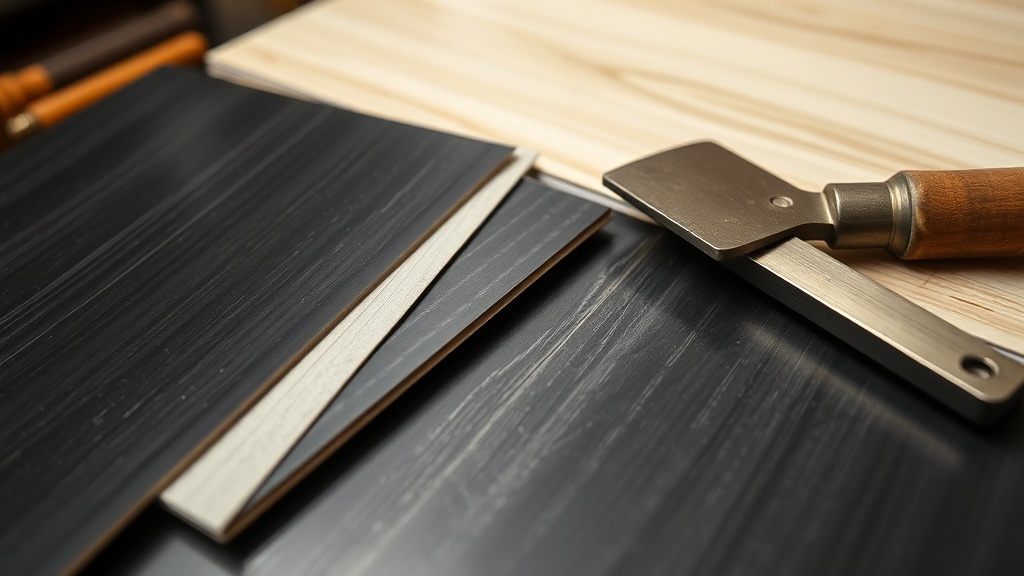
A plain guide to vinyl flooring: types, costs, common failures and what to check before you buy or install.
You are probably comparing vinyl flooring Singapore prices and getting numbers that do not line up. One quote looks cheap until levelling, skirting and door trimming appear later. Another looks expensive, but includes the site work that usually causes trouble.
That is the real issue with vinyl. The material is only half the story. The floor below it, the way it is installed, and how the edges are finished decide whether it lasts five years or starts failing much earlier.
What vinyl flooring means now
Homeowners often say "vinyl" as if it is one product. It is not. In residential renovation, vinyl flooring usually means one of four groups:
- Sheet vinyl, supplied in rolls.
- LVT or LVP, luxury vinyl tile or luxury vinyl plank, cut into tile or plank sizes.
- SPC, stone plastic composite, a rigid-core vinyl board.
- WPC, wood plastic composite, another rigid-core vinyl board, usually softer underfoot than SPC.
Each behaves differently. Each has a different tolerance for uneven floors, impact, water and heat. If you only compare colour and price per sq ft, you will miss the parts that matter.
What vinyl flooring Singapore jobs usually cost
For 2026 residential jobs in Singapore, a practical all-in range for most vinyl flooring is about S$3.50 to S$9.50 per sq ft. Some premium jobs go higher, especially with more site work, thicker wear layers, rigid cores, herringbone layouts or designer finishes. At the lower end, sheet vinyl can be cheaper than plank or tile products, and some guides list it around S$10 to S$15 per sq m. The units differ across sources, so check whether the quote is in sq ft or sq m before comparing.
The useful point is not the exact number. It is what moves it. These are the usual cost drivers:
- Type of vinyl: sheet, LVT/LVP, SPC or WPC.
- Wear layer thickness: the top protective layer that takes scratches and abrasion.
- Core construction: flexible or rigid.
- Design finish: embossed grain, registered texture, herringbone pattern.
- Site work: subfloor levelling, skirting, trimming doors, removal and disposal.
A simple pricing view
| Type | Typical installed range | What usually moves the price |
|---|---|---|
| Sheet vinyl | Lower-cost end, often around S$2 to S$5 psf in some guides, or about S$10 to S$15 per sq m in another | Roll size, pattern, substrate condition, edge finishing |
| Entry-level vinyl | About S$3.50 to S$5.50 psf | Thin wear layer, simpler prints, smaller job size |
| Standard LVT or SPC | About S$4 to S$7.50 psf, many guides cluster around S$4.50 to S$7.50 psf | Wear layer, plank size, click system, floor preparation |
| Premium SPC, WPC, herringbone or designer finish | About S$7.50 to S$9.50 psf for many jobs, with some guides going to S$12 psf | Thicker wear layer, more complex laying pattern, premium texture, more trimming and wastage |
Supply-only material can look much cheaper, roughly S$1.50 to S$8 psf depending on type. That does not tell you what the finished floor will cost. Installation quality is not a small line item with vinyl. It is the difference between a good floor and a noisy, hollow, lifting one.
What each vinyl type is good at, and where it usually fails
Sheet vinyl
Sheet vinyl is the budget-first option. It comes in large rolls, so manufacturing and installation can be efficient on open areas. It is common where the main requirement is a low-cost, easy-to-clean floor.
Where it works:
- Utility spaces.
- Bedrooms in tight budgets.
- Rental units where quick replacement matters more than long-term finish quality.
Trade-off: it usually looks less convincing than plank or tile vinyl, and it shows subfloor problems more easily. If the floor below has undulation, patch marks or ridges, sheet goods can telegraph that through the surface.
What fails first: edge lifting, bubbling from poor adhesive work, visible substrate imperfections, and tears at heavy point loads.
LVT or LVP
LVT means luxury vinyl tile. LVP means luxury vinyl plank. In a home, people mostly choose plank format because it imitates timber better than roll vinyl. This category gives more design choice than sheet vinyl and can look good without moving into premium pricing.
Where it works:
- Bedrooms and living rooms.
- Homes where appearance matters more than maximum dent resistance.
- Projects that want timber look without timber maintenance.
Trade-off: flexible products are more dependent on a flat substrate. If the base is poor, every hump and dip becomes your problem. A cheaper plank with a thin wear layer can also mark faster under chairs, pet claws or dragged furniture.
What fails first: scratches, worn traffic paths, edge curl on badly prepared floors, visible gapping if installation or acclimatisation was poor.
SPC
SPC has a rigid stone-PVC core. It is now one of the most common residential choices because it sits in the middle of the market. It offers a firmer board, click-lock installation in many systems, and a price band that still works for ordinary flats.
Where it works:
- Most HDB and condo living areas.
- Families who want something more robust than soft flexible vinyl.
- Overlay jobs on existing tiles, where the tile joints are minor and floor height still works.
Trade-off: SPC is rigid, not magical. It can bridge small imperfections better than softer vinyl, but if the substrate is badly uneven, the board can rock, click, or break at joints. It also feels harder underfoot than WPC.
What fails first: joint movement over hollow spots, clicking sounds from uneven substrate, chipped locking edges during bad installation, and localised lifting near doors where clearance was misjudged.
WPC
WPC usually sits above standard SPC in price. It is often sold as a more comfortable, quieter rigid-core option. Underfoot, it can feel a bit less hard than SPC.
Where it works:
- Bedrooms where comfort matters.
- Homeowners who are willing to pay more for feel, not just appearance.
- Projects where the flooring budget is less tight.
Trade-off: it is usually more expensive, and not every home needs it. If your use case is normal daily wear in a standard flat, a decent SPC or LVT may already do the job.
What fails first: the same installation issues as other click systems if the base is poor, plus dents if the product chosen prioritises comfort over hardness.
The wear layer matters more than most people realise
The wear layer is the transparent protective layer above the printed design. This is what takes abrasion from foot traffic, chair legs, dirt and cleaning. It is one of the main reasons two vinyl products that look similar can be priced very differently.
Higher-tier residential vinyl products are commonly described with wear layers of 0.5 mm or more. That does not mean every home needs the thickest option available. It means you should know what you are paying for.
A simple way to think about it:
- Light use, bedrooms, low traffic: you may not need to pay for the heaviest wear layer.
- Normal family use, living area, frequent cleaning, chairs moving in and out: mid-range usually makes sense.
- Higher abuse, pets, children, wheeled chairs, frequent furniture movement: a better wear layer is often cheaper than early replacement.
This is where people waste money in both directions. Some buy the cheapest board and replace it early when it dents or wears. Others buy a premium specification intended for much harsher use than they actually have. The correct choice is not the highest specification. It is the right specification for your traffic and habits.
What actually makes vinyl fail first
Most vinyl flooring does not fail because vinyl is a bad material. It fails because one of the basic conditions was ignored. These are the usual causes, in order of how often they matter on site.
1. The subfloor was not flat enough
This is the biggest one. Vinyl wants a sound, clean and reasonably flat base. Subfloor levelling means patching or smoothing low and high spots so the finished material sits properly. If the floor is not flat:
- Flexible vinyl shows waves and ridges.
- Rigid boards rock and click.
- Joints take more stress and can open or fail.
- The floor sounds hollow in local areas.
Levelling can add roughly S$2 to S$5 psf on some Singapore guides. That is exactly why cheap quotes often do not mention it until later.
2. The quote covered flooring, but not the edges
Many problems appear at the perimeter. Skirting is the trim where the floor meets the wall. If skirting is not planned properly, the edge finish looks rough, gaps become obvious, and future movement has nowhere to go cleanly. Some guides itemise skirting at about S$3 to S$6 per linear foot.
Door areas also matter. If a new floor build-up raises the finished height, the bottom of the door may need trimming. Some guides show S$20 to S$50 per door. If no one checks this early, the floor may scrape the door, or worse, someone shaves the material locally just to get clearance.
3. People compared by area only, not scope
One quote says S$4.80 psf. Another says S$6.20 psf. The first sounds cheaper, but what is included?
- Removal of old flooring?
- Disposal?
- Furniture moving?
- Levelling?
- Skirting?
- Door trimming?
- Threshold treatment at toilets or kitchen?
Disposal alone is sometimes shown at about S$0.50 to S$1.50 psf. If you compare by headline rate only, you are not comparing the same job.
4. The pattern chosen created more wastage and labour
Straight-laid planks are the usual baseline. Herringbone and other pattern layouts take more cutting, more planning and more wastage. You are not only paying for material. You are paying for more labour and more offcuts. Sometimes the visual effect is worth it. Sometimes it is a lot of cost for a room that will be half hidden by furniture.
5. The wrong product was chosen for the use
A softer, cheaper product in a hard-use area is a false economy. A premium WPC in a spare room that sees little traffic may be overspending. The use case should decide the floor, not the other way round.
Overlay or hack and replace: which is better?
This is one of the first decisions that changes cost and risk.
Overlay on existing tiles
Overlay means installing the new vinyl over your current tiled floor, instead of hacking out the old finish. This can save time, reduce dust and avoid the cost of demolition. It is common in occupied flats where homeowners want less disruption.
Good when:
- Existing tiles are well bonded.
- The floor is fairly level.
- Final floor height will still work with doors and thresholds.
Trade-off: you keep any substrate problem that was already there. If tiles are loose, uneven, or patched badly, overlay is only hiding a problem until it shows again.
In HDB flats, floor build-up matters. HDB controls approved floor-finishing materials and installation requirements, and overlay jobs need attention to final height, thresholds and affected doors. This is one reason why door trimming and levelling often appear as separate costs.
Hack and replace
Hacking means removing the existing floor finish so the new system starts from the base below. This gives more control over the substrate and can be the better route where the old floor is unsound.
Good when:
- Existing tiles are loose or badly uneven.
- You already need wider renovation works.
- You want to reset floor heights properly between spaces.
Trade-off: more noise, more dust, more disposal, more time and usually more cost. If the old floor is sound and the height works, overlay can still be the sensible choice.
How to choose the right vinyl for each room
Living and dining
This is usually the highest traffic zone in the home. Standard SPC or a decent LVT/LVP is often enough. Pay more attention to wear layer and floor flatness than to exotic surface treatments. If dining chairs are moved often, avoid going too cheap.
Bedrooms
You can often save money here. If traffic is light, you may not need the same specification as the living area. Some homeowners still keep the same flooring throughout for visual consistency. That is fine. Just know that the bedroom does not usually need to carry the whole budget.
Study or home office
If there is a wheeled chair, treat this as a higher-wear zone. Chair movement is hard on flooring. A stronger wear layer matters more than a premium print.
Kitchen approach areas
Vinyl can be used near kitchens, but details matter around edges, cabinet bases and transitions. Water resistance is not the same as saying every joint and every edge is foolproof. The workmanship around the perimeter is what decides whether maintenance stays easy.
Children's rooms
Think about impact and scratches, not just colour. Toys, dragged stools and rough play will test the surface. A mid-range product is often more economical than replacing an entry-level one early.
What to ask for in a quote
If you want a useful vinyl flooring quote, ask for the scope in writing. Not just the rate. At minimum, the quote should make these points clear:
- Brand or product line, or at least product type: sheet, LVT/LVP, SPC or WPC.
- Wear layer thickness.
- Total thickness and core construction.
- Installation method: glue-down or click-lock where relevant.
- Whether the price includes floor preparation.
- Whether levelling is included, excluded, or subject to site condition.
- Whether skirting is included.
- Whether door trimming is included.
- Whether removal and disposal of old flooring is included.
- Whether furniture moving is included.
- What area is measured, and in what unit: sq ft or sq m.
If a quote is silent on these, assume you do not yet know the real price.
A practical way to compare vinyl flooring Singapore quotations
- Put every quote into the same unit, preferably per sq ft if that is how most local renovation quotes are shown.
- Separate material from site work.
- List exclusions clearly: levelling, skirting, disposal, trimming, furniture moving.
- Check the product build: wear layer, total thickness, core type.
- Ask how the installer deals with uneven existing tiles.
- Ask what happens at bedrooms, store, kitchen entrance and main door threshold.
After that, the cheapest quote is sometimes still the best one. But at least you will know why it is cheaper.
Rules and compliance points in Singapore
For homeowners, the practical rules are fairly simple.
- HDB: vinyl used in HDB flats must align with HDB's current approved floor-finishing and installation requirements. If you are overlaying over existing tiles, the final height and affected doors or thresholds need checking.
- Fire performance: products used in buildings need to satisfy the applicable fire-performance requirements for internal finishes under Singapore's building regulations framework. In practice, contractors usually select products with the relevant compliance documentation for residential use.
- Site safety: MOM concerns are about worksite safety and worker conditions during renovation, not the vinyl product itself.
I could not verify a specific 2026 statutory change to HDB, BCA or MOM rules that is unique to vinyl flooring from the available material. So the safe position is to check the current requirement at the time of work, especially for HDB jobs.
When paying more makes sense, and when it does not
Pay more when:
- The living area sees heavy daily use.
- Your existing floor needs proper preparation.
- You need better resistance to scratching or denting.
- You want a more stable rigid-core product.
- The quote includes difficult edge conditions and trimming work that others left out.
Do not pay more just because:
- The sample board looks thicker, but the wear layer is not better.
- The print is premium, but the room use is light.
- You like herringbone in principle, but most of the floor will be covered by furniture.
- A premium category is being sold to solve a substrate problem that should be fixed at the base.
Three sensible vinyl specifications for ordinary homes
These are not hard rules. They are just practical ways to think.
Budget-first replacement
Use when the main goal is cost control. Bedrooms or rental units are the usual fit. Sheet vinyl or entry-level plank products can work, but only if the base is decent and expectations are realistic.
Balanced family choice
This is the common answer for many flats. Standard SPC or mid-range LVT/LVP with a sensible wear layer. Not the cheapest. Not the fanciest. Usually the best value when the home is owner-occupied.
Comfort or design-led upgrade
Use when underfoot feel, richer texture or special layout matters to you. WPC, premium SPC, herringbone and enhanced surface finishes fit here. Good choice when you know why you want it. Wasteful if chosen just because it sounds more premium.
FAQ
Is vinyl flooring good for HDB flats?
It can be, provided the product and installation meet HDB's current floor-finishing requirements. The main practical issues are floor height, overlay condition, door clearance and proper edge finishing.
Why do vinyl flooring quotes vary so much in Singapore?
Because the headline rate often hides different scopes. One quote may include only the vinyl. Another may include levelling, skirting, disposal and door trimming. Product type, wear layer, core construction and laying pattern also move the price.
What usually fails first with vinyl flooring?
Most early problems come from poor subfloor preparation, not from the printed surface. Common issues are clicking boards, lifted edges, visible unevenness, worn traffic paths on thin wear layers, and poor finishing at doors and walls.
If you want, ask YC about your own flat.
Read next
- Parquet flooring: what to choose, what it costs, and what fails firstA plain guide to parquet flooring: wood types, finishes, common failures, and what affects cost in Singapore homes.Trades and Materials
- Laminate flooring: what to choose, what it costs, and what fails firstA practical guide to laminate flooring: types, costs, weak points, and what usually fails first in Singapore homes.Trades and Materials
- False ceiling: what to choose, what it costs, and what fails firstA plain guide to false ceilings in Singapore: types, likely costs, common failures, and what to check before you commit.Trades and Materials
Tell us what you are working with.
Send us the unit type and a rough idea of what you want done. We will come back with what it takes.