
Parquet flooring: what to choose, what it costs, and what fails first
25 Sep 2026 · YC Design and Build
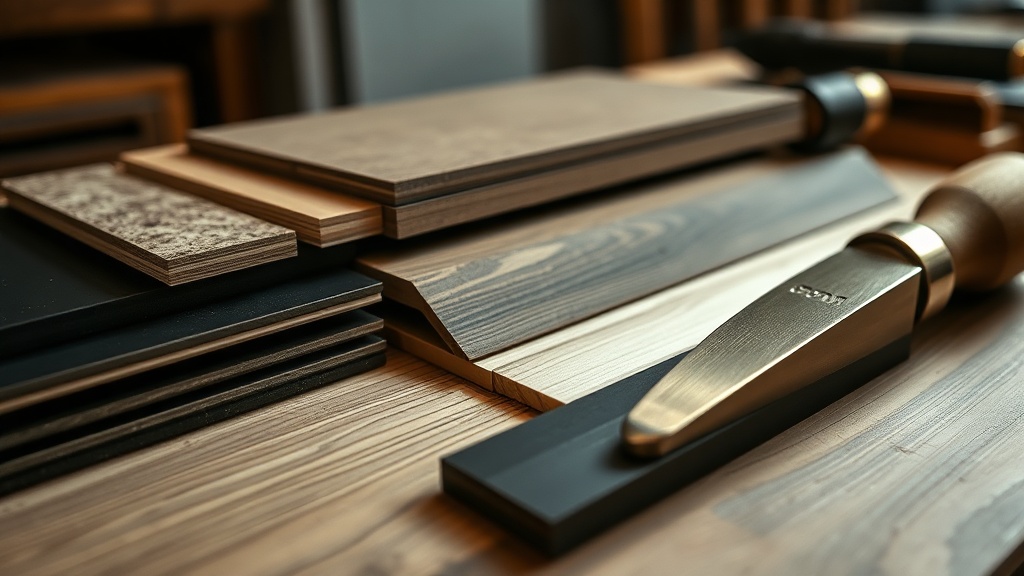
A plain guide to parquet flooring: wood types, finishes, common failures, and what affects cost in Singapore homes.
You want wood underfoot, but the quotes do not line up. One shop says parquet flooring singapore starts cheap, another number is double, and nobody explains what is included. The part that usually catches homeowners is not the plank itself. It is hacking, floor levelling, pattern labour, and the fact that wood fails differently from tile or vinyl.
Parquet can still be a good choice in Singapore. It feels warmer, looks more natural, and can often be restored instead of replaced. But it is not a forgiving material. If the base is uneven, if water gets in, or if the wrong timber goes into the wrong room, the problem shows up fast.
What people mean by parquet flooring in Singapore
Homeowners use "parquet" to mean a few different things. That is where confusion starts.
- Solid wood parquet: full timber pieces, usually tongued and grooved, fixed to the floor and finished. Tongue and groove means each piece has a shaped edge that locks into the next piece.
- Engineered wood parquet: a real wood top layer over a stable core. It is still wood on the surface, not a printed wood look.
- Parquet pattern flooring: herringbone, chevron, basket weave, and similar layouts. The pattern may be done in solid wood or engineered wood.
- General wood flooring: sometimes shops label strip flooring as parquet even when it is simply straight-laid planks.
If you are comparing quotes, ask three simple questions:
- Is it solid or engineered?
- Is the price supply only, or supplied and laid?
- Is the layout straight, herringbone, or chevron?
Without those three answers, the numbers are not comparable.
What parquet flooring singapore usually costs in 2026
For 2026, the market ranges most often seen are these:
| Type | Typical range | What usually moves the price |
|---|---|---|
| Engineered wood parquet, supplied and laid | S$9 to S$18 psf | Top layer thickness, wood species, brand grade, board size, site prep |
| Engineered wood parquet, broader market range | S$7 to S$15 psf, up to about S$12 to S$40 psf in higher grades or different quote formats | Whether installation is included, pattern, finish, product grade |
| Solid wood parquet | S$10 to S$18 psf, often S$12 to S$25 psf | Timber species, thickness, fixing method, site conditions |
| Premium wood parquet | S$18 to S$30+ psf | Imported species, larger format, premium finishing, complex pattern |
| Sanding, polishing, re-varnishing | About S$1.40 to S$3.00 psf, or about S$3.50 to S$6 psf depending on scope | Condition, stain removal, number of coats, furniture moving, repair work |
| Whole-flat restoration, common HDB guide range | About S$1,500 to S$3,500 | Flat size, damaged areas, repairs before sanding |
These are useful ranges, not a fixed tariff. The same "wood floor" can vary a lot once the quote includes skirting, removal of old finishes, threshold pieces, levelling compound, extra cutting at built-ins, and pattern waste.
The biggest mistake is reading a low psf number as the final cost. Often it is supply only, or it assumes a clean, level floor with a straight lay and no removal work.
Why the same room gets very different parquet quotes
- Installed cost versus material cost: some sellers quote only the boards. Some include adhesive, underlay if used, labour, skirting and trims.
- Overlay versus hack and replace: laying over an existing finish can cost far less upfront than tearing it out. But overlay raises floor level and can affect doors, gates, and transitions.
- Floor preparation: hacking and screeding can add about S$4 to S$11 psf. Screeding means making the substrate flat and level before the finish goes on.
- Pattern labour: straight lay is the most economical. Herringbone and chevron cost more because every piece needs more setting out and cutting.
- Board specification: wood species, plank width, thickness and finish all matter.
- Room shape: bay windows, odd corners, wardrobe legs and island carpentry all increase cutting and wastage.
Solid wood or engineered wood, what should you actually choose
For most flats in Singapore, engineered wood is the safer default. That is not because it is "better" in every way. It is because our humidity punishes movement in timber.
Wood expands and contracts as moisture changes. Solid timber moves more. Engineered boards are built to be more dimensionally stable, which means less prone to obvious movement from humidity swings. That does not make engineered wood waterproof. It is not. It just means it usually copes better with the climate indoors.
| Question | Engineered wood | Solid wood |
|---|---|---|
| More stable in humidity | Usually yes | Usually less stable |
| Can be sanded and refinished | Sometimes, depends on top layer thickness | Yes, generally more times |
| Upfront cost | Often lower to mid range | Often mid to higher range |
| Best for wet areas | No | No |
| Good choice for most bedrooms and living areas | Yes | Yes, if detailed and maintained properly |
Choose engineered wood if
- You want real wood but lower movement risk.
- You are renovating an HDB or condo and want a more predictable result.
- You want to control budget without dropping to a printed wood-look product.
- You are not planning to sand the floor many times over decades.
Choose solid wood if
- You specifically want full timber underfoot.
- You accept more care and more sensitivity to moisture.
- You value the option of repeated restoration over a longer life cycle.
- The site conditions are suitable and the installer knows timber movement well.
The trade-off is simple. Engineered wood is usually more forgiving. Solid wood usually offers more depth for future sanding and a more traditional timber build-up. In Singapore homes, the first issue is usually stability, not theoretical lifespan.
Where parquet works well, and where it does not
Parquet is best treated as a dry-area finish.
Good locations
- Bedrooms
- Living rooms
- Study rooms
- Dry walk-in wardrobes
Bad locations
- Bathrooms
- Shower areas
- Service yards exposed to rain
- Unsheltered balconies
- Any area with regular mopping water sitting on the floor
Neither solid wood nor engineered wood is waterproof. If water gets through joints or sits at the perimeter, swelling, cupping, staining, adhesive failure or mould can follow. In many homes, the first failure happens at a doorway near a bathroom, or beside full-height windows where rainwater has entered.
Kitchen, yes or no
Usually we would be cautious. A dry, carefully used open kitchen is one thing. A heavy-use kitchen with regular spills, wet mops and appliance leaks is another. If you insist on wood near the kitchen, detail the thresholds properly and accept higher maintenance. Most homeowners are better off keeping wood out of the main wet-work zone.
What fails first in parquet floors
Most parquet floors do not fail because the timber was bad. They fail because the conditions were wrong, or the prep was skipped.
1. Moisture damage
This is the main one. Water from mopping, planter leaks, air-con drainage issues, open windows, or bathroom oversplash gets into the boards. Early signs are dark edges, swelling, and slight lifting. Later you see cupping. Cupping means the edges rise higher than the centre of the board.
2. Substrate problems
If the floor below is not level, the wood may sound hollow, feel springy, or open at joints. If the substrate still holds moisture, adhesive bond can fail. If old tiles are overlaid without checking flatness, the final floor often tells on the shortcuts.
3. Gaps and movement
Some movement is normal for wood. Large seasonal gaps, edge peaking, or pieces shifting are not. Edge peaking means one board edge sits higher than the next. It often points to moisture imbalance or installation issues.
4. Finish wear
The varnish or protective top coat usually shows wear before the timber itself is damaged. This is good news, because finish can often be restored. The first places to dull out are the walkway, bedside path, dining chair area, and main entrance to the room.
5. Pattern alignment issues
This shows up mostly in herringbone or chevron done badly. Lines drift. Mitres do not close properly. Borders taper. You may not notice it in a small sample. You will notice it across a living room.
6. Termite or pest risk
Not every wood floor gets this problem, but timber in the wrong conditions can be vulnerable. This depends on the product, treatment and building condition. If there is any site history, ask about treatment and inspection.
Straight lay, herringbone, or chevron
This is not only a design choice. It is also a labour and wastage choice.
- Straight lay: boards run parallel. Lowest labour cost. Least waste. Easiest to replace sections later.
- Herringbone: boards are laid in a broken zigzag pattern at right angles. More cutting, more setting out, more labour.
- Chevron: boards meet point to point in a continuous V shape. Looks sharp, but needs precise board cutting and alignment. Usually costs more than straight lay, and often more than simple herringbone.
If your room is small or heavily covered by loose furniture, paying extra for a complex pattern may not buy you much. If the room is open and visible, the pattern matters more. The trade-off is straightforward: more visual interest, higher labour, more waste, and more places for bad workmanship to show.
Overlay or hack and replace
This decision can change your budget more than the wood choice itself.
Overlay
Overlay means installing the new finish over the existing floor, if the condition and height allow.
Pros:
- Less mess
- Faster
- Usually cheaper upfront
Cons:
- Raises floor level
- May affect door swing, gates, built-ins, and thresholds
- Depends heavily on the existing floor being sound and sufficiently level
Hack and replace
Hack and replace means removing the old finish, then preparing the base for the new floor.
Pros:
- Better control of final levels
- Lets you inspect the substrate properly
- Usually the safer route if the old floor is loose, damaged, or uneven
Cons:
- More noise and dust
- Higher cost
- Longer programme
Guides commonly place hacking and screeding in the range of about S$4 to S$11 psf. The spread is wide because scope varies. A clean removal from a simple room is not the same as hacking thick bonded finishes around cabinetry and then levelling a poor slab.
How to read a parquet quote properly
A proper quotation should tell you enough to compare one proposal with another. If it does not, the cheap number is often not cheap.
Items to check line by line
- Wood type, solid or engineered
- Species or finish name, if stated
- Board thickness and top layer thickness for engineered wood
- Pattern, straight lay or decorative pattern
- Supply only or supply and install
- Adhesive and accessories included or not
- Skirting included or not
- Threshold strips and trims included or not
- Removal of old flooring included or not
- Screeding or levelling included or provisional
- Area measured in square foot or square metre
- Number of coats or finish scope for restoration work
The square foot versus square metre point matters more than people think. Some guides quote S$30 to S$50 per m², which is not the same as S$30 to S$50 per ft². A unit mistake can make a quote look far cheaper or far pricier than it really is.
Questions worth asking before you sign
- What is the actual installed price per square foot for my measured area?
- What assumptions are you making about the existing floor?
- If levelling is needed after hacking, how is that charged?
- How is the perimeter detailed at windows, wardrobes and toilet entrances?
- What happens if some areas need patch repair later?
Restoring old parquet, when it is worth it
If you already have parquet, replacement is not always the right answer. Older timber floors can often be revived if the boards are still sound.
Common market guides put sanding, polishing and re-varnishing around S$1.40 to S$3.00 psf for lighter scope, and around S$3.50 to S$6 psf for broader or more intensive service scope. Whole-flat HDB restoration commonly lands around S$1,500 to S$3,500 depending on size and condition.
Restoration is usually worth considering when
- The boards are still firmly fixed
- The damage is mainly scratches, dullness, light staining or minor gaps
- You like the existing floor and want to avoid full hacking
Replacement is more likely when
- Many pieces are loose or swollen
- There has been repeated water damage
- Termite or rot issues are present
- Large sections are beyond patching
One practical limit with engineered wood is the top veneer thickness. If the wear layer is thin, sanding options are more limited than with solid wood. This is why the product specification matters even if two samples look similar.
Maintenance, what parquet needs from you
Parquet is not difficult, but it is less tolerant than tile. If you want a floor you can flood with mop water and forget, choose something else.
- Use a well-wrung mop, not a wet mop.
- Wipe spills quickly.
- Use felt pads under furniture legs.
- Keep grit off the floor, because sand scratches finish fast.
- Watch plant pots, air-con drainage and window corners.
- Do not let water sit at skirting lines or toilet thresholds.
The finish is the sacrificial layer. If you keep that intact, the timber below lasts longer. If you wear through the finish in busy paths, the wood starts taking the punishment directly.
Rules and approvals to know before doing flooring work
For HDB flats, renovation controls apply to flooring works. The exact approval need depends on the type of work, such as simple overlay, hacking of existing finishes, or replacement that affects the floor build-up. Regulated renovation works in HDB flats require the use of HDB-licensed renovation contractors. If the job affects structure or involves more than a straightforward surface finish change, approval requirements become more important.
BCA considerations come in where flooring work affects structure, loading, or waterproofing, especially near wet areas. Flooring is not always just cosmetic once levels, slabs or waterproofing are involved.
MOM rules apply to the workforce on site, especially if foreign workers are used. That covers work permit compliance and workplace safety obligations during hacking, sanding, polishing and installation.
The practical point for a homeowner is simple: ask early whether your intended method is overlay or hacking, and whether any approval is needed for your flat and scope. It is easier to sort this before the schedule is fixed.
What we would choose in three common situations
1. New owner of a resale flat with tired old parquet
First check whether the parquet is structurally worth saving. If the boards are mostly sound, restoration can be the better value. If many areas are swollen or loose, replacement is usually cleaner than trying to chase repairs room by room.
2. Family home, wants wood look with lower risk
Engineered wood in bedrooms and living area. Keep wet zones in tile or other water-tolerant finishes. Straight lay unless the room really benefits from a feature pattern. Spend money on substrate prep before spending it on a fancier species.
3. Owner wants statement flooring in a dry living room
Herringbone or chevron can work well if the room is open enough to read the pattern. Budget for the extra labour. Also ask who is setting out the pattern, because this is where workmanship shows first.
Parquet flooring singapore, the short version
If you want the safest answer for most homes, it is this: use engineered wood in dry areas, compare installed prices not material prices, and do not cut corners on floor prep. Expect typical supplied-and-laid engineered wood around S$9 to S$18 psf, solid wood around S$12 to S$25 psf in many current guides, and remember hacking plus screeding can add about S$4 to S$11 psf.
If you already have parquet, do not assume it must be replaced. Restoration often makes sense, with common guide ranges from about S$1.40 to S$6 psf depending on scope, or around S$1,500 to S$3,500 for a whole HDB flat.
The first thing to fail is usually not style. It is moisture control, substrate quality, or a quote that hid the real scope.
Is parquet flooring suitable for HDB flats in Singapore?
Yes, in dry areas such as bedrooms and living rooms, but HDB renovation controls still apply. The approval and contractor requirements depend on whether you are doing simple overlay, hacking existing finishes, or more involved replacement works.
Which is better in Singapore, engineered wood or solid wood parquet?
For most homes, engineered wood is the safer choice because it is generally more stable in humidity. Solid wood can be a good option too, but it is usually less forgiving of moisture and movement. Neither belongs in bathrooms or other wet-prone areas.
How much does it cost to restore old parquet flooring?
Common guide ranges are about S$1.40 to S$3.00 psf for lighter polishing or re-varnishing scope, and around S$3.50 to S$6 psf for broader restoration scope. For a whole HDB flat, many market guides place restoration around S$1,500 to S$3,500, depending on size and condition.
If you want, ask YC about your own flat.
Read next
- Laminate flooring: what to choose, what it costs, and what fails firstA practical guide to laminate flooring: types, costs, weak points, and what usually fails first in Singapore homes.Trades and Materials
- False ceiling: what to choose, what it costs, and what fails firstA plain guide to false ceilings in Singapore: types, likely costs, common failures, and what to check before you commit.Trades and Materials
- Direct carpentry: what to choose, what it costs, and what fails firstWhat direct carpentry means in practice, how to compare quotes, what affects cost, and the common failure points to check before you commit.Trades and Materials
Tell us what you are working with.
Send us the unit type and a rough idea of what you want done. We will come back with what it takes.