
Tile flooring: what to choose, what it costs, and what fails first
20 Aug 2026 · YC Design and Build
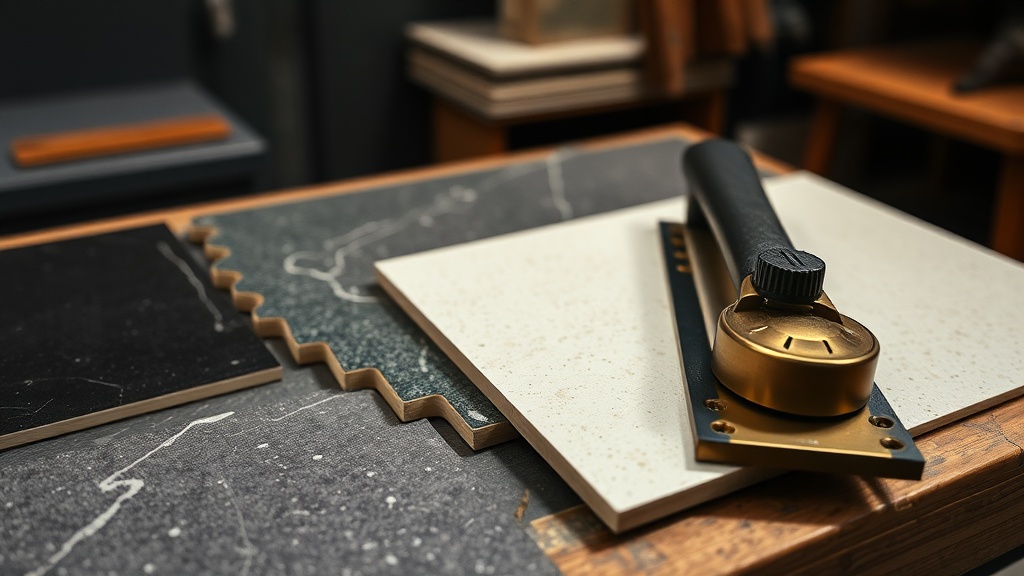
A plain guide to tile types, costs, and common failures, for homeowners planning tile flooring in Singapore.
You are probably looking at a few tile samples that all seem fine, then getting quotations that do not look comparable. That is normal. For tile flooring Singapore projects, the expensive mistakes usually come from what sits under the tile, how the tile is laid, and what is left out of the quote, not from the tile colour.
If you are renovating for the first time, start with three questions. Where is the tile going. Do you want to hack the old floor or overlay on top. How much movement, water, and abuse will that floor see for the next ten years. Once those are clear, the choices get narrower and the pricing gets more honest.
What most homeowners are actually choosing between
In plain terms, most homes in Singapore end up comparing four routes:
- Standard ceramic or homogeneous floor tiles: usually the lower-cost practical choice for many dry areas.
- Porcelain tiles: denser, widely used, more options in finish and size, usually costs more.
- Large-format or imported premium tiles: fewer grout lines, more visual impact, higher supply and labour cost.
- Overlay tiles: new tiles laid over the existing floor if the condition and height allow it, usually cheaper because hacking is avoided.
There is no universal best tile. The right choice depends on the room, the existing floor, and your tolerance for visible grout lines, maintenance, and cost. A bathroom floor has different priorities from a living room. A kitchen that gets oily has different priorities from a bedroom. A resale flat with old uneven screed has different constraints from a new unit.
Screed means the cement layer used to level the floor before tiling. If the screed is uneven, cracked, hollow, or too weak, the tile above will only look good for a while.
Tile flooring Singapore price ranges, installed
For 2026 budgeting in Singapore, typical installed ranges are roughly as follows:
| Tile type / scope | Typical installed range | What usually moves the price |
|---|---|---|
| Standard ceramic or homogeneous floor tiles | S$5 to S$12 psf | Tile grade, size, room type, prep work, access |
| Porcelain tiles | S$8 to S$18 psf | Brand, finish, size, cutting, substrate condition |
| Large-format or imported premium tiles | S$14 to S$27+ psf | Tile size, breakage risk, handling, layout complexity |
| Overlay tiling, when no hacking is needed | S$3.50 to S$9 psf | Existing floor condition, height transitions, bonding prep |
These are broad market ranges, not a promise that any specific floor will fit neatly inside them. Bathrooms and kitchens tend to cost more than dry areas because wet areas often need more prep, more cutting, more detailed finishing, and sometimes waterproofing-related work. Large tiles usually cost more to install than standard sizes. Patterned layouts also push labour up.
If you remember one thing, remember this: do not compare tile-only prices against supply-and-lay prices. The tile itself is only part of the bill. Labour, adhesives, grout, levelling, edge trims, skirting, hacking, disposal, and substrate repair can change the final figure by a lot.
Why one floor can be S$6 psf and another can be S$18 psf
Homeowners often think the difference is mainly the tile brand. It usually is not. The main drivers are below.
1. Material and grade
Standard ceramic and homogeneous options are usually the cheaper starting point. Porcelain generally costs more. Imported premium tiles and natural stone sit higher again. The trade-off is simple: more design choice, denser body, larger sizes, and more specialised finishes usually mean more money.
Do not assume a harder or denser tile is always better for every room. In some spaces, the finish matters more than the body. A very smooth polished tile in a wet kitchen may be a poor practical choice even if it looks expensive.
2. Tile size
Tile size changes both supply cost and labour cost. Standard sizes are easier to handle and cut. Larger formats need flatter floors, more careful setting out, more manpower to handle safely, and better alignment. A 1200 x 1200 mm tile is less forgiving than a 600 x 600 mm tile.
One Singapore price list for 2026 shows a clear step-up by size, with standard 600 x 600 mm work lower than 800 x 800 mm or 900 x 900 mm, and 1200 x 1200 mm higher again. That matches what happens on site. Larger tile, stricter prep.
3. Layout complexity
Straight lay is usually the simplest. Diagonal layouts, herringbone, brick patterns, mosaics, feature borders, and mixed sizes all require more marking, more cutting, and more checking. More joints also mean more grouting work. If two quotes differ a lot, check whether both are pricing the same pattern.
4. Hacking, overlay, and floor condition
Overlay is cheaper because there is no hacking and less debris. But it only works when the existing floor is sound enough, the finished height still works with doors and thresholds, and the old surface can take the new bond properly.
Hacking means removing the existing tiles and base. It costs more because it is noisy, messy, labour-heavy, and creates disposal charges. But sometimes hacking is the correct route. If the old floor is hollow, uneven, badly cracked, or already too high, overlay can save money now and cost more later.
5. Room type and wet-area prep
Bathrooms and kitchens are not just small tiled rooms. They are detailed rooms. Falls to floor trap matter. Door thresholds matter. Pipe penetrations matter. Wet-area prep matters. If your bathroom floor looks cheap on paper, check what has been excluded.
6. Unit type and access
Some Singapore price lists show slight differences between HDB, condo, and landed rates. Part of that is access, loading, disposal, protection requirements, and working conditions. It is not always dramatic, but it can affect the number.
Overlay or hack and replace, which is the right route
This is one of the first decisions because it changes budget, duration, and risk.
When overlay makes sense
- The existing floor is well bonded, not hollow, and generally level.
- You need to keep cost lower.
- You want less noise and less debris.
- Finished floor height will not create a problem at doors, gates, bathrooms, balconies, or built-ins.
Overlay can be good value. If no hacking is needed, market ranges around S$3.50 to S$9 psf are possible for overlay work, depending on tile choice and prep. The trade-off is that overlay is more dependent on the old floor being sound. If the base is bad, the new finish will inherit the problem.
When hacking is the safer route
- The existing tiles are popping, hollow, loose, or cracked across many areas.
- The floor level is already awkward.
- You need to correct falls in wet areas.
- You want to replace old waterproofing-related layers in a bathroom renovation.
- You are changing room transitions and thresholds anyway.
Hacking costs more up front, but it gives better control over the substrate. Substrate means the surface below the tile, usually screed or concrete. A good tile job depends on that layer being sound, level where needed, and properly prepared.
We would rather name the trade-off directly. Overlay is cheaper and faster when conditions are right. Hacking is more disruptive and more expensive, but often the more reliable long-term route when the old floor is poor.
What tends to fail first, and why
Most tile failures are not dramatic. They start small. A hollow sound. Hairline grout cracks. A chipped corner near the kitchen entrance. Water sitting where it should run off. These are the common first failures.
1. Hollow tiles
This is one of the most common complaints. You tap the tile and hear a drummy sound. One or two isolated hollow spots may not mean the whole floor is failing, but widespread hollow patches are a warning sign.
Typical causes:
- Poor bonding between tile and adhesive or bedding
- Dusty or weak substrate
- Uneven bedding support
- Movement in the base
- Overlay done over a weak existing floor
Left alone, hollow tiles can crack or debond later, especially in high-traffic areas.
2. Grout cracking and staining
Grout is the filler between tiles. It is not structural. It will usually show distress earlier than the tile itself. Fine cracks may point to movement, shrinkage, or poor joint filling. Dark staining in wet areas often points more to maintenance and moisture retention than to tile failure, but sometimes it also signals poor detailing.
Very narrow joints may look cleaner in a sample board, but they reduce tolerance on site. Tile dimensions vary slightly, walls are not perfectly square, and floors move a little over time.
3. Lippage on large tiles
Lippage means one tile edge sits higher than the neighbouring tile edge. You feel it with your shoe or see it in side light. Large-format tiles are more prone to this if the substrate is not flat enough or the installer is rushing.
This is one reason large tiles cost more to install properly. The floor below has to be flatter. Setting out has to be tighter. Adhesive coverage has to be better.
4. Pooled water in bathrooms and service yards
If water does not run to the floor trap, something is wrong with the fall. Fall means the slight slope built into the floor. This is not a tile selection issue alone. It is a setting and screeding issue. A beautiful tile on a bad fall is still a bad bathroom.
5. Chipped edges and broken corners
These often happen at exposed edges, step-down points, or where there is impact from dropped objects. Some tile bodies and some edge details are more forgiving than others. Very sharp rectified edges can look crisp, but they can also show chips more clearly. Rectified means the tile edges are mechanically cut to a very uniform size.
6. Slippery floors
This is a failure of selection, not installation. A polished tile may look clean and bright, but in bathrooms, kitchens, and entrances it can become a daily annoyance or a safety issue. If the room gets wet, choose with grip in mind, not just colour.
How to choose tile by room, not by showroom display
Showroom boards are useful for colour and general finish. They tell you almost nothing about how the tile behaves in your home. Choose by room first.
Living and dining areas
These rooms usually suit standard ceramic, homogeneous, or porcelain tiles. Most owners want easy cleaning, a size that makes the room feel calm, and a finish that does not show every footprint.
Practical points:
- 600 x 600 mm remains a straightforward, workable size in many flats.
- Larger sizes reduce grout lines, but installation cost goes up.
- Highly polished finishes show smears and reflected unevenness more clearly.
Bedrooms
Bedrooms see less water and less kitchen-style abuse. If you want tile in bedrooms, comfort underfoot and maintenance are usually bigger factors than pure durability. A matte or lightly textured finish is often more forgiving than a mirror-like one.
Kitchen
Kitchens need grip, stain resistance, and practical maintenance. Too much texture can trap grease. Too little texture can be slippery when wet. This is where sensible compromise matters.
If you cook often, ask yourself what you would rather deal with: visible grout cleaning, or a floor that feels more slippery than you like. There is no perfect answer, only a better fit for how you use the room.
Bathroom
Bathrooms need proper falls, sensible slip resistance, and detailing around traps and corners. Small tiles or mosaic sheets can help on shower floors because they follow falls more easily, but they create more grout lines. Larger bathroom floor tiles can look cleaner, but they require more careful planning around drainage and slope.
Balcony and service yard
These areas can see sun, rain, detergents, and wet feet. Prioritise slip resistance and practical cleaning. Also check thresholds and water movement, especially if you are overlaying.
Large-format tiles, the look people want and the site conditions they need
Large-format tiles are popular because they reduce grout joints and create a calmer look. The catch is that they are less forgiving. If you choose them, know what changes.
- The floor has to be flatter.
- Handling and breakage risk are higher.
- More careful adhesive application is needed.
- Cuts around corners, pipes, and floor traps become more exacting.
- Lippage control becomes more critical.
That is why 2026 price guides in Singapore place large-format and premium installed tile work above standard ranges, often around S$14 to S$27+ psf depending on material and scope. The tile is only part of that jump. Labour and prep are the bigger reasons.
If your floor base is not flat enough, large-format tiles can make every defect more visible. We would rather tell a client that early than install a fashionable size on a poor base and argue about lippage later.
What a proper tile quote should spell out
If two quotations differ by thousands, the first check is scope. A low number is not always cheap work. Sometimes it is just incomplete wording.
A useful quote should state:
- Tile type and size
- Whether pricing is supply-only, labour-only, or supply-and-lay
- Whether hacking is included
- Whether disposal is included
- Whether screeding or levelling is included
- Whether adhesive and grout are included
- Whether skirting is included
- Whether bathroom or kitchen prep items are included
- Whether protection for existing areas is included
- What is excluded, clearly
For wet areas, ask specifically about falls, trap detailing, and any waterproofing-related prep in the scope. For overlay, ask what condition of existing floor is assumed. For large-format tiles, ask whether the rate assumes extra levelling or only basic laying on an already suitable base.
Common budgeting mistakes with tile flooring Singapore renovations
These are the ones that catch first-time renovators most often.
Comparing tile catalogue prices to installed prices
A tile sample with a square-foot price tells you almost nothing about your final bill. Installation labour can be a major component, especially for difficult formats and layouts. Some 2026 guides put labour alone broadly around S$6 to S$15 psf before tile cost, depending on complexity.
Underbudgeting wet areas
Bathrooms and kitchens are usually not the place to force the budget down. The detailing matters too much. Cheap-looking pricing in a wet area often means missing items, not efficiency.
Choosing a pattern before pricing the labour
Herringbone, brick bond, mosaics, and mixed formats all add work. They can look good. They are not free. Price the pattern before you commit emotionally to the sample board.
Assuming overlay is always better value
Overlay is lower cost only if the old floor is suitable and the new height still works. If doors need trimming, thresholds need rebuilding, and the old floor turns out weak, the savings narrow fast.
Ignoring wastage and cuts
You do not buy only the exact room area. Cuts, breakage, pattern matching, and future spare pieces matter. The wastage allowance depends on tile size and layout complexity.
Not thinking about maintenance
Very light grout, very dark polished tiles, or overly textured surfaces all carry a maintenance trade-off. A floor that photographs well is not always a floor you enjoy cleaning.
How we think about tile work as a contractor-led design and build firm
Design choice and site reality have to match. That sounds obvious, but many flooring problems start when the drawing side and the trade side are too far apart.
Tile work is not just selection. It is also sequence. Hacking affects the electrician's route. Floor height affects carpentry clearances. Bathroom falls affect shower screen setting. Skirting and wall finish affect final tile cuts. If the people planning the design are not close to the people doing the hacking, levelling, and laying, small mismatches appear.
This is also why we prefer direct conversations about trade-offs. If a client wants a large imported tile in a room with poor substrate tolerance and a fixed budget, there are only a few honest options:
- Keep the tile, spend more on prep and labour.
- Change to a more forgiving size.
- Reduce complexity elsewhere.
- Accept that the finish tolerance may not look like the showroom board.
There is no magic version where the hardest tile to install is also the cheapest and fastest.
Simple selection guide if you want a practical answer fast
| If your priority is | Usually look at | Watch out for |
|---|---|---|
| Lowest installed cost in a dry area | Standard ceramic or homogeneous tiles, standard sizes | Do not ignore substrate prep and skirting scope |
| Balanced durability and design choice | Porcelain tiles | Price can climb quickly with larger sizes |
| Minimal grout lines and premium look | Large-format tiles | Higher labour, stricter floor flatness, more breakage risk |
| Save cost by avoiding hacking | Overlay tiling | Only if existing floor and finished height allow it |
| Safer wet-area footing | Matte or slip-conscious finishes, suitable bathroom sizes | Too smooth can be slippery, too rough can be harder to clean |
FAQ
Is porcelain better than ceramic for floor tiles?
Not in every case. Porcelain is often denser and comes in more premium formats, so it is a common choice for floors. It also usually costs more. For many dry areas, standard ceramic or homogeneous tiles can still be perfectly practical. The right answer depends on room use, finish, size, and budget.
Can I overlay new tiles over my existing floor?
Sometimes, yes. Overlay can save money and reduce mess if the existing floor is sound, level enough, and the added height will not cause problems at doors, thresholds, bathrooms, or built-ins. If the old floor is hollow, cracked, or already too high, hacking is usually the safer route.
Why is my tile quote much higher for the bathroom than the living room?
Bathrooms usually need more detailed work. Falls to the floor trap, tighter cutting, more edge finishing, and wet-area preparation all add labour. The area is smaller, but the work is not simpler. That is why bathroom tile rates often sit higher than straightforward dry-area flooring.
If you want, ask YC about your own flat.
Read next
- Parquet flooring: what to choose, what it costs, and what fails firstA plain guide to parquet flooring: wood types, finishes, common failures, and what affects cost in Singapore homes.Trades and Materials
- Laminate flooring: what to choose, what it costs, and what fails firstA practical guide to laminate flooring: types, costs, weak points, and what usually fails first in Singapore homes.Trades and Materials
- False ceiling: what to choose, what it costs, and what fails firstA plain guide to false ceilings in Singapore: types, likely costs, common failures, and what to check before you commit.Trades and Materials
Tell us what you are working with.
Send us the unit type and a rough idea of what you want done. We will come back with what it takes.