
Renovation contractor: how to pick one, and the questions that matter
04 Aug 2026 · YC Design and Build
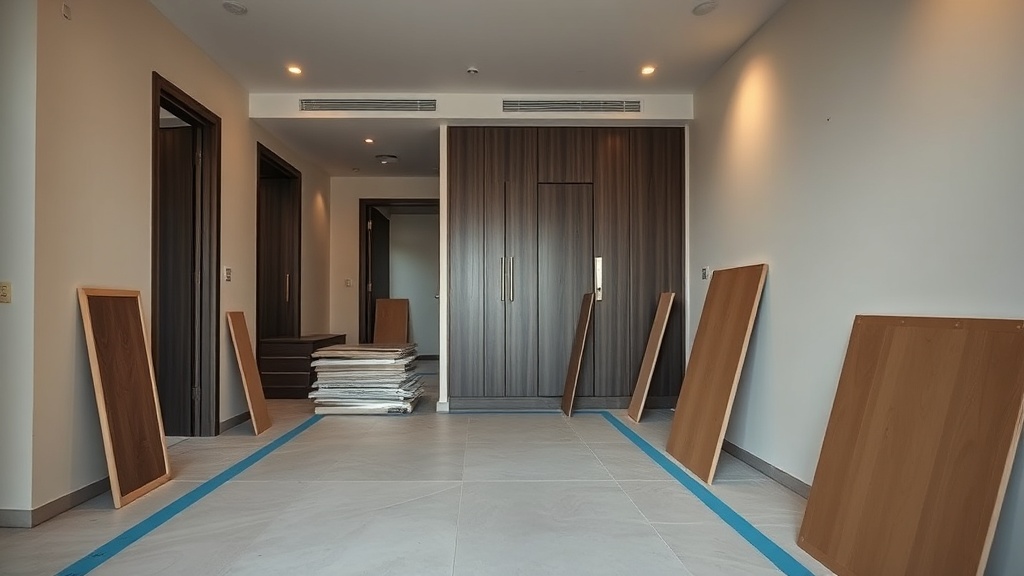
Picking a renovation contractor is mostly about who does the work. Here is what to ask before you sign anything.
You have got the keys, or you are about to, and everyone is telling you something different. One firm quotes S$38,000, another S$62,000 for what looks like the same flat. Half of them call themselves designers, the rest call themselves contractors, and you cannot tell who actually swings the hammer. Picking the right contractor for renovation in Singapore is mostly about understanding who does the physical work, because that is where your money and your headaches come from.
First, understand who is actually building your flat
There are two common setups, and knowing which one you are dealing with changes everything.
An interior design (ID) firm usually draws your home, picks your finishes, and manages the job. But the hacking, tiling, wiring and carpentry are done by subcontractors: separate crews the ID firm hires per trade. The ID firm is a middleman with taste. Nothing wrong with that, but you are paying a margin on top of what each subcontractor charges.
A main contractor is the firm that holds the actual trades. Hacking, electrical, plumbing, tiling, sometimes carpentry, done by workers on their own payroll. A "direct main contractor" means you are dealing with the people who build, not a layer above them.
We come at it from that second direction. The business started as a hacking and electrical contractor with its own crew, and the design studio was added on top later. That is the opposite of most ID firms, which start with design and buy in the building. It matters to you because when the person quoting you also controls the workers on site, fewer things get lost between the drawing and the wall.
Why the direction matters for your budget
When an ID firm subcontracts, every trade gets marked up. The tiler quotes the ID firm, the ID firm quotes you, and the difference is the firm's cut. That is fair, they carry the risk and the coordination. But on a resale flat with heavy hacking and rewiring, those margins stack across five or six trades and the total climbs fast.
A firm that owns the trades in-house does not pay itself a subcontractor markup on those trades. You still pay for labour, materials and management, but the double margin on the bought-in work shrinks. This is not magic and it is not always cheaper, it depends on the job. It just removes one layer.
What a renovation actually costs in 2026
Before you judge any quote, know the rough bands. These are typical whole-home ranges in Singapore dollars for 2026. What moves you up or down within a band is condition, hacking, wet works and finish level.
| Property type | Typical range (S$) | What pushes it to the top |
|---|---|---|
| HDB BTO (2 to 5 room) | 25,000 to 60,000 | Full carpentry, larger flat, premium finishes |
| HDB resale (3 to 5 room) | 40,000 to 100,000 | Heavy hacking, rewiring, replumbing, retiling |
| Condo | 60,000 to 150,000 | MCST protection works, access limits, resale age |
| Landed | 180,000 to 600,000+ | Structural works, additions and alterations, façade |
A light refresh (paint, some flooring, a few built-ins) can sit around S$30,000. A gutted whole-home job runs past S$80,000. Resale units cost more than new ones because you are undoing someone else's home before building yours.
A few line-item rates worth carrying in your head, so you can sanity-check a quote:
- Kitchen cabinets: around S$180 to S$360 per foot run (one foot of cabinet length).
- Wardrobes: around S$200 to S$360 per foot run.
- Laminate flooring: roughly S$4 to S$12 per square foot.
- General tiling: roughly S$6 to S$12 per square foot.
- Bathroom waterproofing and retile: about S$3,100 to S$4,700 per bathroom, including hacking, the waterproof membrane and new tiles.
- Electrical points: around S$45 to S$90 per point (a point is one socket, switch or light connection).
Carpentry is usually the biggest single chunk on an HDB job. Kitchen and wardrobes drive it. If two quotes differ by S$15,000, look at the carpentry foot run and the finish grade before you assume one firm is overcharging.
The rules that govern the work
You do not need to memorise these, but you should know they exist, because a contractor who ignores them creates problems that land on you.
HDB flats. Renovation work that touches structure or common areas must be done by an HDB-registered renovation contractor. Certain works need an HDB permit: hacking walls, hacking bathroom or floor tiles, and replacing flooring or bathroom finishes. Bathrooms and kitchens are treated as wet areas, so waterproofing has to meet HDB's standards. There are also fixed hours for noisy work and rules about informing neighbours. Noisy work outside permitted hours can be stopped, which costs you time.
Condos. On top of any structural rules, the management corporation (MCST) sets its own conditions: protection of common areas, delivery and access times, and often a renovation deposit. These constraints are a real reason condo jobs cost more.
Landed homes. Structural changes, additions and alterations (A&A) and some façade work usually need approvals from the Building and Construction Authority (BCA), submitted through a Qualified Person such as an engineer or architect. This is a formal process with its own timeline.
Workers. The Ministry of Manpower (MOM) governs the employment of foreign workers. A firm using its own registered crew should be able to speak plainly about who is on your site and under what employment. If a firm cannot tell you who will actually be working, that is worth a pause.
The questions that actually matter
Most people ask about price and portfolio. Useful, but they do not tell you how the job will run. These do.
- Who does the hacking, wiring and tiling: your own workers or subcontractors? This one question tells you which of the two setups you are in. Neither answer is wrong. It just tells you where the margins and the coordination risk sit.
- Is the quote itemised by trade and by material? A lump sum of "S$55,000, full renovation" hides everything. You want carpentry by foot run, tiling by area, electrical by point. Itemised quotes let you compare and let you cut scope if the number is too high.
- What is not included? Ask directly about haulage of debris, permit fees, protection works, and appliances. Exclusions are where a low quote quietly becomes an average one.
- What is the payment schedule tied to? Payments should follow completed stages, not just the calendar. Avoid paying most of the money before most of the work is done.
- Who is my single point of contact, and are they on site? On a subcontracted job, coordination between trades is the thing most likely to slip. You want one person accountable for the sequence.
- What happens if something is wrong after handover? Ask about the workmanship warranty and how a callback is handled. Get it in writing.
Reading a quote without getting fooled
A cheaper headline number is not a cheaper renovation. The common trick is not dishonesty, it is scope. Firm A quotes S$42,000 with basic laminate and no hacking allowance. Firm B quotes S$56,000 with the hacking, waterproofing and a mid-grade quartz worktop already in. If you sign Firm A and then add the works you actually need, you often land near Firm B anyway, with more variation orders along the way.
Compare like for like. Put both quotes next to each other, line by line, and see what one has that the other does not. The trade-off is real: the lower quote gives you a smaller commitment upfront but more unknowns later; the fuller quote costs more now but has fewer surprises.
Common ways people waste money
- Over-carpentry. Built-ins are the biggest cost lever. Every extra foot run of custom cabinetry adds up. Loose furniture is often cheaper and you can take it with you.
- Premium fittings that no one sees. European sanitary ware runs S$200 to S$800 a piece against cheaper alternatives. Spend where you touch things daily, save where you do not.
- Changing your mind mid-job. Variation orders after work starts are the most expensive kind of change. Decide the layout before the crew begins.
- Chasing the lowest quote. A quote well below the others usually means something is missing from the scope, not that you found a bargain.
Is a main contractor always cheaper than an ID firm?
No. A direct main contractor removes the subcontractor markup on trades it owns in-house, which can lower cost on hacking-heavy jobs. But the total still depends on scope, finishes and the size of the flat. A well-run ID firm on a simple BTO can land close to a contractor. Ask both for itemised quotes and compare line by line.
How long does an HDB renovation take?
A typical HDB flat runs roughly 8 to 12 weeks, longer for resale units with heavy hacking and rewiring. Permit approvals, material lead times and any change in your layout mid-job all push the timeline out. A clear schedule tied to stages is worth asking for before you sign.
Do I need permits, and who handles them?
For HDB flats, works like hacking walls or replacing bathroom tiles need an HDB permit, and the registered renovation contractor normally files it. Condos need MCST approval on top. Landed structural work needs BCA submissions through a Qualified Person. Ask your contractor which permits your specific job requires and who is responsible for lodging them.
If you want, tell us about your flat, its type, age and what you are hoping to do, and we will walk you through what it would take to build it.
Read next
- HDB renovation guidelines: a straight answer from a main contractorA plain-language look at HDB renovation guidelines from a main contractor: what they cover, where owners get stuck, and what changes the plan.Planning
- HDB renovation contractor registration: how to pick one, and the questions that matterHDB renovation contractor registration is only the start. Ask who does the work, what is included, and who answers when things go wrong.Planning
- HDB approved renovation contractor: how to pick one, and the questions that matterHow to choose an HDB approved renovation contractor, what approval covers, and the practical questions to ask before work starts.Planning
Tell us what you are working with.
Send us the unit type and a rough idea of what you want done. We will come back with what it takes.