
Vinyl flooring price 4 room in Singapore: real numbers, and where the money goes
19 Oct 2026 · YC Design and Build
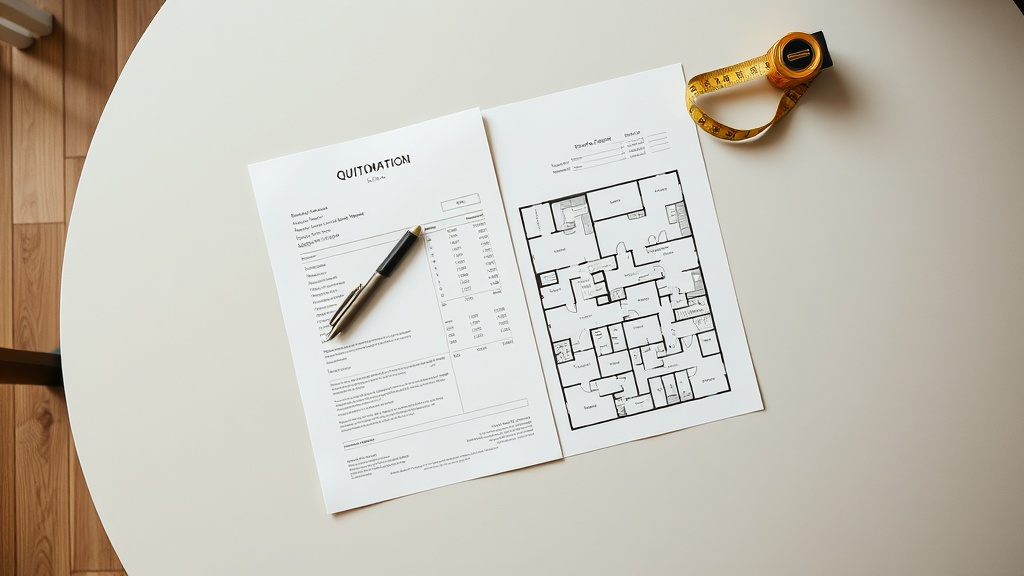
A plain guide to 4-room vinyl flooring costs in Singapore, what changes the price, and where the money actually goes.
Most people asking about vinyl flooring singapore price 4 room are not trying to compare ten brands. They are trying to avoid one bad decision that costs a few thousand dollars twice. The hard part is not the brochure price per square foot. It is knowing what is included, what is excluded, and when a cheap overlay becomes expensive after floor prep, skirting and touch-up.
For a typical 4-room HDB in Singapore, vinyl flooring for the living room and bedrooms often lands somewhere around S$3,000 to S$8,000 all-in. Lower if the existing floor is flat and you are doing a basic overlay. Higher if you are hacking, levelling, doing herringbone, or covering a larger dry area. That spread is wide for a reason. Flooring is not one item. It is material, labour, floor condition, edges, junctions and what needs to happen before the first plank goes down.
What a 4-room vinyl flooring budget usually looks like
Across current Singapore price guides and supplier ranges, most installed vinyl prices for homes sit around S$3.50 to S$9.00 per sq ft. Premium work can go beyond that. Very low promotional rates exist, but they are usually limited in area, product choice or scope.
For a 4-room HDB, the total depends first on how much area you are actually covering. This sounds obvious, but it is where many budgets go wrong. Some quotes use only the bedroom areas. Some use living plus bedrooms. Some use nearly the whole flat except bathrooms. A 4-room flat is one housing type, not one flooring area.
As a rough working guide:
- Basic overlay, simpler product, limited prep: about S$2,600 to S$4,000.
- Typical mid-range SPC or LVT, living plus bedrooms, some prep: about S$3,800 to S$7,000.
- Premium vinyl, pattern layout, hacking, or heavier levelling: about S$7,000 to S$12,000+.
Those numbers fit what the market is showing, but they are not interchangeable. A no-hack overlay on decent tiles is a different job from hacking old ceramic tiles, removing debris, repairing hollows, self-levelling and then laying thicker click vinyl.
Why homeowners get confused by 4-room pricing
Because three quotes can all be honest and still look miles apart.
- One contractor quotes 550 sq ft of dry area.
- One quotes 700 sq ft.
- One quotes 900 sq ft because he includes more circulation space or a different measurement basis.
Then one quote includes skirting. One excludes it. One includes floor levelling up to a limit. One charges it after site inspection. One assumes overlay. One assumes hacking. Put those side by side and you are not comparing vinyl. You are comparing different scopes.
Vinyl flooring singapore price 4 room: realistic ranges by job type
It helps to split the cost into the kind of job being done, not just the product name.
| Job type | Typical installed range | What usually moves the price |
|---|---|---|
| Basic overlay on existing floor | S$2,600 to S$4,000 total | Floor flatness, area size, product grade, skirting, door trimming |
| Mid-range SPC or LVT for living + bedrooms | S$3,800 to S$7,000 total | Actual dry area, minor levelling, brand, thickness, wear layer |
| Hack and lay, or premium pattern work | S$7,000 to S$12,000+ | Hacking, disposal, self-levelling, complex layout, premium planks |
If you want a shorter answer, this is it: most 4-room HDB vinyl jobs are not expensive because vinyl itself is expensive. They become expensive when the existing floor is bad, the layout is complex, or the quote is carrying a lot of hidden prep.
Where the money actually goes
Homeowners often focus on the plank price. Fair enough, because that is the visible item. But flooring cost is usually made up of five separate buckets.
1. The vinyl product itself
This is the material: the planks or tiles you step on. Vinyl in Singapore is commonly sold as:
- Glue-down LVT, luxury vinyl tile. This is adhered directly to the subfloor.
- SPC click vinyl, stone plastic composite. The planks lock together with a click system.
- Basic peel-and-stick or lower-end systems, less common for full-home better-quality jobs.
Material cost changes with:
- Thickness of plank.
- Wear layer, the top protective layer that takes abrasion.
- Surface finish and embossing.
- Pattern, standard straight lay is cheaper than herringbone.
- Brand positioning and stock availability.
Cheaper is not always bad. It depends on use. A lightly used bedroom does not need the same product logic as a living room with children, chairs dragging, and daily mopping. But very cheap vinyl can mean thinner boards, weaker locking edges, more pattern repetition, and less forgiving installation tolerance.
2. Installation labour
This is the laying work itself. Measuring, cutting, setting out, joining, edging, finishing. Labour is not just carrying planks into the flat and clicking them together.
The labour portion rises when:
- The rooms have many corners and awkward cuts.
- The floor is not square.
- The plank format is smaller or pattern-based.
- There are more transitions at bedroom doors or kitchen entrances.
- Furniture protection or phased work is needed.
Herringbone is the clear example. It looks good when done properly. It also uses more labour, more planning, and usually more wastage. That is the trade-off.
3. Floor preparation
This is where budgets move the most. Vinyl needs a reasonably even base. If the floor below is uneven, cracked, drummy, loose, or badly patched, the new finish will show the problem or fail earlier.
Floor prep can include:
- Cleaning and degreasing.
- Removing loose tiles.
- Patching holes.
- Self-levelling, a cement-based compound used to flatten low spots and smooth the surface.
- Moisture checks where needed.
This is the part many cheap quotes leave vague. It is also the part that protects the result. A flat-looking tiled floor is not always flat enough for vinyl. You may not notice a 3 mm dip by eye. You will notice it when the joints flex or the floor feels hollow underfoot.
4. Hacking and disposal, if required
Hacking means breaking and removing the existing tiles or screed. This is noisy, dusty and slower. It also triggers disposal cost and more downstream repair work.
Why do some jobs need hacking, while others can overlay?
- The existing tiles may already be popping.
- The overall floor height may become a problem if you overlay.
- There may be too many uneven repairs.
- The owner may want to reset the levels across the flat.
Overlay is cheaper and faster. Hacking gives you a cleaner reset, but costs more and extends the programme. Neither is automatically right. It depends on the existing condition and the finished floor height you can accept.
5. Edge details and finishing items
These look minor on paper. They matter on site.
- Skirting, the trim at the bottom of the wall.
- Reducer strips or transition strips between different floor materials.
- Silicone at selected edges.
- Door shaving or trimming if the new floor height is higher.
- Moving loose furniture or working around built-ins.
A quote that says “vinyl flooring” may or may not include these. Always check. A good-looking floor is usually a details job.
What changes the price fastest
Not all variables move the cost equally. In practice, these are the ones that shift the number most.
Overlay versus hack-and-lay
This is the big one. Overlay keeps the existing finish and lays vinyl over it. Hack-and-lay removes the old floor first.
Overlay pros:
- Lower cost.
- Shorter work period.
- Less dust and debris.
Overlay trade-offs:
- Depends heavily on current floor condition.
- Raises floor height.
- Can create threshold issues at doors or entrances.
Hack-and-lay pros:
- Lets you start from a cleaner base.
- More control over floor level and repairs.
- Better if old tiles are unsound.
Hack-and-lay trade-offs:
- Higher cost.
- More mess.
- Longer programme, because removal and base preparation take time.
Subfloor flatness
Two flats with the same area and same vinyl can differ by a lot just because one floor is flat and the other is not. This is why site inspection matters. Photos are useful, but they do not replace checking levels and sounding the tiles.
If a quote is very cheap, ask one direct question: what happens if levelling is needed after tiles are checked on site? If the answer is unclear, the number is not firm.
Product tier
Most homeowners do not need the most expensive vinyl. They do need something appropriate for daily wear. Mid-range products are often the practical centre. Not the cheapest, not the premium designer line.
The difference between entry and mid-range is often easier to justify than the jump from mid-range to premium. Premium may buy you thicker boards, stronger locking edges, nicer texture, better pattern variation, or a specific design format. Whether that matters enough is personal.
Area covered
When someone says “4-room vinyl flooring”, ask what rooms are included. Is it:
- Living room only.
- Bedrooms only.
- Living plus all bedrooms.
- Dry kitchen as well.
Bathrooms are usually separate because they are wet areas and often not part of standard vinyl flooring scope. Some homeowners also keep kitchen tiles for practical reasons.
Common vinyl types, in plain terms
SPC click vinyl
SPC stands for stone plastic composite. It is a rigid-core vinyl plank that locks together. In Singapore, this is a common residential choice because it is practical, reasonably durable and relatively fast to install when the base is suitable.
Good for: many living rooms and bedrooms, especially when owners want a timber look with easier upkeep.
Watch for: base flatness. Rigid products do not hide uneven floors well.
Glue-down LVT
LVT stands for luxury vinyl tile. Glue-down systems are adhered to the floor. They can give a lower overall build-up than some click systems and can work well when installed on a well-prepared base.
Good for: jobs where floor height matters, and where the base can be properly prepared.
Watch for: subfloor prep quality. Glue-down products rely heavily on the condition below.
Patterned vinyl, including herringbone
This is more of a layout category than a separate material category. Herringbone uses smaller planks laid in a repeating angled pattern.
Good for: owners who care strongly about the visual effect.
Watch for: higher labour, more cutting, more wastage, and usually higher overall cost.
Rules and practical constraints in HDB flats
Flooring work in HDB flats is not just a design choice. There are renovation controls, work timing controls and practical site constraints. The exact approval path depends on what you are doing. Overlaying vinyl is not the same as hacking existing floor finishes.
In practical terms, homeowners should pay attention to four things.
1. Whether hacking is involved
Once you start removing existing finishes, the job usually becomes more regulated than a simple overlay. Hacking also affects noise, debris removal and the work sequence for other trades.
If you are planning to hack floors in an HDB flat, confirm the required renovation route and timing restrictions before work starts. Do not assume a flooring contractor can simply begin because the product itself is “light work”. The hacking part is the issue.
2. Wet area versus dry area use
Most 4-room vinyl discussions are about living rooms and bedrooms. Wet areas are another matter. Bathrooms in particular have waterproofing and long-term moisture concerns. Even where a product is marketed as water-resistant, that does not mean every wet-area application is sensible.
For a first-time renovator, the simple rule is this: treat bathrooms separately, do not assume the same flooring decision applies everywhere.
3. Floor height and door clearance
Overlaying adds thickness. Sometimes that is fine. Sometimes it affects your main door swing, bedroom doors, store room thresholds or balcony transitions. This is not a reason to avoid overlay. It is a reason to measure it properly before confirming.
4. Workforce and site safety
Any renovation work in Singapore sits within broader workplace safety and manpower rules. For homeowners, the key point is simpler: use a team that can inspect the actual site condition, sequence the work properly, and take responsibility for both the design intent and the site execution.
This matters more when flooring is part of a larger renovation, because one trade can easily spoil another. Floor level, carpentry scribing, door clearance, skirting finish, appliance gaps, all of these intersect.
Money-losing mistakes we see again and again
These are not dramatic mistakes. They are normal first-time homeowner mistakes. They cost money because they are discovered too late.
1. Comparing psf rates without matching scope
S$4.20 psf and S$6.80 psf may not be comparable at all. One may exclude skirting, levelling and transitions. The other may include them. One may be quoting 550 sq ft. The other 760 sq ft.
Ask for the scope in writing. Specifically:
- Exact area measured.
- Vinyl type and thickness.
- Whether skirting is included.
- Whether floor prep is included, and to what extent.
- Whether hacking and disposal are included.
- Whether door trimming and transitions are included.
2. Buying on sample appearance alone
A small sample can make almost any vinyl look acceptable. Ask to see how it behaves across a larger area. Grain repetition, sheen, joint lines and edge bevels become more obvious on a full room.
This is especially important if you are choosing very light oak tones, very dark tones, or strong embossed textures. Large surfaces reveal more than a sample board does.
3. Ignoring subfloor condition
This is the classic false saving. If the old floor is loose or uneven, overlaying over it because the quote is cheaper can cost more later. The floor may feel hollow, the joints may separate, or the finish may telegraph the defects below.
The right decision is not always hacking. But the wrong decision is pretending the base condition does not matter.
4. Forgetting floor height at junctions
A new vinyl floor can affect:
- Bedroom door clearance.
- Toilet entrance thresholds.
- Balcony sliding door tracks.
- Built-in wardrobe bottoms.
If you are renovating the whole flat, flooring should be coordinated with carpentry and doors early. If not, you get awkward reducers, visible patchwork or late changes.
5. Choosing premium layout where the room does not suit it
Herringbone in a very chopped-up layout with many built-ins can be hard to appreciate. You still pay the premium labour and wastage. Sometimes a straight lay in a better product gives a cleaner result for less money.
This is not about style rules. It is about spending where the room can actually show it.
What has changed recently
Three things stand out in current vinyl pricing.
1. More homeowners are seeing the real cost of prep
The market is mature enough now that homeowners know vinyl is not just “cheap wood-look flooring”. More people have seen cases where poor prep led to movement, noise or premature wear. As a result, the better quotes are often more explicit about levelling and base condition.
2. The gap between entry and premium has widened
There are still low promotional rates in the market, especially for basic overlay packages. At the same time, premium SPC and patterned layouts have moved into a much higher bracket once installation and prep are counted. This means the middle of the market matters more. Many sensible jobs sit there.
3. Homeowners are comparing all-in totals, not just psf
That is the right shift. Flooring is one of those trades where a low psf rate can hide a lot. The all-in number, with inclusions and exclusions properly stated, tells you more.
How to budget sensibly for your own 4-room flat
If you are at the planning stage, do not start with the fanciest photo. Start with the condition of the existing floor and the rooms you actually want to cover.
- Decide the area: living only, bedrooms only, or living plus bedrooms.
- Decide the method: overlay if feasible, hacking only if justified.
- Pick a product tier: entry, mid-range or premium.
- Set aside a prep buffer: because until the floor is checked, levelling risk is not fully known.
- Coordinate with doors and carpentry: especially in full renovations.
For many first-time renovators, a practical budget is the mid-range band, not the promotional minimum. That usually gives enough room for a decent product and some honest site realities without forcing every variation into a top-up later.
If your target is purely cost control, be clear about the trade-off: basic overlay on a decent existing floor is usually the cheapest sensible path. If your target is a full reset and the old floor condition is poor, the trade-off is obvious too: more money upfront, fewer compromises hidden under the new finish.
Three questions to ask before you accept a quote
- Is this based on actual site measurement, and what area is included?
- If the existing floor is uneven or loose, how will that be priced?
- What finishing items are included, skirting, transitions, door trimming, disposal?
If you ask only those three questions, you will already avoid most bad comparisons.
FAQ
Is vinyl cheaper than tiles for a 4-room HDB?
Often yes, especially if you are overlaying over an existing sound floor. But the answer changes once hacking, levelling or premium layouts are involved. A cheap vinyl quote and a tile quote are not directly comparable unless the prep and scope are similar.
Can vinyl flooring be installed over existing HDB tiles?
Often yes, if the existing tiles are sound, reasonably level and the added floor height does not create problems at doors or thresholds. If tiles are hollow, loose or badly uneven, overlay may not be the right approach.
How long does vinyl flooring for a 4-room flat usually take?
It depends on scope. Overlay is usually faster than hack-and-lay. The real timing is moved by floor prep, curing time for levelling compounds, room access and whether the flooring is part of a larger renovation sequence.
Ask YC about your own flat.
Read next
- What false ceiling pricing costs in Singapore, line by lineA plain breakdown of false ceiling costs in Singapore: what is priced per foot, what changes the total, and where the trade-offs usually sit.Costs
- False ceiling price in Singapore: real numbers, and where the money goesFalse ceiling costs in Singapore vary by size, design and access. Here is what affects the price, and where the money usually goes.Costs
- Cost of false ceiling in Singapore: real numbers, and where the money goesCost of false ceiling in Singapore explained in plain terms, with what affects the price and where the money usually goes.Costs
Tell us what you are working with.
Send us the unit type and a rough idea of what you want done. We will come back with what it takes.