
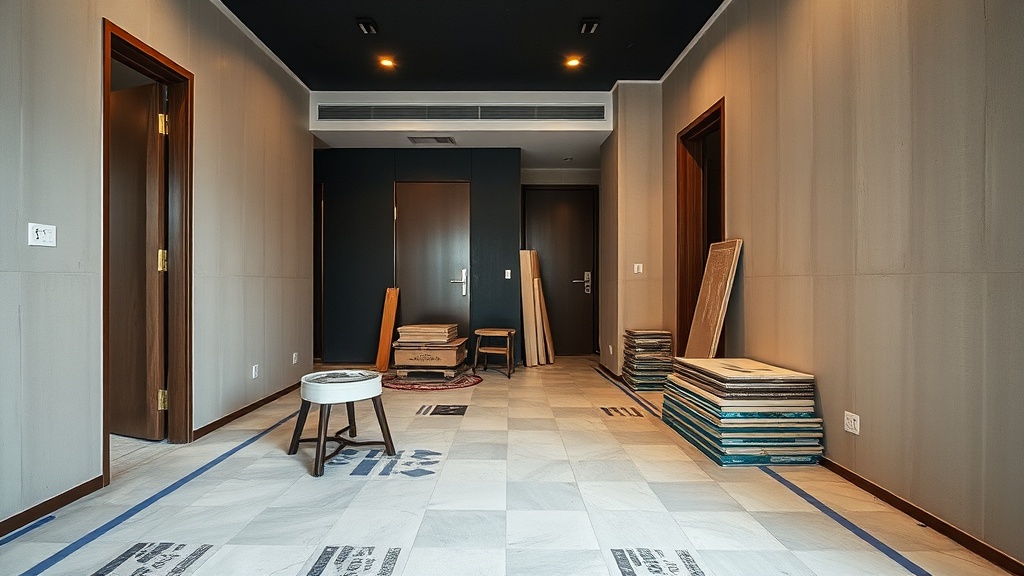
A main contractor explains flooring options in Singapore, what changes cost, and where the trade-offs are for homes and renovations.
You are trying to choose a floor that looks right, lasts, and does not blow up the renovation budget halfway through. In flooring singapore jobs, the mistake we see most is not picking the wrong colour. It is starting with the wrong build-up: laying a new finish over a bad base, underestimating hacking, or choosing a material that does not suit how the flat is actually used.
We come at this as a main contractor. That matters for flooring because the drawing is only half the job. The floor finish, the screed, the levelling, the hacking, the skirting, the door clearances, the bathroom kerb, the neighbour noise restrictions: these sit with the site team, not just the showroom sample. If the same company is drawing and building, there is less room for the usual handover problem where one party sells the idea and another party has to sort out the levels later.
This guide is a straight answer on what homeowners usually need to decide: what each flooring type costs, where it works, where it does not, what tends to go wrong, and when overlay is sensible versus when you should hack and start again.
Start with the part you cannot see: the floor base
Most people shop flooring by finish. We start with the substrate, meaning the surface below the final floor. That can be the concrete slab, an old tile floor, an old screed bed, or existing parquet. If the base is uneven, hollow, damp, cracked or loose, the nicest finish on top will still fail.
Common site conditions in flats include:
- Existing tiles are sound and fairly level, overlay is possible.
- Existing tiles are hollow, cracked or tenting, meaning they are lifting due to stress, hacking is safer.
- Old screed is powdery or uneven, it needs repair or re-screeding.
- There is a height issue at bedroom doors, the main entrance or bathrooms.
- Wet areas need proper falls, meaning the floor must slope towards the trap so water drains correctly.
If you skip this check, the quote looks cheaper at first. Then it grows on site. Not because anyone is trying to be clever, but because floor finishes only behave as well as the base below them.
That is the first trade-off to understand:
- Overlay saves time, mess and hacking cost, but it only works if the existing base is good and the finished height still makes sense.
- Hack and redo costs more and is noisier, but it gives you a clean start and fewer surprises later.
Typical flooring singapore price ranges for 2026
Installed flooring prices in Singapore usually sit in broad bands, not one neat number. The material itself is only one part. The real movers are brand, thickness, wear layer, tile size, origin, site prep, hacking, levelling, skirting and whether special detailing is needed.
As a working guide for supplied and installed residential flooring:
| Flooring type | Typical installed range | What usually moves the price |
|---|---|---|
| Vinyl / SPC | S$3.50 to S$10 psf | Thickness, wear layer, click or glue system, brand, underlay, levelling, skirting |
| Laminate | S$3 to S$7 psf | Core quality, abrasion rating, moisture resistance, underlay, skirting, prep works |
| Ceramic / porcelain / homogeneous tiles | S$8 to S$22 psf, sometimes more for imported or large-format tiles | Tile size, origin, slip rating, pattern layout, grout, hacking, screed, waterproofing |
| Engineered wood | S$8.50 to S$22 psf | Wood species, plank size, top layer thickness, finish system, levelling |
| Solid hardwood / parquet | S$9 to S$50 psf | Species, format, supply source, finish, subfloor condition |
| Cement screed / polished concrete look | S$15 to S$30 psf | Surface prep, crack control, coating system, polishing stages |
| Marble / natural stone | S$30 to S$70+ psf | Stone type, slab or tile, origin, thickness, wastage, polishing |
| Epoxy coating | S$4 to S$12 psf | Number of coats, substrate prep, decorative finish, performance requirement |
These are market ranges, not fixed rates. A quote at the low end usually assumes a straightforward site and a standard product. Once hacking, levelling or awkward detailing enters the picture, the number moves.
Vinyl and SPC: why people choose them, and what they miss
Vinyl is often the first option homeowners look at. In many flats, it is practical. It is fast to install, generally more forgiving underfoot than tile, and available in a wide range of timber looks. SPC stands for stone plastic composite. It is a rigid type of vinyl board, usually installed as a click system.
Typical installed pricing is around S$3.50 to S$10 psf, depending on product and prep.
Where vinyl and SPC work well
- Bedrooms and living areas where you want a warmer feel underfoot.
- Homes that want a timber look without the cost of real wood.
- Projects where overlay saves time and disruption.
- Families who want easier board replacement than some other finishes.
What to check before choosing it
- Wear layer, this is the top protective layer that affects scratch and stain resistance.
- Total thickness, thicker does not automatically mean better, but it often affects feel and tolerance.
- Subfloor flatness, rigid boards can telegraph unevenness below.
- Water exposure, many products resist spills well, but long-term wet conditions and poor bathroom transitions are another matter.
The trade-offs
Vinyl is not magic. It can scratch. It can sound hollow if the base is poor. If boards are laid over uneven or loose tiles, movement can show up later at joints. Cheap systems can also feel lighter and less stable underfoot. If you want the lowest cost and the most forgiving install, vinyl often comes up. If you want the hardest, most permanent finish, tile still wins in many homes.
One common mistake is using vinyl to hide a floor that should really be hacked. Overlay works when the base is honest. If many old tiles are hollow, laying over them can simply postpone the problem.
Laminate: lower entry cost, narrower comfort zone
Laminate usually comes in around S$3 to S$7 psf installed. It is a layered board product with a printed surface and protective top coating. It can look good at the right budget, especially in dry rooms.
Where laminate makes sense
- Bedrooms with lighter foot traffic.
- Projects trying to control cost tightly.
- Homes where the owner prefers a timber look but is not chasing real wood.
Where to be careful
- Kitchens and wet-prone zones.
- Homes with frequent mopping using too much water.
- Sites with poor subfloor condition.
The weak point is moisture. Better laminates have improved moisture resistance, but this is still not the first choice where water is common. Once water gets into the wrong place, swelling at edges can happen. It is also less forgiving than many people expect when exposed to repeated wet cleaning.
If your budget is tight and the area is dry, laminate can still be sensible. Just do not buy it thinking it behaves like tile.
Tiles: still the workhorse, especially where water matters
Tiles remain one of the safest choices for kitchens, bathrooms and homes that want a harder-wearing finish. In residential jobs, installed pricing commonly starts around S$8 psf and can go above S$20 psf, with imported or large-format options going higher.
There are several tile categories homeowners hear about:
- Ceramic tile, usually a common and cost-conscious choice.
- Porcelain tile, denser and often more durable.
- Homogeneous tile, a dense full-body tile often used where durability is wanted.
Where tiles work well
- Bathrooms and kitchens.
- Homes with heavy use, pets or frequent wet cleaning.
- Owners who want a long-life finish and do not mind a harder feel underfoot.
What drives tile cost up
- Large formats, because handling and alignment are more demanding.
- Rectified edges, meaning tiles cut more precisely for tighter joints.
- Imported designs and special finishes.
- Complex laying patterns.
- Hacking, screed correction and waterproofing works.
The trade-offs
Tiles are durable, but they are slower and messier to put in, especially if hacking is needed. They are also cold and hard compared with vinyl or wood-based products. Grout lines need upkeep. If levels are not planned properly, you also run into problems at room thresholds and bathroom entries.
For bathrooms, slip resistance matters more than looks alone. A glossy tile sample can look clean in a showroom. On a wet shower floor, that same surface may not be the right choice. This is one place where practical use should lead the design.
Engineered wood and solid wood: good look, more maintenance, higher stakes
Engineered wood typically lands around S$8.50 to S$22 psf installed. Solid hardwood and parquet can run much higher, depending on species and system. Engineered wood uses a real timber top layer over a stable core. Solid wood is what it sounds like.
Why some owners still choose wood
- The feel is different from printed timber-look products.
- Natural variation gives depth that manufactured patterns cannot fully copy.
- In the right rooms, it can age well.
What to be honest about
- Wood moves more with moisture and temperature than tile.
- It needs more care than vinyl.
- Repairs and replacements are usually less straightforward.
- Wet areas are generally not where you want it.
For some homes, engineered wood is the middle ground. You get a real timber surface without going fully into solid hardwood cost and movement risk. But it is still not a careless floor. If the household uses aggressive mopping, drags furniture often, or wants a finish that takes abuse without thought, wood may not be the right fit.
Cement screed, polished finishes and epoxy: niche choices, not universal ones
These finishes get attention because they photograph well. They can also work well. But they are more dependent on workmanship and maintenance expectations than many people realise.
Cement screed or polished concrete look
Often around S$15 to S$30 psf, depending on system and preparation. The appeal is a plain, monolithic finish. The risk is that people expect it to stay visually perfect. Hairline cracking, tonal variation and wear character are part of the material language. If you want a flawless, uniform surface forever, this is the wrong expectation.
Epoxy flooring
Often around S$4 to S$12 psf. More common in utility or service-type applications, though some homes use it. It can be practical, but substrate prep is everything. If the base has moisture or bond issues, coatings fail. This is not the kind of finish to choose just because the initial number looks efficient.
Marble and natural stone
Usually premium territory, often S$30 to S$70+ psf installed. Beautiful when done well. Expensive to buy, expensive to detail, expensive to repair if selected carelessly. Stone also needs an owner who accepts natural variation and some maintenance discipline.
Overlay or hack: how to decide properly
This is one of the most important flooring decisions in a flat.
Overlay is usually reasonable when
- The existing floor is sound and well bonded.
- Levels at doors and bathrooms still work after adding new thickness.
- You want to reduce dust, noise and time on site.
- The chosen material can tolerate the existing base with minor prep.
Hacking is usually safer when
- There are many hollow or cracked tiles.
- The floor is visibly uneven.
- You need to correct levels or falls.
- Wet areas need proper reworking.
- You want a longer-term solution and can accept the extra work.
Homeowners sometimes ask if hacking is just an upsell. Sometimes it is not needed. Sometimes it absolutely is. The right answer depends on what is below. A proper site check should include tapping for hollowness, checking levels and looking at transitions. If a contractor recommends hacking, ask what condition they found that makes overlay risky. They should be able to tell you plainly.
Whole-flat budgeting: why the flooring line item moves so much
For a whole flat, the flooring budget can vary more than people expect because the floor area is large and the prep works scale with it. In a typical 4-room HDB size, whole-home flooring with installation can range from modest to substantial depending on material and whether hacking is involved. SPC across a straightforward flat may sit at one end. Full tile replacement with hacking and wet-area corrections sits at another.
What usually changes the total budget:
- Total area in square feet.
- How many different materials are used.
- Whether bedrooms, living room and kitchen all match or change at thresholds.
- Hacking extent.
- Levelling or screed correction.
- Skirting replacement.
- Door trimming or replacement due to new floor height.
- Bathroom and kitchen details, especially falls and kerbs.
This is why a psf rate alone is never enough. Two homes with the same floor area can price very differently if one is a clean overlay job and the other needs major correction.
Flooring by room: the practical way to choose
Living and dining
This is where owners usually compare vinyl, tile and engineered wood. The decision is mostly about comfort versus permanence.
- Choose vinyl or SPC if you want a warmer feel and easier budget control.
- Choose tile if you want a tougher finish and do not mind a harder surface.
- Choose engineered wood if you want real timber and accept more care.
Bedrooms
Vinyl, laminate and engineered wood all appear here often. Bedrooms are more forgiving because they are usually dry areas.
- For value and comfort, vinyl is common.
- For the lowest entry cost in a dry room, laminate may work.
- For a premium natural feel, engineered wood is the step up.
Kitchen
Kitchens test a floor harder than many brochures admit. Spills, dropped items, grease and frequent cleaning all happen here.
- Tile is still the conservative choice.
- Some owners extend vinyl into the kitchen, but product selection and detailing matter.
- Laminate is generally the one to be most cautious with here.
Bathrooms
In most homes, tile remains the practical answer. Wet performance, slip resistance and drainage matter more than visual continuity from dry areas. This is not where you want to make decisions from a mood board alone.
Rules and restrictions that affect flooring in HDB flats
If you are renovating an HDB flat, flooring is not just a design choice. Certain works require approval, and there are restrictions around hacking, wet works and noise.
The operational points homeowners should know are:
- Hacking of existing floor finishes generally requires prior approval.
- Certain works must be carried out by an HDB-registered renovation contractor.
- There are restrictions on hacking structural elements and on removal of some bathroom finishes, especially within applicable warranty periods for newer flats.
- Noisy works such as tile hacking are restricted to certain hours and days.
- Overlay works still need to respect thickness, load and level requirements so doors and wet areas remain safe and functional.
The exact requirement depends on the flat type, the age of the flat and the scope of works. This is one reason the build side matters. A flooring plan is easy to draw. The permit path, site sequencing and practical limits are where experience shows.
What a proper flooring quote should tell you
A homeowner does not need every technical detail. But a useful quote should still make the scope clear enough that you can compare jobs properly.
Look for these items:
- Flooring material type and thickness.
- Brand or grade, where relevant.
- Installation method, click, glue-down, bedding, coating system and so on.
- Whether skirting is included, and what type.
- Whether hacking is included.
- Whether levelling or screed repair is included, excluded, or subject to site condition.
- Whether disposal is included.
- What happens at door thresholds and bathrooms.
If a quote is much lower than others, check whether it assumes overlay without real prep, omits skirting, excludes levelling, or uses a thinner product. Flooring prices are easy to flatten on paper by moving cost into exclusions.
Common flooring mistakes we see on site
- Choosing by sample only. A small board in a showroom does not tell you how the floor behaves at transitions, under furniture, or in a wet kitchen.
- Ignoring floor height. Adding a new finish changes door clearance, built-in joinery lines and bathroom thresholds.
- Assuming all vinyl is the same. It is not. Product build and site prep matter.
- Putting water-sensitive floors in the wrong places. A dry-room material should stay a dry-room material unless there is a strong reason otherwise.
- Saving on prep works. This is the one that comes back later as lifting, hollowness or visible unevenness.
How we think about flooring as a design-and-build contractor
Because we build what we draw, we usually start the flooring discussion from coordination, not just finish. The floor has to work with carpentry heights, toilet kerbs, appliance clearances, bedroom door swings and existing site conditions. A nice material choice can still be the wrong job if it creates bad thresholds or repeated maintenance trouble.
That does not mean there is one best flooring type. There is only the one that fits your flat, your tolerance for upkeep and your budget. The honest answer is often a mixed one. Tile where water and wear are highest. A softer finish where comfort matters more. Sometimes the most sensible home is not the one with a single material throughout.
Is vinyl better than tiles for a flat in Singapore?
Not better in every way, just different. Vinyl is usually softer underfoot, faster to install and often lower in cost. Tiles are usually harder-wearing, better in wet areas and more permanent. The right choice depends on room use, floor condition and budget.
Can I overlay new flooring on top of old tiles?
Sometimes, yes. Overlay works when the existing tiles are sound, the surface is level enough, and the added height will not cause problems at doors or bathrooms. If many tiles are hollow, cracked or uneven, hacking is usually the safer route.
Why does the flooring quote change after site measurement?
Because site condition affects the real scope. The finish material may be straightforward, but hacking, levelling, skirting, disposal, threshold detailing and wet-area corrections can only be priced accurately after checking the actual floor base.
Ask YC about your own flat if you want a practical view on what flooring makes sense and what the base condition is likely to allow.
Read next
- Engineered timber flooring: a straight answer from a main contractorA main contractor’s plain guide to engineered timber flooring, what it is, what it costs, and where it works in a Singapore home.Planning
- Engineered flooring: a straight answer from a main contractorWhat engineered flooring is, where it works, what can go wrong, and how a main contractor looks at cost, moisture, repairs and lifespan.Planning
- HDB renovation kitchen: a straight answer from a main contractorA practical look at HDB kitchen renovation from a main contractor: scope, costs, timeline, permits and where the trade-offs usually sit.Planning
Tell us what you are working with.
Send us the unit type and a rough idea of what you want done. We will come back with what it takes.