
Engineered flooring: a straight answer from a main contractor
21 Nov 2026 · YC Design and Build
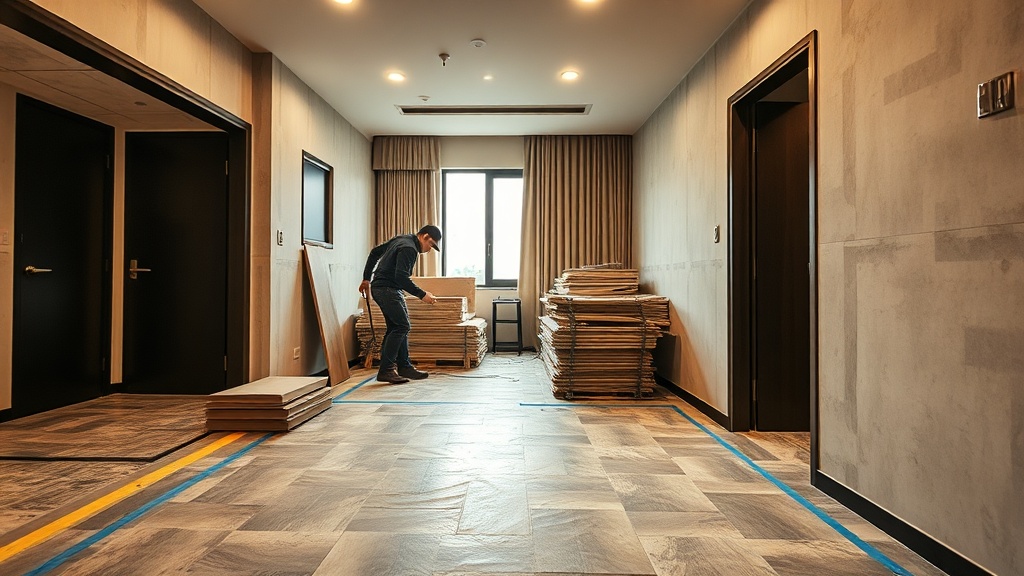
What engineered flooring is, where it works, what can go wrong, and how a main contractor looks at cost, moisture, repairs and lifespan.
You are probably stuck on the same question most owners ask us: does engineered wood give you the wood look you want, without the headaches of solid timber, and what does it really cost in Singapore. If you are searching for engineered flooring singapore, the confusing part is not the product. It is the quoting, the installation method, and the prep work hiding underneath.
A straight answer: engineered flooring can be a sensible choice here, but only if you know what you are buying. Two floors can both be called engineered wood and still behave differently, cost differently, and age differently. The board itself matters. The way it is installed matters. The condition of your slab matters.
From a main contractor's point of view, flooring is not a catalogue decision. It sits on top of hacking, levelling, moisture checks, skirting, door clearances, and junctions to tiles. If those parts are not resolved early, the nice sample board in the showroom will not save the job.
What engineered flooring actually is
Engineered wood flooring is a real wood top layer bonded onto a core made from plywood, hardwood layers, or high-density fibreboard. The top layer is often called the veneer or wear layer. That top layer is what you see and touch. The core underneath gives the board stability.
This is why engineered wood is different from laminate and vinyl.
- Engineered wood: real wood surface, layered core.
- Laminate: printed wood image, not real wood on top.
- Vinyl or SPC: plastic-based product, usually more water-tolerant, not wood.
- Solid timber: one full piece of wood through the whole thickness.
Many owners hear "real wood" and assume all real wood floors are the same. They are not. Solid timber moves more with temperature and humidity. Engineered wood was developed to reduce that movement. Reduce, not remove. It is still wood.
Engineered flooring Singapore: the realistic price range
For 2026 Singapore pricing, a practical supplied-and-installed range for engineered wood is about S$8.50 to S$20 per sq ft for straightforward jobs. At the lower end, some entry-level products and simpler installs may come in around S$6 to S$18 psf, depending on what the quote includes. Premium species, wider planks, heavy subfloor preparation, or patterned layouts can push the number to S$25 psf and above.
That spread is wide because homeowners are often comparing different things under the same label.
| Type of quote | Typical range | What may be included |
|---|---|---|
| Material only | About S$6 to S$14 psf for common options, higher for premium boards | Boards only, usually excludes installation, underlay, trims, levelling |
| Entry-level supplied and laid | About S$8.50 to S$15 psf | Basic oak products, standard installation, simple areas |
| Mid-range supplied and laid | About S$12 to S$18 psf | Better wear layer, better grade, wider planks, cleaner finishing |
| Premium or complex jobs | S$18 to S$25+ psf | Wide planks, special species, glue-down, patterns, more prep |
If you only remember one thing about price, remember this: material-only and supplied-and-laid quotes are not the same comparison. This is where many owners think one supplier is much cheaper, when the cheaper quote is missing installation, underlay, trims, floor levelling, or skirting works.
What makes one engineered floor cost more than another
1. Veneer thickness
The wear layer is the part you walk on. Thinner veneers, around 2 mm, usually cost less. Thicker veneers, such as 3 mm or 4 mm, cost more. A thicker veneer usually gives more visual depth and more room for future light sanding, if the product allows for it. But do not assume every board can be refinished the same way. That depends on the construction and the manufacturer's system.
The trade-off is simple: lower entry cost versus a board that generally has more life in reserve.
2. Wood species
Oak is usually the baseline in Singapore. It is common, easy to match with most interiors, and generally sits in the lower to mid range. Walnut and other specialty species usually cost more.
Species also changes the look in a way samples do not always show clearly. Oak tends to be more forgiving across different lighting conditions. Darker species can look richer, but they can also show dust and scratches faster.
3. Plank width and length
Wide planks cost more. They also need a flatter base to look good. On an uneven floor, a wide plank makes imperfections easier to spot, especially under side lighting from windows.
Longer planks can make a room look calmer and more expensive. They also create more waste in awkward layouts and can make small lifts, corridors, and room manoeuvring more difficult on site.
4. Installation method
This is one of the biggest hidden cost drivers.
- Floating installation: boards lock or sit over underlay without being bonded directly to the slab. Typical installation cost is often around S$2 to S$3 psf, with underlay adding roughly S$0.50 to S$1.50 psf.
- Glue-down installation: boards are bonded directly to the subfloor with adhesive. Typical installation cost is often around S$3 to S$5 psf, before any extra prep.
Floating is usually cheaper and faster. Glue-down usually feels more solid underfoot and can reduce the hollow sound some people dislike. But glue-down needs a better substrate. If the slab is poor, you pay for the corrections.
5. Subfloor condition
The subfloor is the concrete screed or existing base below the finished flooring. This is where budget problems start.
If the floor is uneven, weak, cracked, contaminated, or damp, the new boards may not sit properly. That can lead to movement, noise, gaps, adhesive failure, or visible unevenness. Any proper quote should allow for a site check first, then state clearly whether levelling or repairs are included.
Owners often spend time comparing plank colour and skip the floor base completely. On site, the base decides whether the finish will feel good or cheap.
6. Pattern complexity
Straight lay is the most economical. Herringbone, chevron, and parquet-style layouts cost more, often much more. One reason is labour. Another is cutting waste. Another is that the floor has to be set out more carefully, otherwise the pattern drifts and the whole room looks wrong.
In the current market, patterned layouts can push pricing to around S$25 psf and above, depending on board type and site conditions.
The trade-off is obvious: stronger visual effect, higher cost, slower installation, and usually more wastage.
Floating or glue-down, which should you choose
This is not just a price question. It affects sound, feel, repairability, and what prep work is needed.
| Method | What it means | Pros | Cons |
|---|---|---|---|
| Floating | Boards installed over underlay, not bonded to slab | Lower cost, faster, easier to replace sections in some systems, less wet work | Can sound more hollow, depends on underlay quality, can feel less solid |
| Glue-down | Boards adhered directly to prepared floor base | More solid underfoot, often quieter, cleaner premium feel | Higher cost, more demanding floor prep, removal later is messier |
For homeowners, the practical question is this: what bothers you more, a slightly higher sound when you walk, or a higher bill for better feel underfoot. There is no moral answer. Just pick the trade-off on purpose.
We usually tell clients not to decide this from a brochure. Stand on both. Walk on both. If possible, compare them in a quiet room. Some people do not care about the difference at all. Some notice it in five seconds.
Where engineered wood makes sense, and where it does not
Engineered wood is often chosen for bedrooms, living rooms, studies, and dry circulation areas. It gives a warmer feel than tile and usually looks more natural than laminate or vinyl.
But it is still not a waterproof floor. That point gets blurred in sales talk. Moisture and standing water are still a risk. If you want something for areas with frequent wet exposure, such as bathrooms, service yards, or any location where water spills are common and may sit, engineered wood is usually not the first material we would suggest.
In kitchens, the answer depends on how you use the space. A dry, light-use open kitchen is one thing. A heavy-use kitchen with regular wet washing and frequent spills is another. Owners should not buy engineered wood expecting it to behave like tile or SPC in wet conditions.
The trade-off is warm appearance versus lower tolerance for moisture abuse.
What people get wrong when comparing engineered flooring in Singapore
They compare board thickness, not wear layer
A 14 mm board is not automatically better than a 12 mm board if the wear layer and core quality are weaker. Ask for both numbers. Overall thickness affects feel and build-up. Wear layer affects the usable wood surface.
They do not ask what the quote excludes
Common omissions include:
- underlay
- floor levelling
- moisture barrier, if required by the system
- adhesive upgrade
- skirting replacement
- beading or edge trims
- door cutting
- moving furniture
- disposal of hacked flooring
- touch-up to adjacent finishes
A short quote can look attractive because it is short.
They choose patterns too early
Herringbone looks good on a sample board and on social media. Then the owner sees the actual price difference after wastage, labour, and edge detailing. We prefer to settle the board type and subfloor condition first, then ask whether the pattern still makes sense.
They assume every existing floor can be overlaid
Sometimes yes, sometimes no. Overlaying means installing the new floor on top of an existing finish. It can save hacking, but it raises floor height. That affects entrance thresholds, doors, built-in carpentry clearances, and transitions to bathrooms or balconies. If you overlay without checking these, the floor may be cheap and the knock-on rectification works expensive.
They treat samples as the final appearance
Wood is variable. Shade, grain, knots, and plank-to-plank contrast can differ. That is part of the point of a natural material. If you want a very uniform look, say so early. Some grades are calmer, some are more character-heavy.
What we check on site before advising yes or no
As a contractor, this is the boring part that saves money.
- Floor flatness. Is the slab level enough for the chosen system and board size.
- Moisture risk. Is there any sign of dampness, past seepage, or edge deterioration.
- Height build-up. Will the new floor affect doors, kitchen base cabinets, wardrobes, or entrance levels.
- Junction details. How will engineered wood meet tiles, stone, balcony tracks, and bathroom entrances.
- Skirting plan. Are we keeping existing skirting, replacing it, or using a trim solution.
- Furniture sequence. Flooring before carpentry or after. Both are possible, but the sequence changes risk and cost.
- Room use. Is this a dry bedroom, a rental unit, a family home with pets, or an elderly owner using mobility aids.
Most flooring problems are not caused by the board. They start where the board meets the rest of the house.
How engineered wood behaves in daily use
It feels warmer than tile. It is usually quieter than many hard finishes, especially when installed well. It also marks differently.
Expect these realities:
- Small dents can happen from sharp furniture legs or dropped items.
- Dark and low-sheen finishes can show dust, depending on lighting.
- Natural timber variation means replacement boards may not match perfectly years later.
- Direct sun over time can change colour tone.
- Water left sitting is a bad idea, even if the finish looks fine at first.
None of this means engineered wood is fragile. It means it is wood. Owners who want zero maintenance anxiety should be honest with themselves and consider whether another material suits their habits better.
Maintenance, without pretending it is effortless
Daily care is simple. Long-term care depends on discipline.
- Sweep or vacuum grit regularly. Fine grit is what wears finishes faster.
- Use a damp, not wet, mop if the product system allows it.
- Wipe spills quickly.
- Use felt pads under furniture.
- Avoid dragging heavy items across the boards.
- Use mats at entry points, if practical.
Owners sometimes buy wood flooring for the look, then clean it like tile. That is where avoidable damage starts. A bucket of water and soaked mop is not careful cleaning.
Engineered wood versus vinyl, laminate, and tile
This is usually the real decision. Not "is engineered wood good", but "is it better for my flat than the other options".
| Material | Main strength | Main weakness | Typical position on cost |
|---|---|---|---|
| Engineered wood | Real wood surface, warmer look and feel | Not waterproof, more expensive than laminate and many vinyl options | Mid to premium |
| Vinyl or SPC | More tolerant of moisture, usually lower maintenance | Not real wood, feel and sound vary by product | Usually lower than engineered wood |
| Laminate | Lower cost, many looks available | Not real wood, edge swelling risk if water gets in | Usually lower than engineered wood |
| Tile | Durable, water-resistant, easy to wash | Harder, colder underfoot, grout lines need care | Varies widely |
If you want the shortest version: choose engineered wood because you want actual wood, not because you want the cheapest or most forgiving floor. It is a preference-led material, not a budget shortcut.
Questions to ask before you sign any engineered flooring quote
- Is this price material only, or supplied and installed?
- What is the wear layer thickness?
- What is the wood species and grade?
- Is the installation floating or glue-down?
- Is underlay included, and what type?
- Is floor levelling included, and to what extent?
- Are skirting, trims, and transitions included?
- Are hacking and disposal included, if required?
- What happens at existing door thresholds and bathroom entrances?
- What parts of the quote are provisional because the floor condition is not confirmed yet?
If a contractor cannot answer these clearly, the floor is not the problem. The process is.
About HDB, BCA and other rules
We need to be careful here. We did not find a reliable official source in the material reviewed that states a specific HDB, BCA, or MOM rule for engineered wood flooring itself. So we should not pretend there is a confirmed rule if we cannot point to one.
What is true in practice is that renovation work in Singapore can involve building management requirements, renovation timing restrictions, and site safety obligations depending on property type and scope. If your flooring works involve hacking, heavy deliveries, adhesives, wet works, or coordination with other trades, those practical controls matter. But for any formal compliance point, check the current official requirements that apply to your flat or development at the time of renovation.
That is not a dodge. It is the correct answer when the official text is not in front of us.
What changed in the market recently
The current market looks broader and more tiered than older summary guides suggested. In simple terms, there is now a bigger gap between entry-level engineered wood and premium engineered wood than many owners expect.
That shows up in three ways:
- Installed pricing is wider, commonly around S$8.50 psf at the lower practical end, but stretching past S$20 psf and into S$25+ psf for premium or complex work.
- Premium layouts are more clearly separated. Straight lay and patterned work are no longer close cousins on price.
- Engineered wood sits firmly above laminate and many vinyl systems in cost, which makes the buying decision more deliberate.
So if you last looked at wood flooring years ago and remember a neat, narrow price band, that memory is probably out of date.
Our contractor view: when engineered wood is worth it
It is worth it when the owner wants the look and feel of real wood, accepts that it is not a wet-area material, and is willing to spend on proper prep. It is also worth it when the rest of the renovation supports it, meaning the transitions, skirting, carpentry sequencing, and floor base have been thought through.
It is usually not worth it when the owner mainly wants a wood look at the lowest cost, wants to wash the floor aggressively, or is choosing it for a wet-prone zone. In those cases, the product can be correct on paper and wrong for the household.
The best engineered floor jobs are not the ones with the fanciest board. They are the ones where the chosen board, the installation method, and the site conditions all match.
FAQ
Is engineered wood flooring better than vinyl for a flat in Singapore?
Better depends on what you value. Engineered wood gives you a real wood surface and usually a warmer, more natural look. Vinyl is usually more tolerant of moisture and often costs less. If you want actual wood and accept the care that comes with it, engineered wood can be the better fit. If you want lower maintenance and more water tolerance, vinyl may suit you better.
How much should I budget for engineered flooring in Singapore?
A common supplied-and-installed range is about S$8.50 to S$20 per sq ft for standard jobs, with premium boards, glue-down systems, heavy floor prep, or patterned layouts pushing to S$25 psf and above. Final cost moves with veneer thickness, species, plank width, installation method, underlay, and how much levelling or repair the existing floor needs.
Can engineered wood flooring be used in kitchens and bathrooms?
Bathrooms are generally not where we would recommend it because engineered wood is not a waterproof flooring material. Kitchens depend on use. In a dry, light-use kitchen it may be considered, but in a kitchen with frequent water exposure, there are usually more practical options.
If you want, ask YC about your own flat and we can tell you whether engineered wood makes sense there.
Read next
- Engineered timber flooring: a straight answer from a main contractorA main contractor’s plain guide to engineered timber flooring, what it is, what it costs, and where it works in a Singapore home.Planning
- HDB renovation kitchen: a straight answer from a main contractorA practical look at HDB kitchen renovation from a main contractor: scope, costs, timeline, permits and where the trade-offs usually sit.Planning
- Recommended renovation contractor: how to pick one, and the questions that matterHow to choose a renovation contractor in Singapore, what to compare, and the questions that help you avoid costly surprises later.Planning
Tell us what you are working with.
Send us the unit type and a rough idea of what you want done. We will come back with what it takes.