
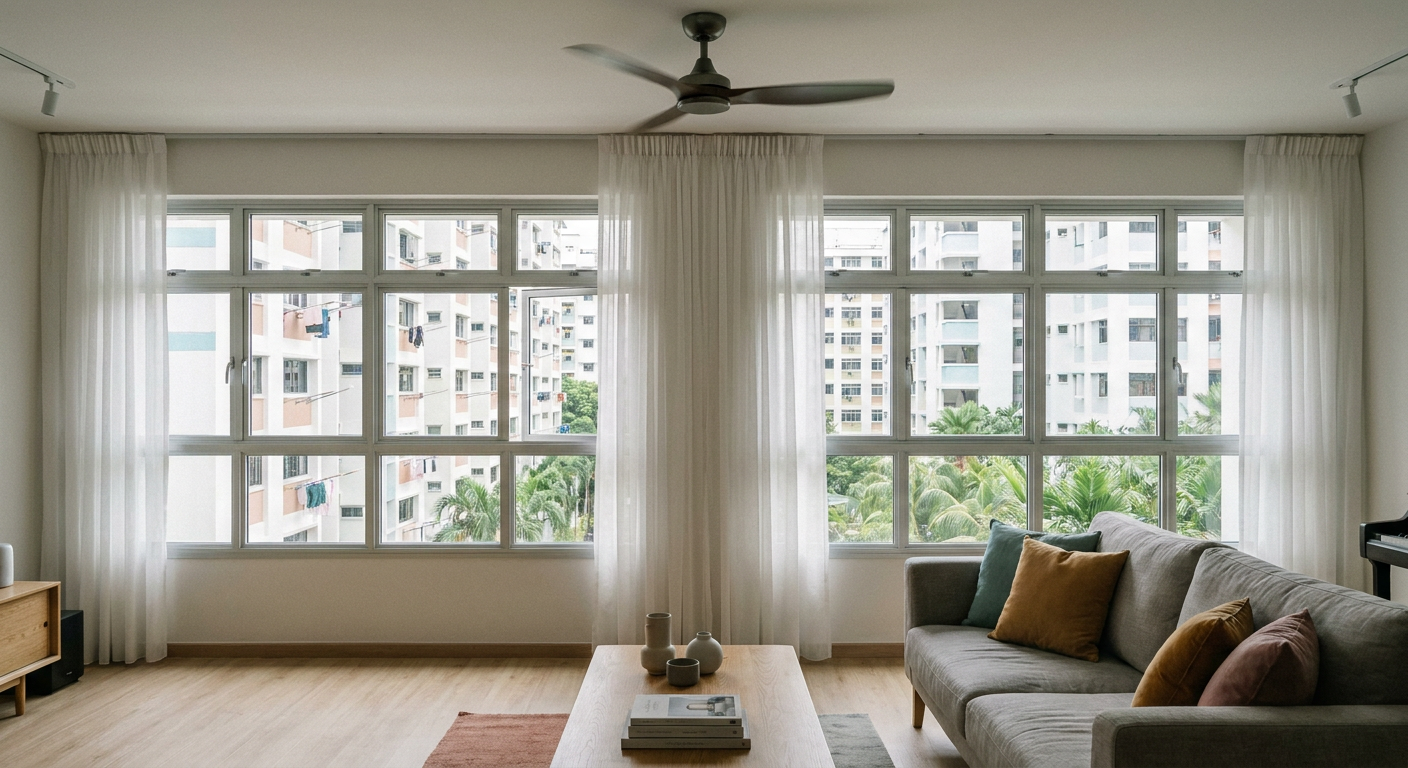
The wall you want gone may be holding the block up. Here is how to tell before you pay anyone to swing a hammer.
What You Can and Cannot Hack in an HDB Flat
The concrete skeleton belongs to HDB. Read the floor plan before you touch a wall.
- Structural walls and load-bearing walls
- Structural columns and beams
- Household Shelter walls, floor, and ceiling
- Household Shelter steel door
- External walls and facade
- Window size or new window openings
- Brick partition walls, with permit
- Old floor and wall tiles
- Old built-in cabinets and wardrobes
- False ceilings from a previous owner
- Drywall partitions to split a room
- Open shelving cut into a wall, with approval
Bring your floor plan.
We check the structural drawings and tell you what HDB will approve before any work starts.
If you are planning to renovate your HDB flat, understanding the hdb renovation rules is the single most important step before you buy a single tile or schedule a contractor. Because HDB flats are public housing, you do not technically own the structural elements of the building. You own the right to live in the space, but the concrete skeleton belongs to HDB. This means there are strict boundaries on what you can and cannot hack. These rules exist to prevent structural damage, protect neighbours, and ensure the building remains safe for decades.
As a firm that started as a direct contracting business before adding a design studio, we deal with these regulations on a daily basis. We do our own hacking, plumbing, and electrical works, so we see exactly what happens when walls are opened up. This guide breaks down the practical realities of HDB hacking rules, how to check what you have, and what to do when the rules do not allow what you want.
The First Check: Your Floor Plan and Structural Walls
Before you fall in love with an open-concept kitchen or a combined living and bedroom space, you need to look at your original floor plan. If you just bought the flat, HDB provides a copy of the floor plan in the resale documents. If you lost it, you can purchase a copy from the HDB Hub or through the HDB InfoWEB.
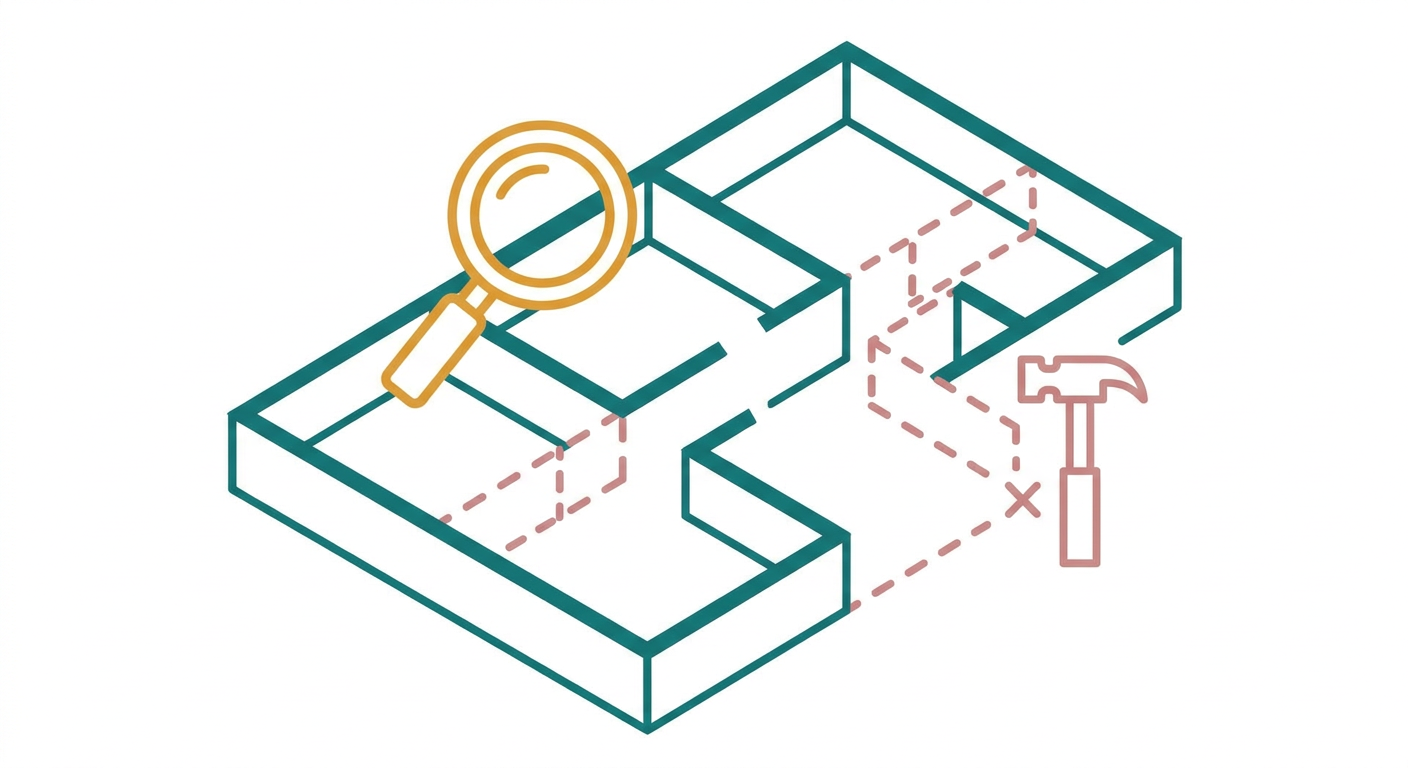
On the floor plan, you will see walls marked in different ways. The most critical distinction is between structural walls and non-structural partition walls. Hacking a structural wall is never allowed. It compromises the load-bearing capacity of the entire block.
How to Read HDB Wall Markings
Here is how to tell the difference on a standard HDB floor plan:
| Floor Plan Marking | Wall Type | Hacking Allowed? |
|---|---|---|
| Solid black line / Solid filled box | Structural / Load-bearing wall | Strictly NO. Cannot be hacked, drilled beyond a certain depth, or removed. |
| Box with internal diagonal lines (hatching) | RC (Reinforced Concrete) Wall | Usually NO. Often structural. Check with HDB. |
| Double thin lines (parallel) | Brick partition wall | YES, with HDB permit. Non-load-bearing. |
| Thick dashed lines | Curtain wall / Glass partition (often in newer BTOs) | Depends. Check with HDB, often restricted. |
Source: SG Info Property – HDB renovation rules & permits
What You Cannot Hack: Restricted Zones
HDB has strict rules regarding structural integrity. When we say you cannot touch something, it means you cannot do it legally, and doing it illegally carries severe penalties. Here are the areas and elements that are strictly off-limits.
1. Structural Columns and Beams
These are the vertical and horizontal supports holding up your block. They are typically cast in reinforced concrete. You cannot remove them, and you generally cannot notch into them to run pipes or electrical conduits.
2. Load-Bearing Walls
As mentioned, any wall drawn as a solid black line on your floor plan cannot be touched. Even if a previous owner illegally hacked a section of it, you are responsible for restoring it if HDB flags it during an inspection.
3. Household Shelters
Older HDB flats built before 1995 do not have them, but flats built after 1995 include a Household Shelter (HS). This is a reinforced room, usually near the main door or in a master bathroom area, designed for civil defence.
Source: Housing & Development Board – Renovation: Important Information
The hdb renovation rules for Household Shelters are highly restrictive. You cannot:
- Hack the walls, floor, or ceiling of the shelter.
- Drill into the walls or floor without strict limitations on depth (usually not exceeding 10mm into the concrete).
- Install built-in cabinets that permanently enclose the shelter or prevent the heavy steel door from opening fully.
- Alter the ventilation sleeve or the steel door in any way.
Source: Housing & Development Board – Guidelines for Household Shelters
4. External Walls and Windows
You cannot alter the external facade of the building. This means you cannot change the size of your existing windows, knock out a window opening to extend a room, or install new windows where there were none without HDB approval (which is rarely granted for structural openings).
Source: Housing & Development Board – Renovation permit guidelines
5. Bomb Shelter Doors
Even if you decide to turn your Household Shelter into a walk-in wardrobe, you cannot remove the heavy steel door. It must remain functional and closed unless you are actively entering or exiting the space.
What You Can Usually Hack (With a Permit)
Provided you apply for the permit and follow the approved working hours, you are generally allowed to demolish non-structural elements.
Interior Partition Walls
Walls built of bricks or lightweight blocks that do not carry the weight of the floor above can be removed. For example, the wall separating the kitchen from the service yard, or a wall between two bedrooms, is often non-structural. Removing these creates open layouts. You must submit a layout plan showing the wall removal to HDB for approval before starting work.
Source: Housing & Development Board – Renovation: Important Information
Tiles and Floor Screed
In older resale flats, you are allowed to hack floor and wall tiles. However, hacking the floor screed (the layer of cement below the tiles) in bathrooms has special rules.
Old Built-In Furniture
Unless your flat is brand new and subject to a defect-checking period, you can remove old kitchen cabinets, built-in wardrobes, and false ceilings left by the previous owner. We always advise clients to check if the old wardrobes are masking a structural column or a beam, as we sometimes discover hidden structural elements when stripping out old carpentry.
The 3-Year Rule for BTO Bathrooms
One of the most frequently misunderstood hdb renovation rules concerns bathrooms in new Build-To-Order (BTO) flats. HDB spent money waterproofing these floors using a specialized system, and they guarantee this waterproofing for three years.
Source: Housing & Development Board – Renovation permit: toilet/bathroom works
To protect this warranty:
- You are NOT allowed to hack the floor tiles or the floor screed in a BTO bathroom during the first three years after key collection.
- You can hack the wall tiles, but you must be extremely careful not to damage the floor.
- If you must change the floor tiles, you have to overlay them instead of hacking them. However, overlaying adds weight and raises the floor level, which can cause issues with the door swing and step-down height.
Source: RenovationContractorSingapore – HDB Renovation Permit Guide (BTO 3-year rule)
After the three-year period, you are allowed to hack the bathroom floor entirely, down to the concrete slab, so we can re-apply a fresh waterproofing membrane. If you are buying a resale flat that is older than three years, this restriction no longer applies.
Permits, Deposits, and Working Hours
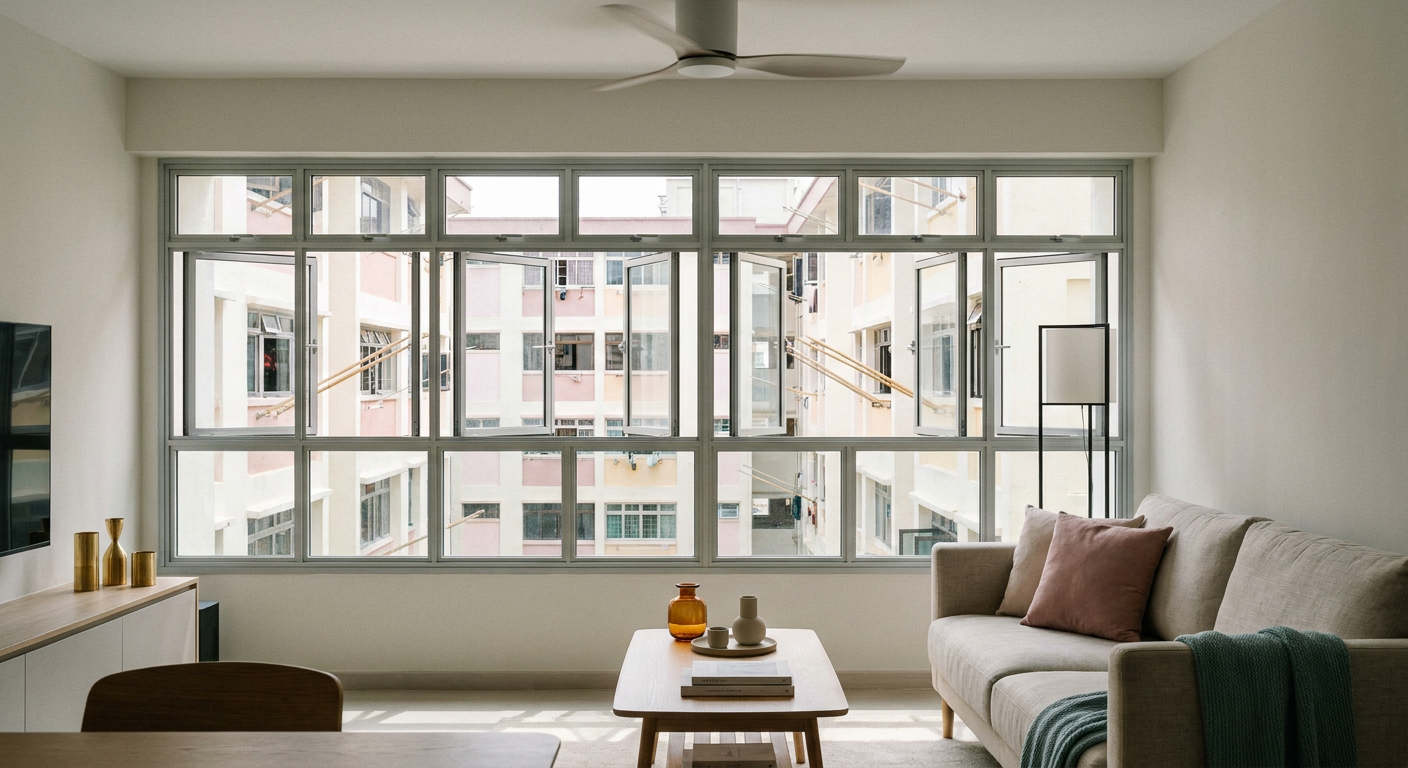
You cannot simply hire a worker with a sledgehammer and start tearing down a brick wall. HDB requires a strict administrative process to ensure the work is safe and does not drive your neighbours to complain to the authorities.
The Renovation Permit
Your renovation contractor must apply for a renovation permit via HDB's online renovation portal (e-Submission). The submission includes your proposed floor plans, clearly marking what is being hacked, added, or altered. HDB generally processes and approves straightforward renovation permits within a few working days, although complex cases can take longer.
Source: Housing & Development Board – Renovation: Important Information
Renovation Security Deposit
For hacking works, contractors must post a security deposit to HDB. This deposit acts as a bond. If the contractor damages common property, like the lift, the corridor walls, or the lobby floor while carting debris away, HDB uses the deposit to pay for repairs. The deposit is refunded to the contractor after the renovation ends, provided there are no valid complaints from neighbours or the Town Council.
Source: Housing & Development Board – Renovation permit conditions
Approved Hacking Hours
Noisy work is heavily restricted. If you or your contractor breaks these rules, the permit can be revoked immediately, and you may face fines. The legal hours for noisy renovation work in HDB flats are:
- Monday to Friday: 9:00 AM to 5:00 PM
- Saturday: 9:00 AM to 1:00 PM
- Sundays and Public Holidays: Strictly NO noisy work allowed.
Furthermore, you are only allowed to carry out noisy works (like hacking, drilling, and cutting tiles) for a maximum of three consecutive days per unit. After that, noisy work must stop. Quiet work, like painting or installing cabinets, can continue for the duration of the permit.
Source: The Straits Times – Renovation guidelines for noisy works
Why Hacking is Messy and Expensive
Many homeowners are surprised by the cost of hacking. When we quote for hacking works, the expense comes from the labour, the debris disposal, and the rebuilding process.
When we hack a brick wall, the debris does not just disappear. It has to be shoveled into gunny sacks, carried down a staircase or lift (often requiring protective padding in the lift to avoid damage), and loaded into a bulk disposal truck. Singapore charges dumping fees at construction waste facilities. If you live on a high floor with limited lift access, the manual labour costs increase.
Additionally, when you hack a wall, you are left with rough edges, exposed floor screed, and potentially dangling electrical wiring or plumbing pipes. You have to pay for a mason to build a new wall (if you are replacing it with a drywall partition or a new brick wall), an electrician to re-route the wiring, and a tiler to patch the floor where the old wall sat.
Alternatives to Hacking Walls
If HDB rules prevent you from hacking a structural wall, or if you want to save money and reduce dust, consider alternatives:
- Drywall Partitions: If you want to split a large room without adding heavy bricks, we can erect steel framing and gypsum boards. It is faster, cleaner, and saves floor space.
- Open Shelving: Instead of removing a wall between a kitchen and dining area (which might be structural), we can cut openings or create pass-through windows. This still requires HDB approval, but is sometimes permitted if the structural engineer signs off on where the rebar is located.
Common FAQs on HDB Hacking
Can I hack a wall if my neighbour says it is affecting their flat?
Even if HDB approves a permit, you are responsible for rectifying any damage caused to your neighbour's flat. If you share a common wall and your hacking causes cracks in their plaster or dislodges their tiles, you must pay for the repairs. This is why we always advise speaking to your immediate neighbours before renovation starts, and taking photos of your own unit and common areas as proof of the original condition.
What happens if I accidentally hack a structural wall?
This is a severe breach of HDB regulations. If an HDB inspector finds out, or if a neighbour reports structural vibrations, HDB can issue a Stop Work Order immediately. You will be forced to engage a Professional Engineer (PE) to assess the damage and submit a plan to restore the structural integrity, usually by pouring a new reinforced concrete wall or installing heavy steel supports. The cost for this remedial work is extremely high, and you may be fined.
Can I hack the wall between my kitchen and the service yard?
In most cases, yes. The wall separating the main kitchen from the service yard (where the washing machine usually sits) is typically a non-structural brick wall. However, you must still apply for a permit. We also have to check if the electrical points or gas pipes are running through that wall before hacking begins.
Do I need to inform the Town Council before hacking?
Your contractor applies for the permit through HDB, but the Town Council manages the common areas. Before delivery of materials or the start of hacking, your contractor must inform the Town Council. This is to ensure that common corridors, lifts, and bin chutes are available for your use, and to arrange for bulky debris removal if necessary. Town Councils also require a separate refundable deposit for the use of common property.
Plan First, Hack Later
Hacking is the foundation of any major renovation. If the sequence is wrong, or if you breach the hdb renovation rules, the entire project will stall. We always tell our clients: verify the floor plan, apply for the permit, and then pick up the sledgehammer.
Because we handle the structural works, permits, and debris disposal directly with our own crews, we can tell you upfront whether your dream layout is physically and legally possible inside an HDB flat. We do not draw things that cannot be built.
If you have a floor plan and an idea of what you want to change, bring it to us. We will look at the structural drawings, tell you what HDB will and will not approve, and give you an honest quote for the hacking, carting, and rebuilding works.
Bring your floor plan to our showroom at Blk 727 Clementi West Street 2, #01-278, Singapore 120727 (by appointment), or WhatsApp our manager Tony at 9088 5037 to discuss your renovation.
Read next
- Commercial interior design firm: what the rules allow, and what they do notWhat a commercial interior design firm in Singapore can usually do, what needs separate approval, and where homeowners often get confused.Renovation Rules
- List of interior design firms: what the rules allow, and what they do notWhat a list of firms can tell you, what it cannot, and how to check who will actually build your renovation in Singapore.Renovation Rules
- Interior design for residential: what the rules allow, and what they do notA plain guide to what residential interior work usually allows in Singapore, what needs approval, and where design has to stop.Renovation Rules
Tell us what you are working with.
Send us the unit type and a rough idea of what you want done. We will come back with what it takes.