
Modern style in interior design: which ones actually work in a Singapore flat
28 Oct 2026 · YC Design and Build
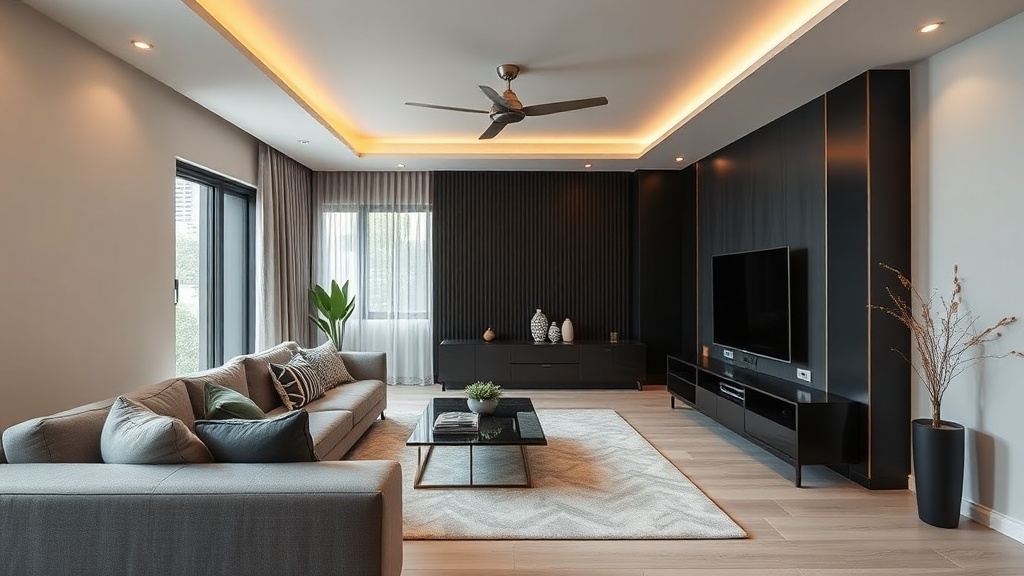
A practical look at modern style in interior design for Singapore flats, what suits the climate, layout and day-to-day use.
You like the clean look, but “modern” covers too many things. In a Singapore flat, the wrong version can feel hot, dark, cramped, hard to clean, or simply too expensive for what you get. The useful question is not whether you like a modern style in interior design, it is which modern style still works after you factor in flat size, light, storage, maintenance and renovation rules.
At YC, we look at this from the build side first. A nice rendering is easy. The harder part is making sure the layout, materials and details suit an HDB or condo, and can be built properly by the trades on site. Modern style usually looks simple. It is not always simple to execute.
What “modern” usually means in a Singapore home
Most homeowners use “modern” to mean clean lines, less ornament, built-in storage, calm colours and a neater visual finish. In practice, that branches into a few common directions:
- Modern contemporary: clean base, warmer than stark minimalism, often mixed materials.
- Modern Scandinavian: light timber tones, white or warm neutrals, soft forms.
- Modern industrial: darker tones, exposed textures, metal, cement-effect finishes.
- Modern minimalist: reduced palette, fewer visual breaks, hidden storage.
- Modern luxury: larger surfaces, feature stone, detailed lighting, more expensive joinery.
All of these can work. Not all of them work equally well in a typical Singapore flat. Climate, flat size and daily use matter more here than on a Pinterest board.
Which modern style in interior design actually works best in a Singapore flat
For most HDB and condo units, the safest modern styles are modern contemporary, modern Scandinavian and a practical form of minimalist design. They suit smaller footprints, they handle daylight better, and they do not depend on many fragile details to look complete.
Modern industrial can work, but it is less forgiving. Modern luxury can work, but the budget climbs quickly because simple-looking details often require more trades, tighter tolerances and better materials.
If you want the short answer:
- Best all-rounder for a 3-room to 5-room flat: modern contemporary.
- Best for small flats with limited daylight: modern Scandinavian.
- Best if you want visual calm and can stay disciplined on storage: modern minimalist.
- Best only if you genuinely like texture and darker tones: modern industrial.
- Best only with a stronger budget and a clear lighting plan: modern luxury.
The key point is this: a modern style should solve the flat, not fight it.
Start with the flat, not the style name
Before choosing any style, check five things.
1. The amount of natural light
Many Singapore flats have one side doing most of the lighting work. If your living room gets strong afternoon sun, dark finishes may look rich in photos but feel heavy by 5pm. If bedrooms are dim, charcoal laminates and smoked glass can make them feel smaller.
Lighter finishes do not just look brighter. They also make uneven daylight less obvious. That is one reason modern Scandinavian and lighter contemporary schemes are common here.
2. The width of your rooms
A lot of modern references come from larger homes. Wide circulation, generous island counters and floating furniture need space around them. In a flat, every 50mm to 100mm matters. A feature wall that projects too much can shrink a walkway. A bed platform can look good and make cleaning harder. A false ceiling may help with lighting, but it lowers the room visually.
3. How much enclosed storage you need
Minimalist homes look good because clutter is hidden. If you do not have enough proper storage, the style falls apart within a month. Built-in carpentry helps, but it is one of the biggest budget drivers in a modern renovation.
4. Your tolerance for maintenance
Open grain timber, fluted panels, black surfaces, mirror, dark grout, glass shelves and textured wall finishes all have a maintenance cost. Not always a money cost, often a time cost. If the home has young children, older parents, or heavy cooking, choose details that can take use.
5. The actual renovation scope
A new BTO and an older resale flat are different jobs. Resale units often need more demolition, rectification and rewiring. That affects what style makes sense. A clean modern design in a resale flat may still require a lot of hidden work before the visible finishes start.
Modern contemporary: the most reliable fit for Singapore flats
If a homeowner asks for a modern home without wanting it cold or trendy, this is usually the most workable direction.
Modern contemporary uses a restrained base, then adds warmth through timber tones, textured laminates, fabric, lighting and a few stronger accents. It lets you keep the clean look without depending on extreme minimalism. That matters in a real flat where storage, drying clothes, family routines and appliances have to coexist.
Why it works
- It adapts well to both BTO and resale layouts.
- It can be done light or medium-toned, depending on sun and room size.
- It hides practical storage more easily than Scandinavian style, which can look too sparse if overdone.
- It ages better than trend-heavy looks.
What to watch
- “Contemporary” is broad. Without discipline, it becomes a mix of unrelated finishes.
- Too many feature materials can make a small flat look busy.
- Curves, niche shelves and layered lighting look simple on paper but add carpentry and electrical work.
For a 4-room HDB, modern contemporary or modern Scandinavian style is commonly seen in the S$45,000 to S$70,000 range for a full renovation, with the lower or upper end moving mainly by carpentry, wet works, flooring changes, hacking and material grade. If it is a BTO with minimal hacking, the range tends to stay lower. If it is a resale flat with rectification, it goes up.
Modern Scandinavian: still good, if you do not reduce it to white walls and pale wood
Scandinavian style became common in Singapore for a reason. It suits compact layouts. It lifts darker rooms. It makes a space feel approachable. Done properly, it is practical.
Done badly, it can look temporary, flat or under-built.
Why it works
- Light colours help small rooms feel larger.
- Warm timber tones soften the look of built-in storage.
- It pairs well with vinyl flooring, simple laminates and off-white walls.
- It allows the home to feel calm without needing costly feature elements.
What to watch
- Very pale finishes show staining and knocks more easily.
- Cheap light oak-look laminates can look artificial quickly.
- If every surface is the same tone, the home can feel washed out.
- Open shelving looks neat in photos, but closed storage works better for daily life.
The practical version of this style in Singapore usually means: warm white walls, one or two timber tones only, simple carpentry lines, enough concealed storage, and flooring that is easy to mop. It does not need decorative wooden slats everywhere.
Modern minimalist: good only if the planning is honest
Minimalist homes are appealing because they look calm. But the calm is usually bought in two ways: by reducing things, or by hiding them. Most families do the second. That means more planning and more built-ins.
In a flat, modern minimalism works when the layout is efficient, storage is measured properly and the material palette is tightly controlled. It fails when the visible simplicity hides unresolved practical needs.
Why it works
- Visually quiet rooms can make a modest flat feel more generous.
- Handleless or reduced-detail carpentry gives a clean look.
- A limited palette can tie old and new parts of a resale flat together.
What to watch
- Less visible detail means workmanship shows more. Crooked lines are easier to see.
- Flush finishes and shadow gaps can cost more than they look like they should.
- Hidden storage means more carpentry. More carpentry means more budget.
- Very plain homes can feel austere if lighting and texture are not handled well.
This is where the contractor side matters. Minimalist design depends on alignment. Cabinet lines, ceiling lines, skirting detail, tile set-out, switch placement and silicone joints all become more obvious because there is less visual distraction. A home can be “simple” and still be demanding to build.
Modern industrial: workable, but less forgiving in an HDB
Industrial style is often misunderstood as a cheaper route because it uses raw-looking finishes. That is not always true. A cement-look tile, microcement coating, black-framed glass panel, metalwork feature and exposed-effect lighting scheme can cost more than a straightforward contemporary fit-out.
It can still work well in a Singapore flat, especially for owners who prefer moodier interiors. But it needs control.
Why it works
- It suits open living and dining areas with stronger personality.
- Textured finishes can hide minor daily wear better than glossy surfaces.
- It pairs well with practical materials such as homogeneous tiles and compact laminates.
What to watch
- Darker tones can compress space in smaller rooms.
- Too many black elements can make the flat feel dim.
- Some “exposed” looks are cosmetic only, and still require careful finishing.
- Screed or cementitious surfaces may crack or stain if the substrate and application are not handled properly.
For 4-room HDB projects, modern industrial is commonly benchmarked above light contemporary schemes, often around S$50,000 to S$75,000 for a full renovation, with the variation driven by floor and wall finishes, metal or glass detailing, carpentry amount and whether wet areas are fully redone.
The practical version for a flat is usually 20 to 30 per cent industrial, not 100 per cent. Use one or two rougher textures, keep the envelope brighter, and avoid turning every room into a dark box.
Modern luxury: possible, but know what you are paying for
Modern luxury is usually less about the style label and more about execution. Bigger stone-look surfaces, fewer joints, custom lighting, glass, veneer, metal trims, detailed wardrobes, premium sanitary fittings and better appliances all push cost up.
In a flat, this style can work very well if the layout is already decent and the owner values material quality over quantity of features. It works less well when the budget is spread across too many statement elements.
Why it works
- Good materials can make a compact home feel composed and substantial.
- Well-planned lighting gives depth without clutter.
- Cleaner detailing can suit resale flats after a full overhaul.
What to watch
- Large-format tiles and stone-effect slabs need skilled handling and good substrate preparation.
- Mirror, metal trim and glossy surfaces show alignment issues quickly.
- The style is expensive because workmanship tolerance is tighter, not just because the materials cost more.
For a standard 4-room HDB, modern luxury ranges commonly start around S$70,000 and can exceed S$120,000, depending on scope. In resale units with heavy hacking, rewiring, bathroom renewal and premium finishes, costs can climb much further.
A practical comparison: what suits which flat
| Style | Best for | Main strengths | Main trade-offs |
|---|---|---|---|
| Modern contemporary | Most 3-room to 5-room HDBs, most condos | Balanced, flexible, easy to warm up, good for hidden storage | Can become generic if materials are not controlled |
| Modern Scandinavian | Smaller flats, dimmer rooms, young families | Bright, approachable, cost-efficient when kept simple | Can look flat or too light, pale finishes mark more easily |
| Modern minimalist | Owners who want visual calm and can commit to storage planning | Clean, spacious feel, good visual order | Needs strong planning and precise workmanship |
| Modern industrial | Owners who like darker texture and stronger mood | Character, texture, practical materials available | Can feel heavy, not always cheaper, lighting is critical |
| Modern luxury | Higher budgets, strong focus on finish quality | Polished result, strong material impact | Budget rises quickly, mistakes show more |
How Singapore renovation rules shape modern design choices
Homeowners often choose a style first and only later discover what can or cannot be changed. In Singapore, rules and approvals affect both design and cost, especially in HDB flats and older resale units.
The broad areas that commonly matter are:
- Structural and load-bearing elements: not every wall can be hacked.
- Wet areas: bathrooms, waterproofing and floor finishes need care.
- Electrical rewiring: older flats often need more extensive work.
- Windows and doors: some replacements have specific requirements.
- Working hours, access and permits: HDB and condo management rules affect logistics.
This is one reason some modern layouts cost more than expected. An open-plan concept in a resale flat may involve hacking, debris removal, making good, electrical rerouting and rectification of old surfaces. The style picture looks simple. The hidden work is not.
For wet areas especially, do not chase a look without checking buildability. A flush bathroom aesthetic or a change in floor finish may have waterproofing and level implications. The visual goal matters, but the wet area still has to function properly.
What modern style costs in Singapore, and what moves the number
For a 4-room HDB, modern style renovations in 2026 commonly sit around S$40,000 to S$80,000, depending on whether it is BTO or resale, how much hacking is involved, how much carpentry you want, and the material level. That broad market band is useful as orientation, not as a quote.
A few grounded benchmarks:
- BTO flats: often lower because the shell is newer and hacking is lighter. A 4-room BTO modern renovation is commonly seen from around the low S$40,000s up to the high S$60,000s, depending on scope.
- Resale flats: usually higher because demolition, rectification, rewiring, plumbing checks and bathroom works are more common. A 4-room resale modern renovation often lands from around the high S$40,000s upward, and can exceed S$100,000 if the scope is heavy and finishes are premium.
- Broader market range: across home types and renovation scope, modern-style projects can start from around S$15,000 for smaller or lighter jobs and run beyond S$200,000 for large or high-spec homes.
The main cost drivers are usually:
- Carpentry quantity: wardrobes, TV walls, shoe storage, study units, kitchen and service yard cabinets.
- Hacking and rectification: especially in resale flats.
- Wet works: bathrooms and kitchen tiling, waterproofing and plumbing changes.
- Electrical scope: full rewiring, added circuits, lighting points and feature lighting.
- Material choice: standard laminates versus veneer, compact surfaces, sintered stone or slab-like finishes.
- Detailing level: curves, niches, fluting, glass, metal trims, large tiles and concealed systems.
If two modern homes look similar in photos but one quote is much higher, the difference is often in hidden work and detailing. What is behind the wall, below the tile, or inside the cabinet carcass matters.
Common mistakes when copying modern interiors into a local flat
Making the living room too empty, then adding loose storage later
A sparse design looks calm at handover. After move-in, you buy organisers, sideboards and racks. The room ends up busier than if storage had been designed properly from the start.
Using too many feature walls
Modern style relies on restraint. Stone-look panel, fluted panel, mirror panel, slatted timber and cove light in one sightline is not restraint. Pick one emphasis, not five.
Ignoring service yard and kitchen realities
Homes here cook, wash and store. A beautiful kitchen that lacks usable counter space, appliance planning or cleaning access will become frustrating quickly.
Over-darkening small bedrooms
A dark bedroom can be restful, but many flats do not have the dimensions or light balance to carry it well. Often it is better to keep the main surfaces lighter and bring in darker tones through fabric, hardware or one controlled surface.
Choosing details that are hard to maintain
Textured grooves collect dust. Open shelves collect clutter. Matte black can show water marks. This does not mean avoid them all. It means place them carefully.
How to choose the right modern direction for your own flat
A simple method works better than chasing style labels.
- List your non-negotiables: number of wardrobes, work-from-home needs, dining size, shoe storage, cleaning access, whether you cook heavily.
- Mark what the flat gives you already: daylight, ceiling height, awkward beams, existing kitchen and bathroom condition.
- Choose a base mood: light, medium or dark.
- Choose only two main finishes: for example, warm white plus mid oak, or grey-beige plus walnut.
- Decide where to spend: kitchen, bathrooms, master wardrobe, flooring, lighting. Not every area needs the same intensity.
- Ask what can be built cleanly: not just what looks good in a rendering.
For most first-time homeowners, a balanced contemporary scheme is the easiest to live with and the hardest to regret. You can still bring in Scandinavian warmth, minimalist lines or a little industrial texture without committing the whole flat to one extreme.
Where a direct contractor approach helps on modern projects
Modern interiors look controlled when the trades are coordinated well. Hacking affects electrical rerouting. Ceiling detail affects lighting positions. Carpentry line affects tile set-out. Glass and metal details affect wall preparation. These are site decisions as much as design decisions.
That is why buildability matters. If the people drawing the lines do not understand how the lines meet on site, the result may still look acceptable in photos but feel unresolved up close.
With modern work, the joints, edges and alignments are the design. There is less decoration to hide behind. A contractor-led eye helps because we are not only asking, “Does this look good?” We are asking, “How will this be built, by which trade, in what sequence, and what happens if the existing wall is out by 10mm?”
That is not a glamorous question. It is often the right one.
FAQ
Which modern style is best for a 4-room HDB flat?
For most owners, modern contemporary is the safest choice. It is flexible, suits compact layouts, and can include enough built-in storage without looking heavy. If the flat is dim or you want a lighter feel, modern Scandinavian is also a strong option.
Is modern industrial cheaper because it looks raw and unfinished?
Not necessarily. Industrial-style finishes can involve special coatings, darker materials, metal or glass details and careful lighting. Some raw-looking finishes are more demanding to execute than standard painted walls and simple laminates.
How much should I budget for a modern renovation in Singapore?
It depends on property type, BTO versus resale, scope and materials. For a 4-room HDB, a broad 2026 market range for modern styles is commonly around S$40,000 to S$80,000, with BTOs often lower and resale flats often higher because of hacking, rectification and rewiring. Smaller projects can start below that, while larger or more premium homes can go well beyond it.
If you want, ask YC about your own flat and we can tell you which modern direction is practical to build.
Read next
- House interior design: how to get it right in a Singapore homePractical notes on planning a Singapore house renovation: layout, storage, services, budget and what changes once design meets site.Design Styles
- Home interior design: how to get it right in a Singapore homeHow to plan a home that works in daily life, with clear steps on layout, storage, budget and build choices for a Singapore renovation.Design Styles
- Interior design company list: how to get it right in a Singapore homeUse an interior design company Singapore list properly: shortlist firms, check who actually builds, compare quotes, and avoid common renovation gaps.Design Styles
Tell us what you are working with.
Send us the unit type and a rough idea of what you want done. We will come back with what it takes.