
HDB Renovation Permit: What Needs One, What Does Not, and How to Apply
29 Jul 2026 · YC Design and Build

The permit is what decides whether your contractor starts on schedule or waits. Here is exactly which works need one, which do not, and how the application actually runs.
Quick Reference Guide
HDB Renovation Permit: What Needs One
A contractor checklist for Singapore public flats: what always requires approval, what skips it, and what happens if you skip the process.
!Needs a Permit
- Hacking walls, including non-structural dividers
- Removing floor or wall tiles
- Building new partition walls, including brick, drywall, or glass
- Door or window replacement, especially along fire escape routes
- Electrical rewiring, power points, and load upgrades by a Licensed Electrical Worker
- Plumbing changes, including pipe positions and sanitary fittings
- False ceilings or L-boxes that involve drilling into the slab
✓No Permit Needed
- Painting walls, ceilings, and doors
- Wallpaper or vinyl wall stickers
- Interlocking vinyl floorboards or loose carpets, no glue or hacking
- Ready-made freestanding furniture or wardrobes
- Swapping internal light fixtures without altering wiring
The Application Process
Site Inspection
Contractor visits and quotes based on proposed works.
Document Prep
Floor plan, plus structural or electrical plans where required.
Online Submission
Contractor files via HDB InfoWEB using the APEX system.
HDB Evaluation
Officers review. Non-compliant items return for amendment.
Approval
Digital permit issued. Works can start within the approved period.
Display
Printed permit shown prominently at the flat entrance.
Skip the Permit, Pay Later
Unauthorised works can trigger an immediate Stop Work Order, mandatory reinstatement at your own cost, and fines up to S$5,000 under the Housing & Development (Renovation Control) Rules. Getting the permit first is almost always cheaper.
Before any hacking, tiling, or rewiring begins in a Singapore public flat, the HDB renovation permit is the document that decides whether your contractor can start on schedule or has to wait. As a firm that started as a direct contractor before adding a design studio, we have processed many of these applications. Some homeowners are surprised to find that minor works still require paperwork, while others overestimate what needs approval. This guide breaks down exactly what requires a permit, what you can do without one, how to apply, and what happens if you skip the process.
Why HDB Requires a Renovation Permit
HDB flats share structural walls, plumbing lines, and electrical wiring with neighbouring units. The permit system exists to ensure that no renovation compromises the structural integrity of the building, breaches fire safety codes, or causes severe nuisance to your neighbours. The application process forces the contractor to declare exactly what works will be carried out, allowing HDB to check if those works comply with current regulations.
It is important to note that renovation rules change over time. Walls that were allowed to be hacked twenty years ago might be disallowed today. Always rely on current HDB guidelines rather than what a previous owner did to the flat.
What Requires an HDB Renovation Permit
Any work that alters the structure, fire safety, or essential building systems of the flat requires a permit. If you are engaging us or any other contractor for major works, the permit must be approved before tools are brought into the unit.
Structural and Masonry Works
- Hacking of walls: Even if a wall is non-structural (such as a divider between the living room and a bedroom), you still need a permit to hack it down to ensure it is not carrying unexpected loads.
- Hacking of floor and wall tiles: Removing original HDB tiles generally requires approval because it involves removal of existing floor or wall finishes.
- Constructing new walls: Building new partition walls, whether brick, drywall, or glass, requires declaration to ensure they do not overload the floor slab.
- Door and window replacement: Changing the main door, bedroom doors, or original windows can require a permit to ensure the new frames meet fire rating and structural standards, especially for doors along fire escape routes and all window replacements.
Source: HDB Renovation Portal – Terms and Conditions; Sample HDB Renovation Guidelines (City View @ Boon Keng); PropertyGuru – HDB renovation permits guide
Electrical, Plumbing, and Ceiling Works
- Electrical rewiring: Changing wiring positions, adding new power points, or upgrading the electrical load requires a permit and must be done by a Licensed Electrical Worker (LEW).
- Plumbing works: Altering bathroom layouts, changing pipe positions, or replacing the original sanitary fittings may require approval. Note: Bathroom renovation restrictions apply within the first three years of flat ownership for new BTO flats.
- Ceiling works: Installing a false ceiling or L-box, particularly if it involves drilling into the concrete slab or altering recessed lighting, can require approval because it affects the building structure and fire safety provisions.
Source: HDB Application for Renovation Permit (Contingency Form); HDB Renovation Permit Guide Singapore (2026 Rules & Process); RenoTake – Which renovations need permits
What Does Not Require a Permit
Cosmetic updates and non-permanent fittings generally do not require an HDB renovation permit. However, contractors are still expected to follow renovation time rules and noise guidelines when carrying out these works.
- Painting of walls, ceilings, and doors
- Installation of wallpaper or vinyl wall stickers
- Laying of interlocking vinyl floorboards or loose carpets (no glue or hacking involved)
- Installing ready-made, freestanding furniture or wardrobes
- Replacing internal light fixtures without altering the wiring
Source: RenoTake – Which renovations need permits; PropertyGuru – HDB renovation permits guide
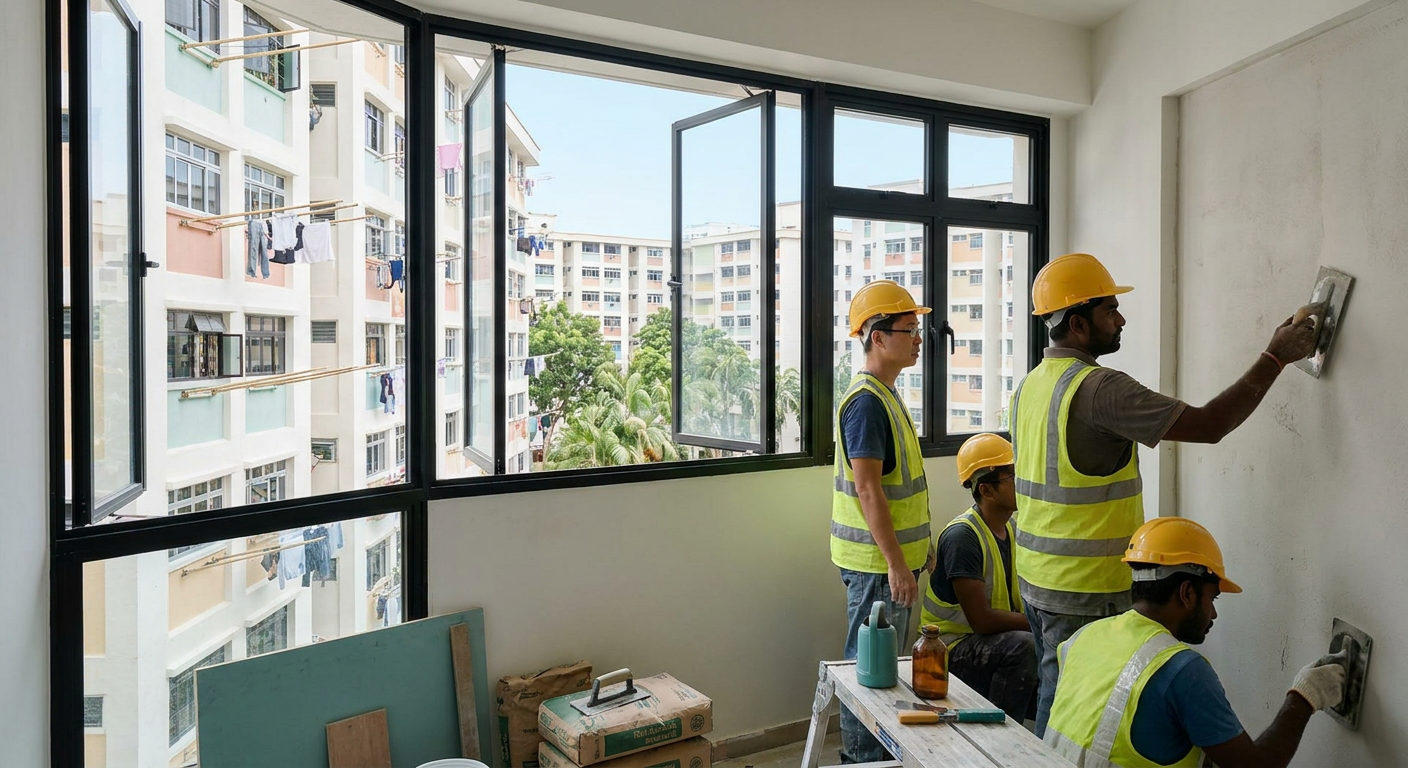
Permit vs No-Permit: A Quick Comparison
| Renovation Work | Permit Required? | Key Consideration |
|---|---|---|
| Hacking a non-structural wall | Yes | Must ensure the wall is not load-bearing according to the floor plan. |
| Removing floor and wall tiles | Yes | HDB needs to check that removal and replacement of finishes comply with thickness, waterproofing, and other technical limits. |
| Full electrical rewiring | Yes | Must be carried out and endorsed by a Licensed Electrical Worker (LEW). |
| Changing original main door (along fire escape route) | Yes | New door must meet required fire safety ratings. |
| Installing vinyl flooring (click-system) | No | No hacking of existing floor finishes is permitted beneath the boards. |
| Painting and wallpapering | No | Strictly surface-level cosmetic changes. |
| Assembling ready-made cabinets | No | Cabinets must not involve structural alterations. |
Source: RenoTake – Which renovations need permits; PropertyGuru – HDB renovation permits guide
How to Apply for an HDB Renovation Permit
As a homeowner, you do not apply for the permit yourself. HDB requires the application to be submitted by a HDB-registered renovation contractor, who is responsible for complying with the Housing & Development (Renovation Control) Rules.
If you are doing extensive works involving structural calculations, your contractor may need to engage a Qualified Person (QP) – usually a professional engineer – to endorse the submission. Because our team handles structural, electrical, and plumbing works in-house, we manage this entire submission process for you.
Source: Sample HDB Renovation Guidelines (City View @ Boon Keng); HDB Application for Renovation Permit (Contingency Form)
The Application Process
- Site Inspection and Quotation: Your contractor visits the flat, notes what needs to be hacked or altered, and provides a quotation based on the proposed works.
- Document Preparation: The contractor prepares the proposed floor plan, and where required, structural or electrical plans for submission.
- Online Submission: The contractor submits the application electronically via HDB InfoWEB using the “Application for Renovation Permit via Electronic Transaction” system (APEX), or via My Business on HDB InfoWEB.
- HDB Evaluation: HDB officers review the plans. If something is non-compliant, they will reject it or request amendments, which delays the timeline.
- Approval: Once approved, the permit is issued digitally and the contractor can commence works within the approved period.
- Display of Permit: A printed copy of the permit must be displayed prominently at the flat entrance before any work begins.
Source: HDB Application for Renovation Permit (Contingency Form); HDB Renovation Portal – Terms and Conditions
Timeline and Costs
The approval timeline depends entirely on what you are doing. For non-structural works (like tiling or non-load-bearing wall removal), approval typically takes a few working days once all documents are in order. For structural works requiring a QP, approval can take a few weeks after submission, especially if clarifications are requested.
Permit-related costs can vary depending on the type and extent of works, and may be itemised as part of your contractor’s professional, submission, or processing fees rather than as fixed statutory charges for each item of work. Your contractor should make clear in the quotation how these fees are broken down.
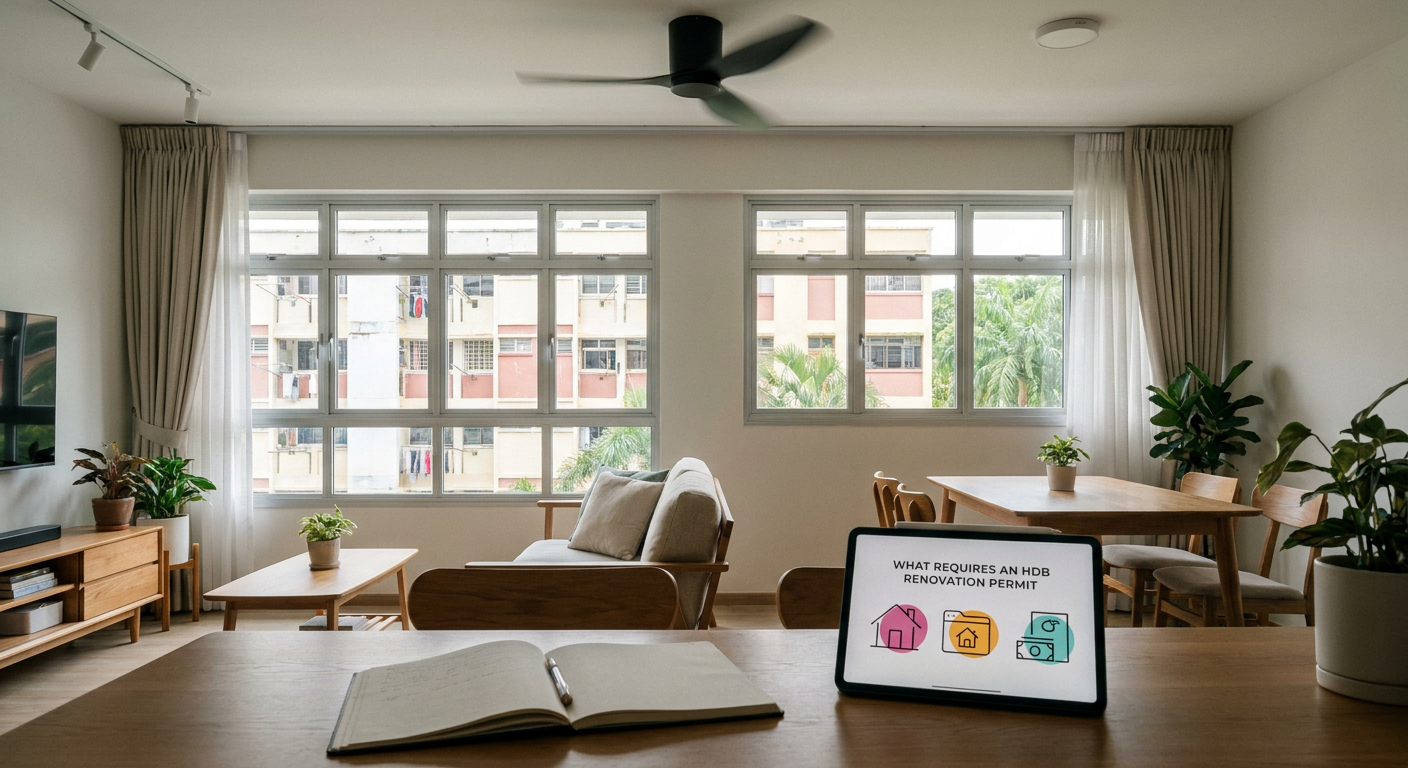
Key Rules During the Renovation
Once your HDB renovation permit is approved, your contractor must still follow strict rules during the execution phase. Failing to do so can result in a Stop Work Order.
- Renovation Hours: Noisy renovation works (such as drilling and hammering) are generally restricted to weekdays during the day, and are not allowed on Sundays or public holidays. Always check the latest HDB rules and your block’s notice board for the exact permitted hours.
- Hacking Hours: Hacking of walls and floors is typically limited to weekday day-time hours only and is not allowed on Sundays and public holidays.
- Duration Limit: For new BTO flats, most renovations must be completed within 3 months from the date of the renovation permit. For resale flats, the usual maximum duration is 1 month, unless otherwise stated in the permit.
- Rubble Chutes: If you are doing a major overhaul involving significant hacking, your contractor may be required to install a proper debris chute and use approved methods to dispose of demolition waste, instead of dragging debris through common corridors.
Source: HDB Renovation Permit Guide Singapore (2026 Rules & Process); HDB Renovation Portal – Terms and Conditions
What Happens If You Renovate Without a Permit?
Skip the HDB renovation permit and the financial consequences fall directly on the homeowner, not the contractor. If HDB inspectors catch the work (often triggered by neighbour complaints about noise or dust), HDB can issue an immediate Stop Work Order.
You may then be ordered to restore the flat to its original condition at your own expense. If you hacked a wall, you might be ordered to brick it back up. On top of this, you can be fined up to S$5,000 for unauthorised works under the Housing & Development (Renovation Control) Rules. Furthermore, when you eventually try to sell the flat, HDB can flag unauthorised alterations, and you may not be allowed to complete the resale until the modifications are legalised or reverted. Getting the permit first is almost always cheaper than paying for reinstatement and potential penalties.
Source: Housing & Development (Renovation Control) Rules 2006
Frequently Asked Questions
Can I apply for the HDB renovation permit myself?
No. HDB requires all renovation permit applications to be submitted by a registered renovation contractor through its electronic systems. This ensures that the entity carrying out the work takes responsibility for complying with building regulations.
Source: HDB Renovation Portal – Terms and Conditions; HDB Application for Renovation Permit (Contingency Form)
Do I need a permit for a BTO if I just want to do overlay flooring?
If you are overlaying vinyl or laminate flooring over the existing HDB tiles without hacking the existing finishes, no permit is generally required. However, if you want to hack the original tiles to lay new marble or ceramic tiles, a permit is mandatory.
Source: RenoTake – Which renovations need permits; HDB Renovation Permit Guide Singapore (2026 Rules & Process)
Can I hack the wall between my kitchen and living room in an older resale flat?
It depends entirely on the flat's structural plan. If the wall is a structural wall (often indicated by a thick line on the HDB floor plan), it cannot be hacked. If it is a non-structural partition wall, it may be hacked with a valid permit. Some older flats also have walls that were added by previous owners without approval – these can sometimes be removed, but you still need a permit and HDB’s consent to do so.
Source: Sample HDB Renovation Guidelines (City View @ Boon Keng)
Can I change the position of my toilet bowl or shower?
Yes, but only within the original toilet floor space. HDB has strict rules about waterproofing and about not extending the bathroom into adjacent rooms. Changing plumbing positions requires a permit, and waterproofing must be re-applied and tested (usually with a 24-hour water ponding test) before the new tiles go in.
Source: HDB Renovation Permit Guide Singapore (2026 Rules & Process)
Plan Your Renovation the Right Way
Figuring out which walls can come down and which systems need upgrading is easier when your design team is also your contracting team. Because we handle the hacking, masonry, electrical, and plumbing works directly, we know exactly what HDB will approve and what will be rejected before we even submit the application. That means fewer delays and no surprises during your renovation.
If you are planning a renovation and want to understand what permits your specific floor plan will require, bring your floor plan to our showroom at Blk 727 Clementi West Street 2, #01-278, Singapore 120727 (viewing by appointment), or WhatsApp our manager Tony at 9088 5037 for a direct consultation.
Read next
- Commercial interior design firm: what the rules allow, and what they do notWhat a commercial interior design firm in Singapore can usually do, what needs separate approval, and where homeowners often get confused.Renovation Rules
- List of interior design firms: what the rules allow, and what they do notWhat a list of firms can tell you, what it cannot, and how to check who will actually build your renovation in Singapore.Renovation Rules
- Interior design for residential: what the rules allow, and what they do notA plain guide to what residential interior work usually allows in Singapore, what needs approval, and where design has to stop.Renovation Rules
Tell us what you are working with.
Send us the unit type and a rough idea of what you want done. We will come back with what it takes.