
Contemporary style in interior design: which ones actually work in a Singapore flat
07 Nov 2026 · YC Design and Build
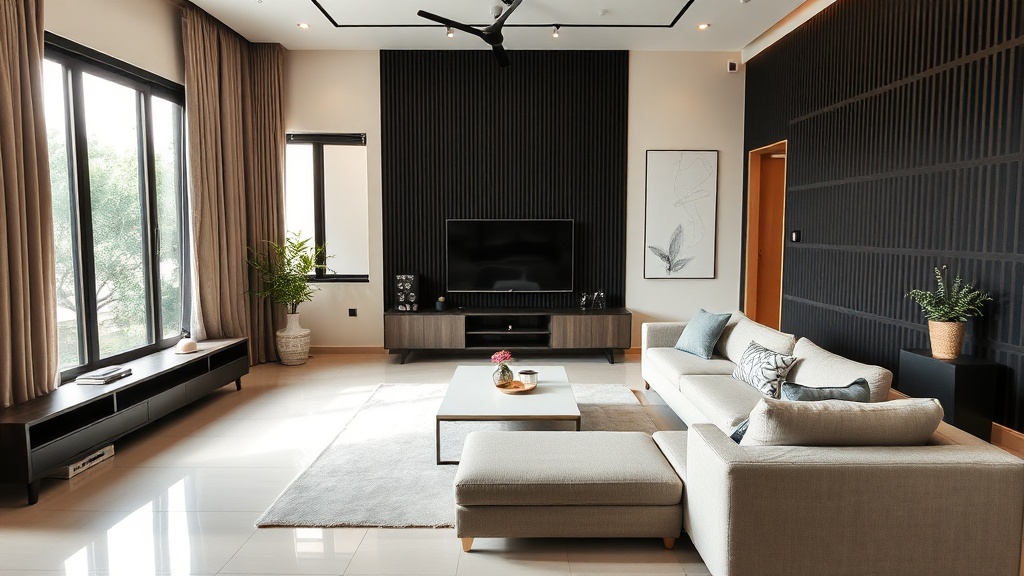
What contemporary style in interior design means in a Singapore flat, and which choices work in real layouts, budgets and daily use.
Most homeowners asking about contemporary style in interior design are not really asking about style first. They are asking a practical question: what will still look current in a Singapore flat, fit normal rooms, and not turn into a maintenance problem six months later. That matters more here because our flats are compact, humid, and usually need storage to work hard.
Contemporary is one of the most misused labels in renovation. Some use it to mean modern. Some use it for luxury hotel looks. Some use it for any neutral colour scheme with cove lights. None of that helps you decide. In a flat, contemporary style works only when the design responds to three things: room size, daily use, and how much built-in work you are willing to pay for.
At YC, we come at this from the build side. Our founder started as an independent contractor with one or two workers, grew into hacking, electrical and the other trades, then the design studio came on top. So when we talk about a style, we are not talking about mood boards only. We are talking about what has to be hacked, how much carpentry it needs, what is hard to clean, and which details look good on day one but age badly in a lived-in flat.
What contemporary style in interior design actually means
Contemporary style means what feels current now, not a fixed historical style. That is why it changes over time. In a Singapore flat today, it usually comes down to a few visible traits:
- Clean lines, fewer decorative profiles.
- Neutral base colours, often warm whites, taupe, grey, sand, charcoal or black accents.
- Built-in storage that keeps visual clutter down.
- Simple surfaces, larger planes, fewer small details.
- Layered lighting, not one bright ceiling light only.
- A mix of materials, for example laminate, sintered stone, quartz, glass, metal, veneer or textured paint.
The confusion starts because contemporary overlaps with other styles. A contemporary flat can borrow from minimalist, modern, Scandinavian, Japandi or even industrial language. The difference is not the label. The difference is how far you push each element.
For example, a Scandinavian home usually wants lighter timber tones and a softer casual feel. A minimalist home strips back even more. A contemporary home can sit between them: cleaner than Scandinavian, warmer than strict minimalism, and less raw than industrial.
That is why the better question is not, "Is this contemporary?" It is, "Which version of contemporary suits this flat, this budget, and this household?"
Why some contemporary looks work in Singapore flats, and some do not
Singapore flats have a few constraints that quickly expose weak design decisions.
- Space is limited. Long corridors, bomb shelters, household shelters, service yards and compact bedrooms force storage decisions.
- Humidity is high. Some finishes need more care, especially where air circulation is poor.
- Light varies a lot. Some units get strong west sun. Some are shaded and dim. The same palette can look calm in one flat and dull in another.
- Most households need real function, not showroom function. Shoes, laundry, charging points, cleaning tools, children, parents working from home, all of that must fit.
So the contemporary styles that work here tend to share four traits:
- They use built-ins carefully, not everywhere.
- They control visual clutter without making the home too precious to use.
- They choose materials for maintenance, not just appearance.
- They respect room proportions instead of copying large-house references into a small flat.
The styles that fail usually have one of these problems: too much dark surface in a dim unit, too many false ceilings in a low ceiling flat, too much open shelving for owners who own many things, or too much feature work for rooms that are already tight.
Which contemporary directions actually work in a Singapore flat
Below are the versions we think make practical sense most often. Not because they are fashionable, but because they hold up in real use.
1. Warm contemporary
This is the safest version for most HDB flats and many condos. The base is simple, but not cold. Think off-white walls, warm grey or beige undertones, light to medium wood tones, and black or bronze details used in small doses.
Why it works:
- It keeps the flat bright without looking clinical.
- It suits both daylight and artificial light better than stark white and blue-grey schemes.
- It ages well because the palette is forgiving.
- It works across open living areas and small bedrooms without dramatic shifts.
Where it goes wrong:
- Too many timber tones in one space, which makes it look muddled.
- Overuse of beige without contrast, which can make the home look flat.
- Trying to hide every item in full-height carpentry, which raises cost fast.
Best for: first-time homeowners, family flats, resale flats needing a full reset, and owners who want a current look without chasing trends.
2. Soft minimalist contemporary
This is the version many people want when they say they like "clean" homes. It uses fewer colours, fewer visible handles, and quiet detailing. Storage is usually concealed. Lines are straight. Decoration is restrained.
Why it works:
- Small spaces look calmer when visual noise is reduced.
- It can make an average flat feel more considered without expensive materials everywhere.
- It suits open-plan living and work-from-home corners well.
The trade-off is obvious: the cleaner the look, the more discipline the household needs. Minimalist homes are easy to spoil with clutter. That means this style works best when storage planning is honest. If you own many appliances, hobby items, children’s things or travel gear, you need to make room for them early. Otherwise the design is not minimalist, only incomplete.
Best for: owners who prefer calm spaces, have moderate storage needs, and are willing to keep surfaces clear.
3. Contemporary with Japandi influence
Japandi is common now, but the useful part is not the label. The useful part is its balance: soft texture, muted tones, simple forms, and practical restraint. In small flats, that can work well because it adds warmth without making the space busy.
Why it works:
- Natural textures soften compact rooms.
- The style does not rely on many colours or ornament.
- It pairs well with practical carpentry, especially low cabinets and simple wardrobes.
Where it fails:
- Too much pale wood and cream can look washed out in flats with weak natural light.
- Open shelving is often copied from references, then becomes a dust problem.
- Some textured finishes are chosen for looks but are awkward around cooking or children.
Best for: couples and small families who want warmth, simplicity and a less formal atmosphere.
4. Dark contemporary, used carefully
Dark contemporary can look very good in the right unit. Charcoal laminates, smoked glass, black-framed details and stone-look surfaces can create depth. But this is one of the easiest styles to overdo in a flat.
Why it can work:
- In bright units, darker tones can reduce glare and feel grounded.
- Used selectively, dark finishes make feature areas read clearly.
- It suits owners who want a sharper, more urban look.
The trade-offs:
- Dark rooms feel smaller if lighting is not planned properly.
- Dust, fingerprints and water marks show more on some dark surfaces.
- If the carpentry fills too much wall area, the home can feel heavy.
Best for: brighter condos, larger HDB living rooms, and owners willing to invest in good lighting and material selection.
5. Hotel-like contemporary
This is the polished version many people save from social media: large-format stone looks, concealed doors, padded headboards, cove lighting, tinted mirrors, and a more luxurious palette. Parts of it can work. The full package often does not.
Why it appeals:
- It looks tidy and expensive in photos.
- The layered lighting can make rooms feel more comfortable at night.
- It gives strong visual impact quickly.
Why it often struggles in flats:
- Too many false ceiling details can make ceilings feel lower.
- Large stone-look surfaces and mirror panels need careful proportioning in small rooms.
- Once every wall becomes a feature wall, nothing is a feature anymore.
- Costs rise quickly because this look usually depends on customised carpentry and finishing details.
Best for: larger condos, selected master bedrooms, or one controlled area such as the living room TV wall, not every room.
How to choose the right contemporary style in interior design for your flat
Do not start from colour. Start from use. We usually suggest deciding in this order:
- How many people live here, and what do they need to store.
- Whether the layout already works, or needs hacking.
- Which rooms need built-in carpentry, and which can stay looser.
- How much daylight the unit gets.
- What level of maintenance you will actually tolerate.
That order matters because style follows decisions that cost money. If you know you need a study nook, a dining bench with storage, a full-height shoe cabinet, and wardrobes in three bedrooms, then your contemporary look must absorb a lot of carpentry. That pushes you towards simpler lines and a more disciplined material palette. If not, the whole flat starts competing with itself.
| Flat condition | Contemporary direction that usually works | Main reason | Main caution |
|---|---|---|---|
| 4-room BTO | Warm contemporary, soft minimalist | New shell, easier to keep lines clean | Do not overbuild carpentry just because the flat is empty |
| 4-room resale HDB | Warm contemporary, Japandi-influenced | Good for full reset after rectification works | Budget may be consumed by hacking, rewiring, wet works first |
| Small condo | Soft minimalist, dark accents only | Can look crisp without heavy feature work | Do not let styling references reduce usable storage |
| Larger condo | Warm contemporary, controlled hotel-like elements | More room for material layering | Avoid making every wall a statement wall |
Budget reality: what usually moves the cost
For a contemporary-style home in Singapore in 2026, a typical HDB or condo renovation will often land somewhere between about S$45,000 and S$120,000+, depending mainly on whether it is a BTO or resale, how much carpentry you build, whether hacking and wet works are needed, and what materials and brands you choose.
For a 4-room BTO, a practical working range for contemporary renovation is often around S$45,000 to S$70,000 for a standard full design-and-build scope, with higher-spec work and heavier carpentry pushing towards S$90,000+.
For a 4-room resale HDB, a more realistic working range is often around S$60,000 to S$100,000, because older flats may need hacking, haulage, rectification, rewiring, plumbing updates and bathroom work. Premium versions can go higher, around S$120,000 to S$150,000, depending on scope.
For a 2 to 3-bedroom condo, a full contemporary renovation often sits around S$60,000 to S$100,000, with larger units, more custom carpentry, and premium finishes pushing towards S$150,000 to S$200,000+.
Those figures are not a style tax. They are mostly a scope tax. Contemporary style often looks simple, but simple usually means the details must be resolved well. That takes carpentry, coordination and finishing work.
The biggest cost drivers are usually these:
- BTO or resale: resale often carries demolition and rectification costs that a BTO does not.
- Carpentry volume: wardrobes, TV walls, platform beds, study tables, bay window storage, kitchen cabinets and concealed doors add up quickly.
- Wet works: bathrooms and kitchens cost more once you redo tiles, waterproofing, plumbing points or floor levels.
- Material choices: a calm contemporary palette can be done with modest materials or premium surfaces. The look alone does not tell you the cost.
- Lighting complexity: layered lighting helps contemporary interiors, but each lighting layer means more planning and electrical work.
If budget is tight, the cleanest way to protect the style is not to spread feature work everywhere. Keep the palette consistent, solve storage properly, and spend on the few built-ins you use every day.
Where homeowners waste money with contemporary interiors
This is where many projects drift. The style looks restrained on paper, but the spend goes in the wrong places.
Too many feature walls
One good focal wall is enough in most flats. Once the TV wall, dining wall, master bedhead, common bedroom wall and entrance wall all compete, the home feels busy, not contemporary. You also pay for more substrate, laminate, painting details or lighting details than you need.
Full-height carpentry in every room
Storage is useful. But full-height cabinets on too many walls make a flat feel tighter and costlier. The trade-off is direct: more storage, less visual breathing room, more budget spent on laminate boxes. Many homeowners are better served by choosing two or three proper storage zones instead of filling every corner.
Concealed details that add little function
Fluted panels, shadow gaps, hidden doors, curved edges and integrated handles can all look good. But every extra detail costs coordination and fabrication time. Use them where the eye naturally goes. Not on every elevation.
Lighting that is decorative but not useful
Cove light is not task light. Pendant light is not enough for food prep. Warm mood lighting is good, but if the flat still needs bright portable lamps to function, the lighting plan failed.
Copying landed-house references into an HDB room
Large slabs, oversized islands, wide circulation, double-layer curtains, deep feature walls, and dramatic entrance foyers rely on space. In a flat, scaled-down versions sometimes work. Full copies rarely do.
Materials that suit contemporary flats better
You do not need expensive materials to get a contemporary result. You need controlled use of materials. A few practical notes help.
- Laminates: useful for most carpentry because there are many finishes and they are predictable to maintain. The quality and feel vary, so see samples in person.
- Quartz or sintered stone: common for kitchen counters because they offer a clean look. What suits you depends on use, heat exposure, edge details and cost.
- Textured wall finishes: can add depth without another carpentry feature, but choose them carefully in grease-prone or high-contact areas.
- Glass and mirrors: good for lightness, but too much mirrored surface can date a room quickly.
- Timber-look flooring or tiles: often works better than chasing a very pale wood look that may show dirt or read yellow under warm lighting.
The principle is simple: let one or two materials lead, and let the rest support them. Contemporary style usually looks better when materials are edited, not collected.
Layout matters more than style language
A strong contemporary flat usually feels clear because the layout is clear. This does not always mean hacking walls. Sometimes it means planning furniture, storage and walking space properly.
If hacking is on the table, understand what you are buying. Hacking means demolition of walls, floor finishes or built structures. In resale flats it often links to haulage, making good, electrical rerouting, and new finishes. That is why layout changes can carry a cost jump even before the new design starts to show.
For many flats, the best layout move is not the biggest one. It may be:
- opening part of a kitchen rather than fully opening it,
- combining dining storage with a study ledge,
- using a glass partition instead of a solid wall,
- keeping bedrooms regular in shape instead of creating feature niches.
Good contemporary interiors usually feel intentional because circulation is easy. You can move through the flat without dodging corners, furniture or decorative pieces. That is not styling. That is planning.
Contemporary style by room: what tends to work best
Living room
Keep the main wall calm. If you need a TV wall, let it do one job: hold the visual focus and maybe some hidden wiring or storage. Floating consoles help the room feel lighter, but only if there is enough practical storage elsewhere.
Kitchen
Contemporary kitchens work best when upper cabinets, tall units and worktop materials are planned as one composition. Handle-free or recessed-handle looks are common, but make sure they are comfortable in daily use. Open shelving looks good when used sparingly. In a cooking-heavy household, too much open display becomes cleaning work.
Bedrooms
Master bedrooms often do better with fewer moves: a clean bedhead, well-sized wardrobes, proper bedside charging, and soft lighting. Common bedrooms need honest planning. If a room must serve as study, guest room and storage room, the style should support that, not fight it.
Bathrooms
Contemporary bathrooms rely on proportion and lighting more than decoration. Large-format tile looks can be attractive, but slip resistance, drainage and cleaning matter more. If waterproofing is being redone in a resale flat, that is a serious build scope, not just a style update.
Recent shifts homeowners should know
The current contemporary direction in Singapore has moved away from very cold grey interiors and very busy industrial detailing. Warmer neutrals, softer textures and cleaner carpentry lines are more common now. That is useful because these choices tend to age better in a home setting.
There is also more awareness now that the expensive part of a project is often not what shows in the final photos. In resale flats especially, money may need to go first into electrical rewiring, plumbing updates, waterproofing, levelling and rectification. Homeowners who understand this early usually make better style decisions later, because they know what budget is left for visual upgrades.
Another shift is that many owners are asking for more hidden storage while also wanting the home to feel less built-in. Those two goals can conflict. The answer is not magic. It is prioritisation. Decide which storage needs daily access, which can go high level, and which can be reduced before you commit to wall-to-wall carpentry.
How to tell if your contemporary idea is practical before renovation starts
Run through these checks:
- Can each room still do its main job without relying on styling tricks?
- Have you listed what must be stored, not just what you wish to display?
- Does the unit have enough natural light for the palette you want?
- Are the feature details limited to a few important areas?
- If this were your home after a busy work week, would it still look acceptable without perfect tidying?
If the answer to the last question is no, the design may be too dependent on photo styling. A home has to survive daily life.
Is contemporary style good for a small HDB flat?
Yes, often. It suits small flats when the design keeps lines simple, storage planned and materials controlled. It fails when owners add too many feature walls, dark finishes or bulky carpentry.
Is contemporary style more expensive than other interior styles?
Not by default. Cost depends more on scope than label. A contemporary home with modest materials and disciplined carpentry can cost less than a heavily customised themed interior. The main cost drivers are usually resale rectification, hacking, wet works, carpentry volume and finish selection.
What is the safest contemporary colour palette for Singapore homes?
For most flats, a warm neutral base works best: off-whites, sand, taupe, soft grey and light to medium wood tones, with darker accents used in smaller amounts. It is generally more forgiving in our lighting conditions than very cold grey or stark black-and-white schemes.
If you want, ask YC about your own flat.
Read next
- House interior design: how to get it right in a Singapore homePractical notes on planning a Singapore house renovation: layout, storage, services, budget and what changes once design meets site.Design Styles
- Home interior design: how to get it right in a Singapore homeHow to plan a home that works in daily life, with clear steps on layout, storage, budget and build choices for a Singapore renovation.Design Styles
- Interior design company list: how to get it right in a Singapore homeUse an interior design company Singapore list properly: shortlist firms, check who actually builds, compare quotes, and avoid common renovation gaps.Design Styles
Tell us what you are working with.
Send us the unit type and a rough idea of what you want done. We will come back with what it takes.