
Cheapest vinyl flooring: what to choose, what it costs, and what fails first
31 Oct 2026 · YC Design and Build
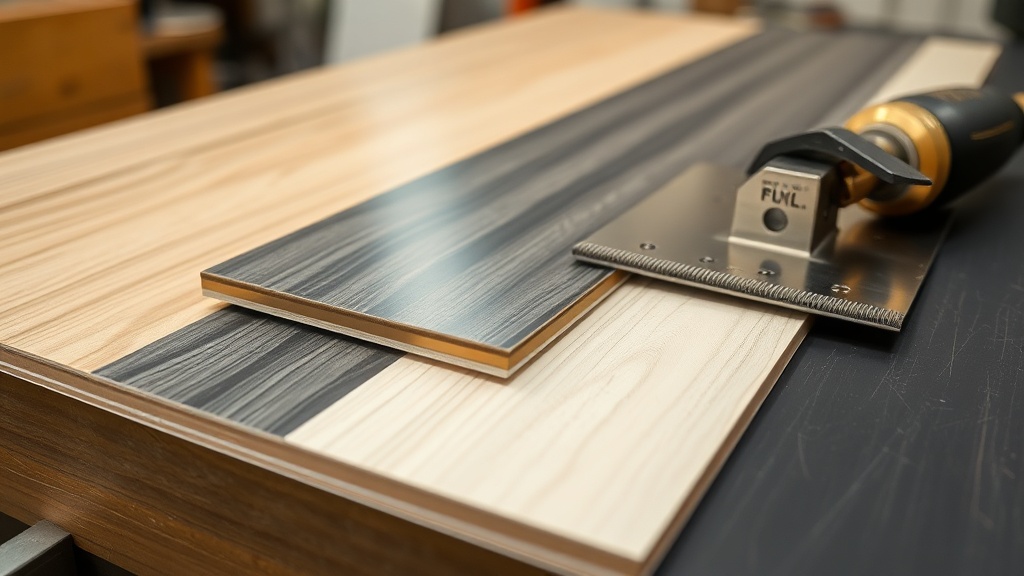
A plain guide to the cheapest vinyl flooring options in Singapore, what affects cost, and the common failure points before you buy.
If you are searching for the cheapest vinyl flooring singapore options, the first problem is simple: the cheapest quote on paper is often not the cheapest floor once it is laid. Vinyl can start very low, but the price moves fast once floor levelling, skirting removal, furniture shifting, pattern layout, or a thicker wear layer are added.
The second problem is that “vinyl” is not one thing. Sheet vinyl, glue-down vinyl, LVT, SPC and WPC are sold under the same broad label, but they fail in different ways, cost different amounts, and suit different flats.
At contractor level, the useful question is not “what is the cheapest vinyl”. It is this: what is the cheapest vinyl that will survive how you actually use the room. That answer is different for a rental bedroom, an owner-occupied HDB living room, and a kitchen with frequent washing.
Cheapest vinyl flooring singapore: what is actually at the bottom of the market
For Singapore homeowners looking at 2026 pricing, the lowest commonly advertised vinyl options are usually:
- Sheet vinyl, sold in rolls.
- Basic glue-down vinyl, where planks or tiles are fixed to the subfloor with adhesive.
- Entry-level LVT, short for luxury vinyl tile, usually at a basic specification.
At the low end, published supply-and-install prices are commonly around S$3 to S$5.50 psf for basic glue-down options. Some vinyl roll or sheet-style products are advertised around S$2 to S$5 psf all-in. Sheet vinyl is also commonly shown around S$10 to S$15 per m² installed, which converts to roughly the same low-entry territory. More mainstream residential SPC and LVT installations often sit higher, around S$4.50 to S$7.50 psf, with broader market guides showing many vinyl floors landing around S$4 to S$10+ psf depending on build-up and scope.
That means the cheapest options are real, but they are usually cheap for a reason:
- thinner wear layer, which is the clear protective top layer that resists scratches and wear,
- simpler print film and finish,
- less forgiving installation system,
- more dependence on a flat subfloor.
If a quote is much lower than the common market floor, check what is missing before you compare it to anything else.
The main vinyl types, from cheapest to more expensive
1. Sheet vinyl
Sheet vinyl is the most budget-driven format. It comes in large rolls and covers more area with fewer joints. Fewer joints can help with water resistance on the surface, but the material itself is usually the most basic part of the market.
Why it is cheap:
- fast material production,
- simple installation in open areas,
- lower-spec product ranges are widely available.
Where it makes sense:
- rental units,
- utility spaces,
- rooms where appearance is not the main concern,
- projects with a hard cap on cost.
What to watch:
- visible seams in larger or awkward rooms,
- easier denting,
- lower-end prints can look obviously artificial,
- repairs are not always neat.
2. Glue-down vinyl
Glue-down vinyl is often the cheapest plank-based option that still looks more like a proper timber-strip floor. The planks are adhered directly to the subfloor. Because there is no thick rigid core or click-lock profile, material cost can stay low.
Why it is cheap:
- less material build-up than SPC or WPC,
- simple product format,
- entry-level ranges are common.
Where it makes sense:
- bedrooms,
- living rooms with a reasonably flat existing floor,
- owners who want a plank look at the lowest possible price.
What to watch:
- subfloor condition matters a lot,
- adhesive failure can show up if preparation is poor,
- every bump underneath can telegraph through the finish over time.
3. LVT
LVT stands for luxury vinyl tile, though many products are plank-shaped. In the market, LVT can overlap with glue-down vinyl because many glue-down products are basically entry to mid-range LVT. Price depends heavily on specification. Basic LVT can be cheap. Better LVT stops being cheap quickly.
Where the price moves:
- wear-layer thickness,
- surface texture,
- plank size,
- brand positioning,
- whether the quote is material only or installed.
If someone says “LVT is S$2.50 to S$5 psf”, that may be material only. Installed cost can be closer to S$5 to S$9 psf depending on scope. This is one of the most common areas where homeowners misread pricing.
4. SPC click-lock
SPC means stone plastic composite. It is a rigid-core vinyl product with click joints. This is now one of the most common residential vinyl choices in Singapore because it is practical, comparatively stable, and easy to market. It is not usually the cheapest option, but it is often the cheapest option people end up choosing after they compare risk.
Why it costs more than the bottom-end options:
- denser core,
- click-lock system,
- often thicker total build-up,
- better-positioned product lines.
Typical guides put SPC material around S$3 to S$6 psf, with installed market ranges often around S$4.80 to S$7.50 psf. Some buyer guides publish tighter low ranges, but once site conditions are real, many installed jobs land above the headline minimum.
5. WPC
WPC means wood plastic composite. It is usually positioned above SPC in cost. It can feel slightly softer underfoot, but it is not where people looking for the cheapest vinyl start. Guides commonly place it above SPC and well above basic sheet or glue-down options.
If budget is strict, WPC is usually ruled out early.
What actually drives vinyl flooring cost
When homeowners compare S$3.80 psf against S$6.20 psf, they often assume the margin is mainly profit. Usually it is not. These are the parts that move the number.
Type and format
Sheet vinyl is generally the cheapest because it is produced and installed in a simpler format. Glue-down is often next. SPC and WPC cost more because the board structure is more substantial.
Wear layer
The wear layer is the transparent top layer that protects the printed design. This is one of the key specs to check. Lower-cost products usually have a thinner wear layer. Premium ranges often go to 0.5 mm or more. A thicker wear layer does not make a floor indestructible, but it usually gives more resistance to abrasion from grit, chair movement and daily traffic.
If you save S$1 psf by taking a much thinner wear layer in a heavily used area, the floor may not age well. If it is a low-use bedroom, the trade-off may be acceptable.
Installation method
Glue-down, loose lay, click-lock and patterned layouts are priced differently. Herringbone nearly always costs more than straight lay because there is more cutting, more setting out, and more wastage. The same vinyl product can sit in two very different total-cost brackets depending on how it is laid.
Subfloor condition
This is the part many low quotes avoid until site inspection. Vinyl likes a flat, stable base. If the existing tile floor has lippage, which means one tile edge sits higher than the next, or if there are hollows, cracks, loose tiles or old adhesive residue, the installer may need levelling work.
Levelling can change a cheap job into an average-priced job very quickly.
Area size and shape
Small rooms can cost more per square foot because there are fixed transport and labour components. Odd-shaped layouts, bay windows, built-in carpentry cuts, toilet thresholds and many door frames also raise labour time and wastage.
Integrated underlay and extra features
Some SPC products come with attached underlayment. Some advertise stronger acoustic performance, embossed texture, or EIR, which means embossed in register, where the surface texture follows the printed wood grain more closely. These improve feel or appearance, but they are not the bottom of the market.
What fails first on cheap vinyl
If you buy the cheapest vinyl available, failure rarely starts with a dramatic collapse. It starts with small signs. These are the ones we see first on budget jobs.
1. Edge lifting or corner lifting
This is common in lower-spec glue-down floors or in jobs with poor subfloor prep. If the floor below is dusty, uneven or damp, adhesive bond suffers. Corners start lifting, especially near windows, entrances, or spots that get frequent mopping.
What causes it:
- weak preparation,
- poor adhesive spread,
- movement in the substrate,
- water exposure at joints.
2. Joint peaking or separation
On cheaper click systems, the locking profile can be less robust. If the floor below is uneven or the boards are forced during installation, joints may not sit cleanly over time. You may see tiny gaps, raised edges, or clicking sounds when stepped on.
3. Telegraphing from the floor below
This is a glue-down problem especially. Every imperfection underneath can show through later. Grout lines, chipped tiles, hairline cracks and patch marks can become visible in the finished surface. The cheaper and thinner the material, the less it hides.
4. Surface scratching and wear-track dullness
Cheaper vinyl often carries a thinner wear layer. In practical use, this means grit from shoes, dining chair dragging, pet claws, and repetitive cleaning can dull traffic paths faster. The floor still works, but it starts looking tired earlier.
5. Denting
Thin vinyl and softer constructions dent more easily under concentrated loads. Fridge feet, metal chair legs, ladders, heavy bed frames and narrow sofa legs can all leave marks. This is less about “bad product” than about using a low-spec product in a high-load situation.
6. Water getting into weak points
Vinyl itself is often sold as water resistant, and many products handle surface spills well. That does not mean every installation detail is safe from water. Water can still get into joints, skirting edges, perimeter gaps or weak adhesive zones. In kitchens, the issue is usually not one spill. It is repeated wet cleaning and trapped moisture over time.
Cheapest does not mean wrong, but it must match the room
The cheapest vinyl can be a sensible choice in the right room. It becomes a false saving when used in the wrong place.
| Room | Can cheap vinyl work? | Main risk | Better low-risk choice |
|---|---|---|---|
| Spare bedroom | Yes | Mostly cosmetic wear | Basic glue-down or entry LVT |
| Rental bedroom | Yes | Faster scratching from turnover | Basic glue-down with realistic expectations |
| Living room | Sometimes | Traffic wear, furniture dents, joint issues | Entry to mid SPC or better LVT |
| Children's room | Sometimes | Scratches, marker stains, toy impact | Mid-range SPC |
| Kitchen entrance or dining zone | With caution | Moisture, chair movement, dropped items | SPC, with good detailing |
| Whole flat overlay | Only if the subfloor is good and expectations are modest | Accumulated defects across many rooms | SPC or stronger-spec LVT |
If you are trying to keep to a hard renovation budget, a common compromise is simple: spend less in bedrooms, spend a bit more in the living area. That gives a better cost-to-life balance than using the cheapest specification everywhere.
How to read a vinyl quote properly
Many homeowner mistakes start before installation. They start with reading the quotation too quickly.
Check whether the rate is material only, or supply and install
This is the first filter. A low material rate is not a low installed rate. Several market guides publish both, and the spread can be large. Always ask for the all-in installed rate and the separate exclusions.
Check what subfloor preparation includes
Does the quote include:
- basic cleaning only,
- patching minor holes,
- self-levelling compound, which is a pourable material used to flatten floors,
- grinding high spots,
- hacking existing flooring, if needed?
Without this, a cheap quote is not really a fixed comparison.
Check skirting and edge treatment
Some jobs leave existing skirting in place and fit the vinyl up to it. Some remove and reinstate skirting. Some add scotia, which is a small trim that covers the edge gap. These options affect appearance and cost.
Check the plank size and layout
Straight lay is the baseline. Herringbone is not. If a showroom sample shows herringbone and the quote is for straight lay, you are not pricing the same job.
Check thickness, wear layer, and warranty wording
The useful spec is not just total thickness. Wear layer matters more for day-to-day durability. Warranty also needs reading. A long warranty does not mean every scratch, dent or water issue is covered.
HDB and residential practical points
For HDB flats, renovation works including flooring changes are subject to HDB renovation rules. The exact method and whether other trades are involved depend on the existing condition and the overall renovation scope. If you are overlaying an existing floor, the condition of that existing base is what decides whether vinyl is straightforward or troublesome.
There are also wider building and site compliance considerations in Singapore, but homeowners should be careful about broad claims online. In the material reviewed here, there is no specific vinyl-only MOM rule stated for homeowners, and the exact BCA regulatory text for product approval clauses is not set out in the source set. So the safe position is practical: ask for a product that is suitable for residential use here, and make sure the installation method suits your flat condition rather than relying on vague certification language in a sales pitch.
Where cheap vinyl makes sense, and where it usually does not
Good use cases
- You need a short-to-medium-term flooring solution.
- The room has low traffic.
- The existing floor is already fairly flat.
- You accept that appearance and lifespan will be more modest.
- You are controlling budget across a larger renovation and need to save somewhere.
Poor use cases
- You want the floor to look fresh for many years with heavy use.
- The existing floor is uneven.
- The room gets frequent wet cleaning or splash risk.
- You have heavy movable furniture.
- You are sensitive to visible joints, dents or wear marks.
This is the trade-off most people need stated plainly: cheap vinyl usually buys lower upfront cost by giving away tolerance. Tolerance to uneven floors, tolerance to scratching, tolerance to heavy use, tolerance to installation error. If the site is simple and use is light, that may be fine. If not, the savings can disappear.
A practical budget approach for first-time renovators
If you have never renovated before, do not try to optimise every square foot to the absolute lowest number. Start with this order instead:
- Decide where the floor takes abuse. Living room, dining area and corridor usually take more punishment than bedrooms.
- Inspect the current floor. If the base is uneven, budget for preparation first.
- Choose format by room use, not by sample board alone.
- Compare all-in installed prices only.
- Use wear-layer and installation scope as the tie-breakers.
That is usually a better method than chasing the lowest psf headline and then arguing over variation costs later.
What we would choose if cost is the main priority
If cost is the main priority and the room is low-risk, basic glue-down vinyl is often the best place to start comparing. It usually gives a more familiar plank look than the very cheapest sheet products, while staying near the bottom end of installed pricing.
If cost is the main priority but the room is the main living area, entry-level SPC often makes more sense than the absolute cheapest option. It is usually not the lowest quote, but for many households it is the lower-risk spend.
If the quote only works because subfloor preparation is excluded, then it is not actually a cheap floor yet. It is just an incomplete one.
FAQ
Is sheet vinyl always the cheapest vinyl flooring option in Singapore?
Usually it is among the cheapest commonly advertised options, especially for basic residential use. But not every room is efficient for sheet format. In smaller or awkward spaces, joins, trimming and site conditions can reduce the cost advantage.
What is a realistic installed price range for cheap vinyl flooring in 2026?
At the low end, commonly published figures for basic options are around S$3 to S$5.50 psf installed for glue-down vinyl, with some sheet or roll-style products advertised around S$2 to S$5 psf all-in. More mainstream residential SPC and LVT often land higher, around S$4.50 to S$7.50 psf or more depending on specification and floor preparation.
What should I check before accepting the lowest vinyl flooring quote?
Check whether it is material only or supply and install, whether floor levelling is included, what wear layer you are getting, what layout the price assumes, and how skirting and edge finishing are handled. Those items change the real cost more than many first-time owners expect.
Ask YC about your own flat if you want a practical view of what your existing floor can actually take.
Read next
- Kitchen carpentry: what to choose, what it costs, and what fails firstKitchen carpentry in Singapore explained simply: materials, costs, common failure points, and how to choose cabinets that suit your use and budget.Trades and Materials
- Walnut carpentry: what to choose, what it costs, and what fails firstWalnut carpentry looks warm and costly. Here is what to choose, what affects cost, and which parts tend to fail first in Singapore homes.Trades and Materials
- False ceiling contractors: what to choose, what it costs, and what fails firstHow to choose false ceiling contractors, what affects cost, and the common failures to watch for before and after installation.Trades and Materials
Tell us what you are working with.
Send us the unit type and a rough idea of what you want done. We will come back with what it takes.